
Life, 1892-05-05 · page 13 of 18
Life — May 5, 1892 — page 13: what you’re looking at
What you’re looking at
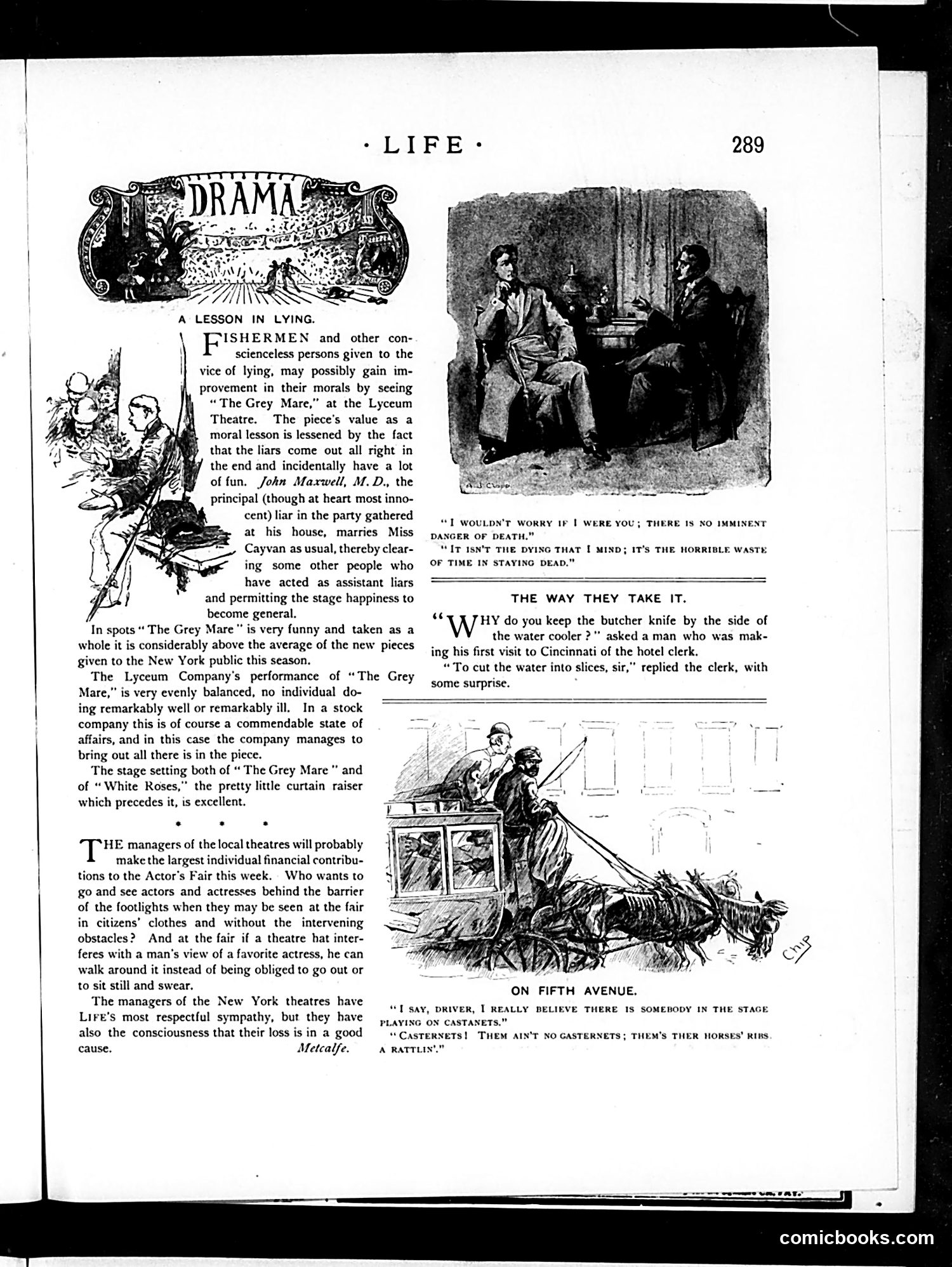
This page reviews the theatrical production "The Grey Mare" at the Lyceum Theatre, sardonically praising it as a "moral lesson in lying"—the joke being that the characters lie throughout but face no real consequences, making it a terrible moral example despite good intentions. The page includes three unrelated humorous anecdotes: 1. **"The Way They Take It"**: A hotel clerk in Cincinnati claims to cut water "into slices," a nonsensical response that mocks rural simplicity or deliberate absurdist humor. 2. **"On Fifth Avenue"**: A carriage driver mistakes the sound of horses' ribs rattling against their harnesses for castanets being played on stage, poking fun at urban-rural cultural misunderstandings. The theatrical review critiques how the play's moral message is undermined by its happy ending for liars. The satirical tone throughout reflects Life magazine's characteristic wit about contemporary social and cultural subjects.
📄 Transcribed text from this page (OCR, searchable)
Machine-transcribed from the original scan — historical spelling and the odd misread are preserved.
A LESSON IN LYING. \ ISHERMEN and other con- i scienceless persons given to the vice of lying, may possibly gain im- provement in their morals by seeing “The Grey Mare,” at the Lyceum Theatre. The piece’s value as a moral lesson is lessened by the fact that the liars come out all right in the end and incidentally have a lot offun. John Maxwell, M.D., the principal (though at heart most inno- cent) liar in the party gathered at his house, marries Miss Cayvan as usual, thereby clear- ing some other people who $ have acted as assistant liars } "and permitting the stage happiness to Y become general. In spots “ The Grey Mare" is very funny and taken as a whole it is considerably above the average of the new pieces given to the New York public this season. The Lyceum Company's performance of “The Grey Mare,” is very evenly balanced, no individual do- “TL WOULDN'T WORRY IF | WERE YOU; THERE IS NO IMMINENT DANGER OF DEATH,” “IT ISN'T THE DYING THAT [ MIND; IT’S THE HORRIBLE WASTE OF TIME IN STAYING DEAD.” THE WAY THEY TAKE IT. “ HY do you keep the butcher knife by the side of the water cooler ?"" asked a man who was mak- ing his first visit to Cincinnati of the hotel clerk. “To cut the water into slices, sir,” replied the clerk, with some surprise. ing remarkably well or remarkably ill. In a stock company this is of course a commendable state of affairs, and in this case the company manages to bring out all there is in the piece. The stage setting both of “ The Grey Mare " and of “ White Roses,” the pretty little curtain raiser which precedes it, is excellent. . . . HE managers of the local theatres will probably make the largest individual financial contribu- tions to the Actor's Fair this week. Who wants to go and see actors and actresses behind the barrier of the footlights when they may be seen at the fair in citizens’ clothes and without the intervening obstacles? And at the fair if a theatre hat inter- feres with a man’s view of a favorite actress, he can walk around it instead of being obliged to go out or to sit still and swear. The managers of the New York theatres have Lire’s most respectful sympathy, but they have also the consciousness that their loss is in a good cause. Metcalfe. ON FIFTH AVENUE, “TL SAY, DRIVER, I REALLY BELIEVE THERE IS SOMEBODY IN THE STAGE PLAYING ON CASTANETS.” “ CASTERNETS! THEM AIN'T NO GASTERNETS ; THEM'S THER HORSES! RIBS A RATTLIN'.” comicbooks.com