
Life, 1890-01-16 · page 7 of 14
Life — January 16, 1890 — page 7: what you’re looking at
What you’re looking at
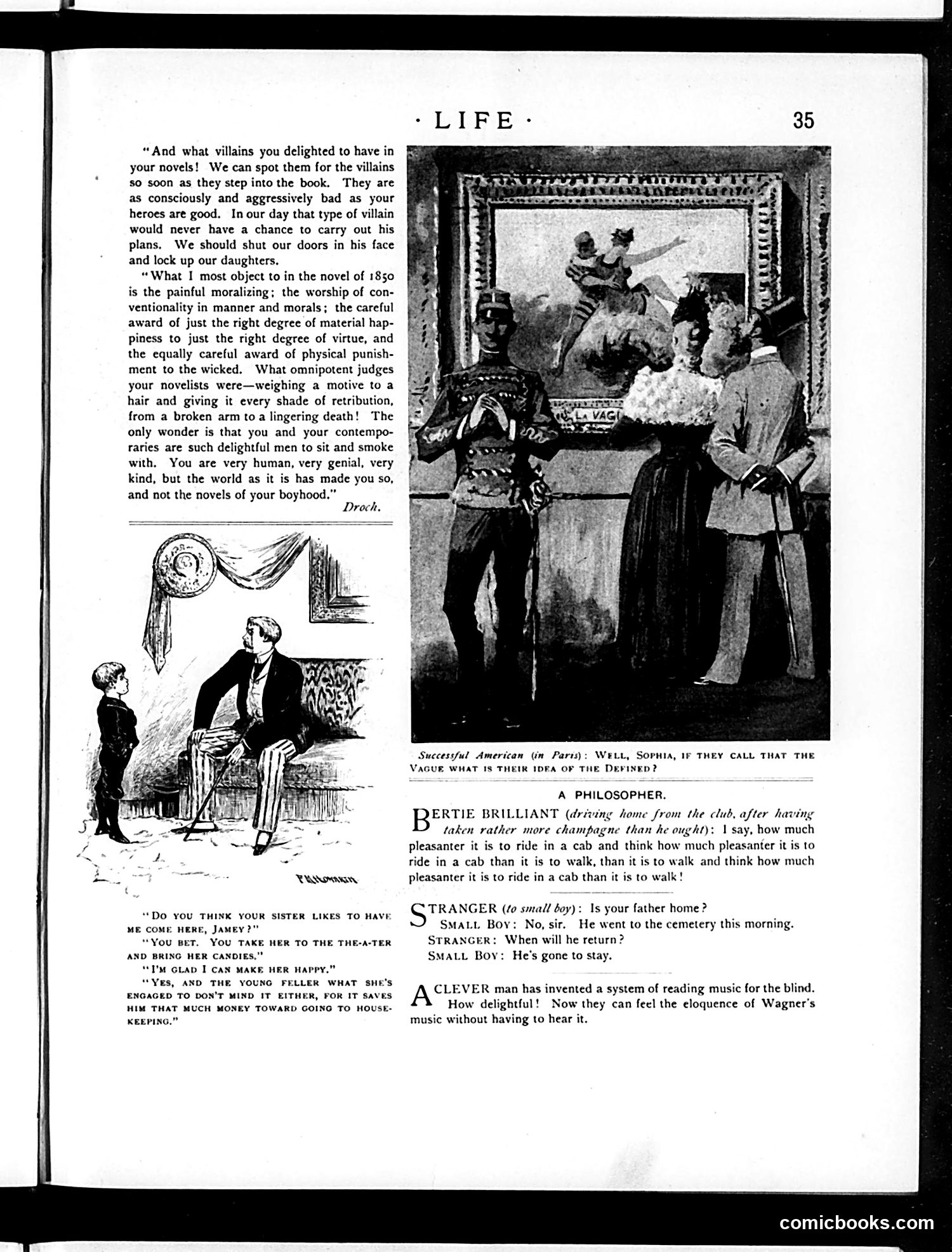
This page contains literary criticism and humorous anecdotes rather than political cartoons. The main text criticizes 1850s novels for their heavy-handed moralizing and convenient punishment of villains. The author (signed "Drech") argues that novelists acted as omnipotent judges, and praises contemporary writers for being more human and nuanced. The small sketch by Telamanson shows a child asking an adult about attending theater—a domestic scene illustrating social customs. Below are three brief jokes: one about entertaining a sister at the theater, another about a boy whose father has died, and a third about a blind man's music-reading system (likely referring to Louis Braille's tactile musical notation). These items reflect Victorian-era literary taste and social concerns rather than political satire.
📄 Transcribed text from this page (OCR, searchable)
Machine-transcribed from the original scan — historical spelling and the odd misread are preserved.
“And what villains you delighted to have in your novels! We can spot them for the villains so soon as they step into the book. They are as consciously and aggressively bad as your heroes are good. In our day that type of villain would never have a chance to carry out his plans. We should shut our doors in his face and lock up our daughters, “What I most object to in the novel of 1850 is the painful moralizing; the worship of con- ventionality in manner and morals; the careful award of just the right degree of material hap- piness to just the right degree of virtue, and the equally careful award of physical punish- ment to the wicked. What omnipotent judges your novelists were—weighing a motive to a hair and giving it every shade of retribution, from a broken arm toa lingering death! The only wonder is that you and your contempo- raries are such delightful men to sit and smoke with, You are very human, very genial, very kind, but the world as it is has made you so, and not the novels of your boyhood.” Droch. “DO YOU THINK YOUR SISTER LIKES TO HAVE ME COME HERE, Jamey?” “You BET. YOU TAKE HER TO THE THE-A-TER AND BRING HER CANDIES," “I'M GLaD I CAN MAKE HER Happy.” “YES, AND THE YOUNG FELLER WHAT SHE'S ENGAGED TO DON'T MIND IT EITHER, FOR IT SAVES HIM THAT MUCH MONEY TOWARD GOING TO HOUSE- KEEPING.” Successful American (in Parts): Wet, SopHia, IF THEY CALL THAT THE VAGUE WHAT 18 THEIR IDEA OF THE DEFINED? A PHILOSOPHER. ERTIE BRILLIANT (driving home from the club, after having taken rather more champagne than he ought): \ say, how much pleasanter it is to ride in a cab and think how much pleasanter it is to ride in a cab than it is to walk, than it is to walk and think how much pleasanter it is to ride in a cab than it is to walk! TRANGER (¢o smtadl boy): Is your father home ? SMALL Boy: No, sir, He went to the cemetery this morning. STRANGER: When will he return ? SMALL Boy: He's gone to stay, ASLEVER man has invented a system of reading music for the blind. How delightful! Now they can feel the eloquence of Wagner's music without having to hear it. comicbooks.com