
Life, 1889-12-26 · page 7 of 55
Life — December 26, 1889 — page 7: what you’re looking at
What you’re looking at
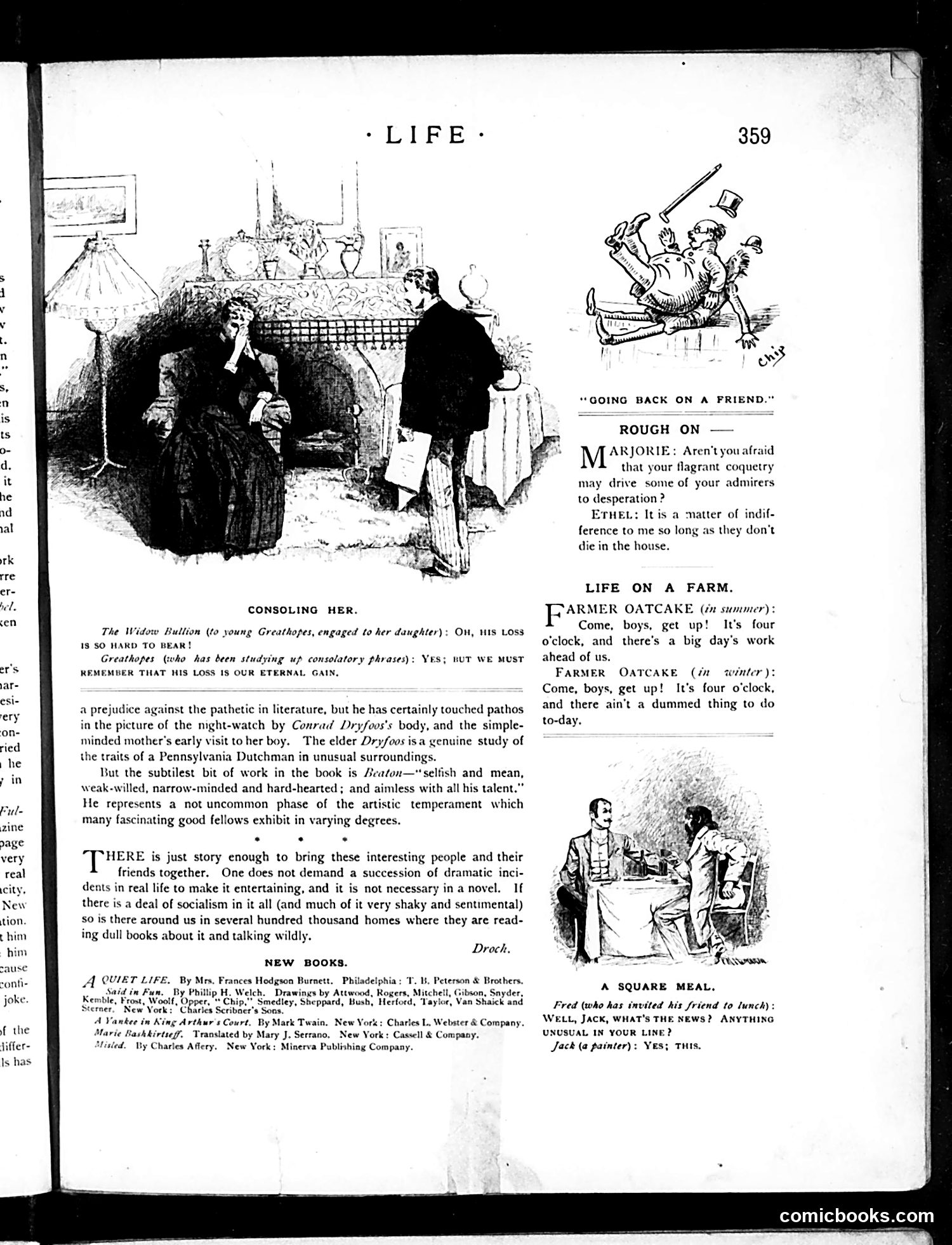
This page contains three separate comic sketches with accompanying dialogue: 1. **"Consoling Her"** depicts a widow being comforted after losing her husband, with text emphasizing that "his loss is our eternal gain"—suggesting the deceased's departure benefits society. 2. **"Rough On—Marjorie"** shows a conversation between two women about a man's "flagrant coquetry" potentially causing admirers despair, with the dismissive response that infidelity matters little "so long as they don't die in the house." 3. **"Life On a Farm"** humorously contrasts a farmer's morning call with a farm hand's sardonic response about the day's lack of work. The sketches reflect early 20th-century domestic humor and social commentary, with satirical takes on marriage, infidelity, and rural labor relations.
📄 Transcribed text from this page (OCR, searchable)
Machine-transcribed from the original scan — historical spelling and the odd misread are preserved.
zine age very real city, New tion. chim CONSOLING HER. The Widow Bullion (to young Greathopes, engaged to her daughter): OM, Wis Loss 18 SO HARD TO BEAR! Greathopes (who has been studying up consolatory phrases): YES; KUT WE MUST REMEMBER THAT HIS LOSS 18 OUR ETERNAL GAIN, a prejudice against the pathetic in literature, but he has certainly touched pathos in the picture of the mght-watch by Conrad Dryfoos's body, and the simple- minded mother’s early visit to her boy. The elder Dryfoos isa genuine study of the traits of a Pennsylvania Dutchman in unusual surroundings. But the subtilest bit of work in the book is caton—*seltish and mean, weak-willed, narrow-minded and hard-hearted ; and aimless with all his talent.” He represents a not uncommon phase of the artistic temperament which many fascinating good fellows exhibit in varying degrees. HERE is just story enough to bring these interesting people and their friends together. One does not demand a succession of dramatic inci- dents in real life to make it entertaining, and it is not necessary in a novel. If there is a deal of socialism in it all (and much of it very shaky and sentimental) so is there around us in several hundred thousand homes where they are read- ing dull books about it and talking wildly. Droch. NEW BOOKS. Aq OQUIET LIFE, By Mrs, Frances Hodgson Burnett. Philadelphia: T. 18, Peterson & Brothers. Said im Fun, By Phillip H. Welch. Drawings by Attwood, Rogers, Mitchell, Gibson, Snyder, ble, Frost, Woolf, “Chip.” Smedley, Sheppard, Bush, Herford, Taylor, Van Shaick and Sterner, New Yor! ‘les Scribner's Sons. A Vankee in King Arthur's Court, By Mark Twain, New Vorg: Charles L. Webster & Company. Marie Bashkirtseff. Translated by Mary J. Serrano, New York: Cassell & Company. Misled. My Charles Affery. New York: Minerva Publishing Company. “GOING BACK ON A FRIEND.” ROUGH ON — Mavens: Aren'tyou afraid that your flagrant coquetry may drive some of your admirers to desperation ? Erne: Itis a matter of indif- ference to me so long as they don't die in the house. LIFE ON A FARM. ARMER OATCAKE (ex summer): Come, boys, get up! It’s four o'clock, and there's a big day's work ahead of us. FARMER OATCAKE (¢2 wenter): Come, boys, get up! It’s four o'clock, and there ain't a dummed thing to do to-day. A SQUARE MEAL, Fred (who has invited his friend to lunch): WELL, JACK, WHAT'S THE NEWS? ANYTHING UNUSUAL IN YOUR LINE? Jack (a painter): Yes; THI, comicbooks.com