
Life, 1889-08-22 · page 7 of 16
Life — August 22, 1889 — page 7: what you’re looking at
What you’re looking at
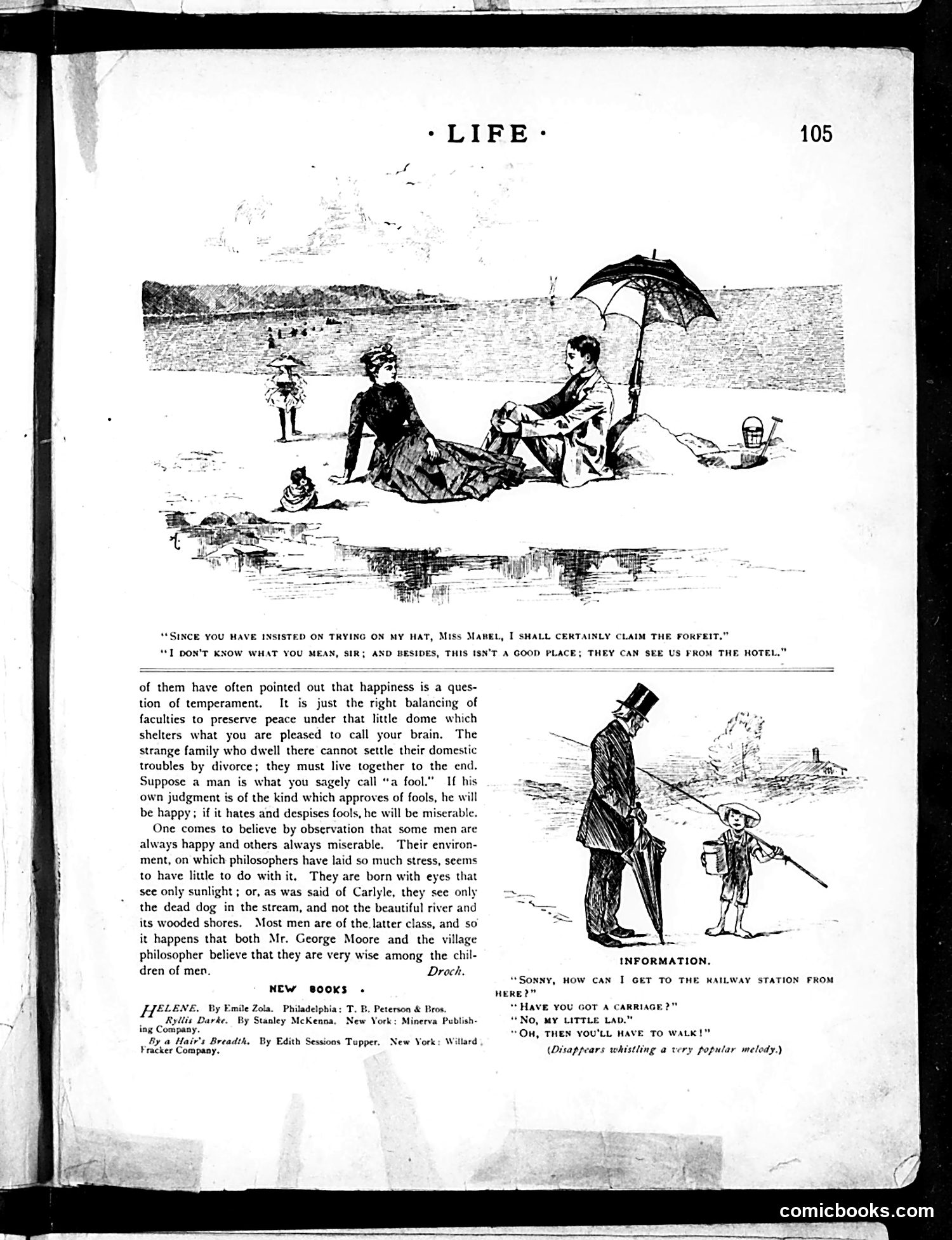
**Top Cartoon:** This seaside scene shows two women and a man on a beach. A woman in dark clothing objects to the man's suggestion that she try on his hat, fearing they'll be seen from the hotel. The satire targets Victorian-era social propriety—the anxiety that even minor improprieties (sharing a hat) could damage one's reputation if observed by others. The humor derives from the absurdity of such rigid social conventions. **Bottom Comic ("Information"):** A tall man asks a small boy for directions to the railway station. The boy responds with a nursery rhyme about disappearing while whistling, a nonsensical answer. This gentle humor mocks children's evasiveness or the difficulty of extracting useful information from youngsters. Both pieces reflect early 20th-century social anxieties and everyday domestic comedy.
📄 Transcribed text from this page (OCR, searchable)
Machine-transcribed from the original scan — historical spelling and the odd misread are preserved.
“SINCE YOU HAVE INSISTED ON TRYING ON MY HAT, MiSs MABEL, I SHALL CERTAINLY CLAIM THE FORFEIT.” “1 DON'T KNOW WHAT YOU MEAN, SIR; AND BESIDES, THIS ISN'T A GOOD PLACE; THEY CAN SEE US FROM THE HOTEL.” of them have often pointed out that happiness is a ques- tion of temperament. It is just the right balancing of faculties to preserve peace under that little dome which shelters what you are pleased to call your brain. The strange family who dwell there cannot settle their domestic troubles by divorce; they must live together to the end. Suppose a man is what you sagely call “a fool.” If his own judgment is of the kind which approves of fools, he will be happy; if it hates and despises fools, he will be miserable. One comes to believe by observation that some men are always happy and others always miserable. Their environ- ment, on which philosophers have laid so much stress, seems to have little to do with it. They are born with eyes that see only sunlight ; or, as was said of Carlyle, they see only the dead dog in the stream, and not the beautiful river and its wooded shores. Most men are of the. latter class, and so it happens that both Mr. George Moore and the village philosopher believe that they are very wise among the chil- dren of men. Droch. NEW 80OKS - FLELENE. By Emile Zola. Philadelphia: T. B. Peterson & Bros. Ryltis Darke. By Stanley McKenna, New York: Minerva Publish- ing Company. By a Hair's Breadth, By Edith Sessions Tupper. New York: Willard Fracker Company. INFORMATION. “Sonny, HOW CAN I GET TO THE RAILWAY STATION FROM HERE?” “HAVE YOU GOT A CARRIAGE 2” “No, MY LITTLE Lab.” “OH, THEN YOU'LL HAVE To WALK!” (Disappears whistling a very popular melody.) comicbooks.com