
Life, 1888-12-27 · page 16 of 43
Life — December 27, 1888 — page 16: what you’re looking at
What you’re looking at
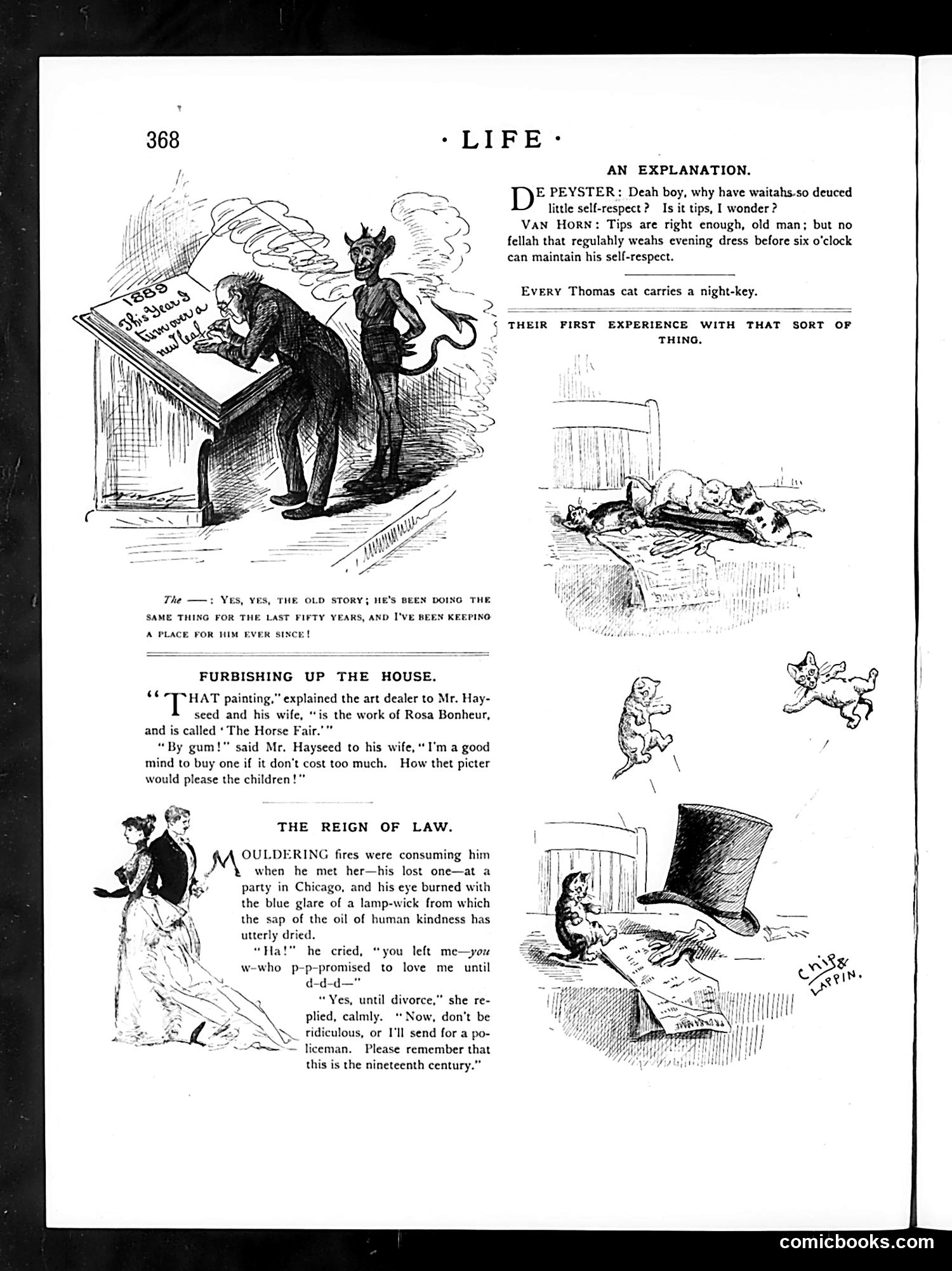
This page contains three satirical sketches mocking 19th-century social pretensions: **"An Explanation"** ridicules wealthy men's obsession with dress codes and propriety. The joke is that waiters who must wear formal evening dress before 6 p.m. cannot maintain self-respect—suggesting the absurdity of rigid social conventions. **"Furbishing Up the House"** satirizes rural Americans' (Mr. Hayseed's) cultural ignorance. He considers buying a painting by Rosa Bonheur (a famous French artist) solely because it depicts horses, assuming it would entertain children rather than valuing its artistic merit. **"The Reign of Law"** mocks melodramatic romance. A man confronts his lost love with theatrical anguish, but she dismissively invokes modern divorce law and threatens police intervention—deflating his emotional outburst with practical 19th-century legality. The satire suggests society's shift toward rational law over romantic sentiment. All three pieces target class pretension, cultural gaps, and changing social values of the period.
📄 Transcribed text from this page (OCR, searchable)
Machine-transcribed from the original scan — historical spelling and the odd misread are preserved.
-LIFE: AN EXPLANATION. E PEYSTER: Deah boy, why have waitahs-so deuced little self-respect ? Is it tips, 1 wonder ? Van HoRN: Tips are right enough, old man; but no fellah that regulahly weahs evening dress before six o'clock can maintain his self-respect. < THEIR FIRST EXPERIENCE WITH THAT SORT OF a THING. SAME THING FOR THE LAST FIFTY YEARS, AND I'VE BEEN KEEPING FOR HIM EVER SINCE! FURBISHING UP THE HOUSE. s¢ Tet painting,” explained the art dealer to Mr. Hay- seed and his wife, “is the work of Rosa Bonheur, and is called * The Horse Fair.’" “By gum!" said Mr. Hayseed to his wife, “I'm a good mind to buy one if it don’t cost too much. How thet picter would please the children!” ~ $ THE REIGN OF LAW. OULDERING fires were consuming him when he met her—his lost one—at a party in Chicago, and his eye burned with the blue glare of a lamp-wick from which the sap of the oil of human kindness has utterly dried. “Ha!” he cried, “you left: me—you w-who p-p-promised to love me_ until d-d-d—" “Yes, until divorce,” she re- plied, calmly. ‘Now, don’t be ridiculous, or I'll send for a po- liceman. Please remember that this is the nineteenth century.” comicbooks.com