
Life, 1887-12-22 · page 11 of 18
Life — December 22, 1887 — page 11: what you’re looking at
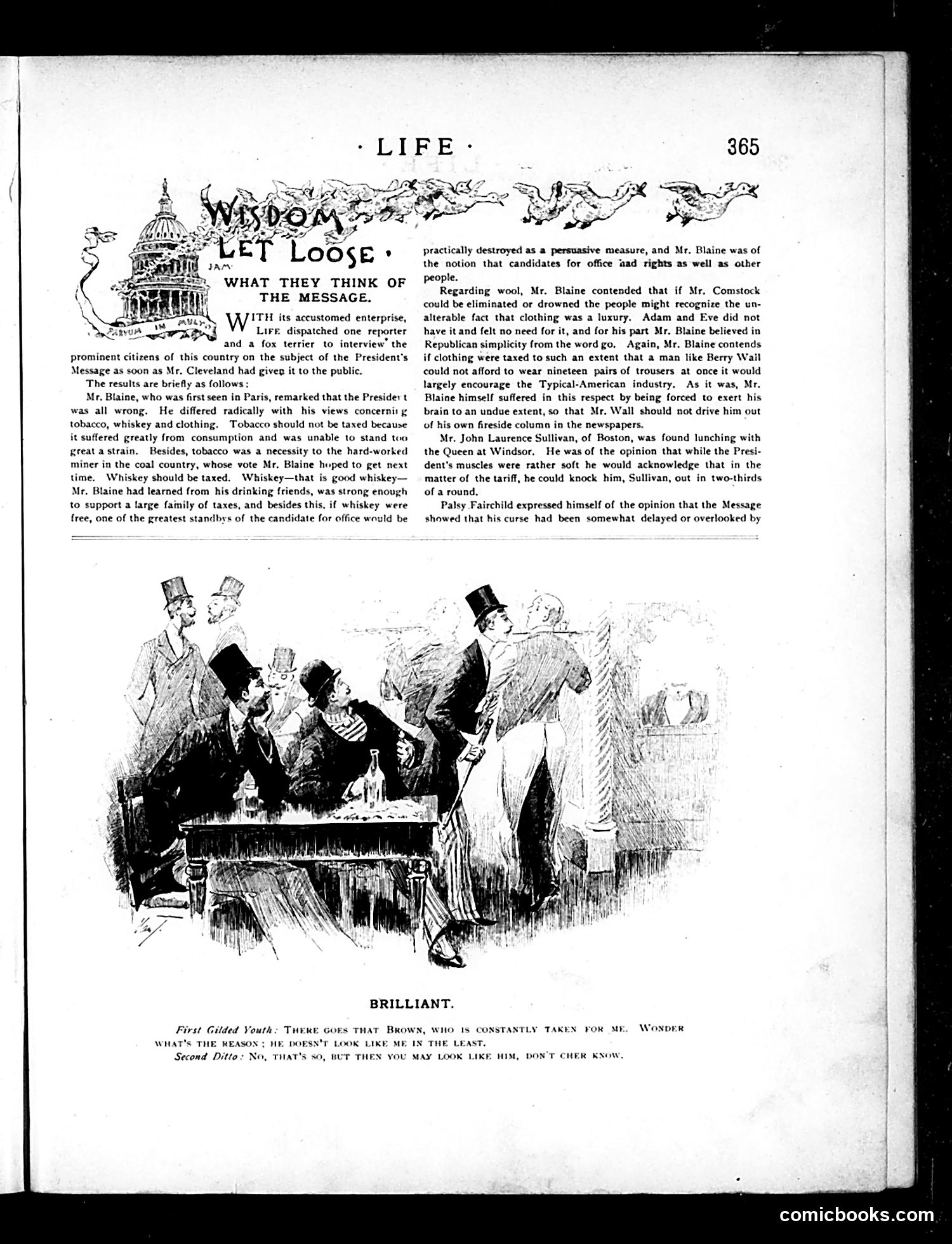
What you’re looking at
This page satirizes prominent figures' reactions to President Cleveland's tariff message. The main text mocks James G. Blaine (Republican politician), who opposes Cleveland's proposed taxes on tobacco, whiskey, and wool. The satire highlights Blaine's self-interested hypocrisy: he argues tobacco shouldn't be taxed because miners need it (and their votes), yet contradictorily supports taxing whiskey for revenue—despite personally benefiting from untaxed alcohol. References to "Berry Wall" (a wealthy man famous for excessive clothing) and boxer John L. Sullivan (humorously reported dining with the Queen) ridicule wealthy elites who'd suffer minimal tax impact. The bottom cartoon joke is simpler: two gilded youths discuss being confused for one another despite looking nothing alike—poking fun at vapid wealthy young men. The overall message: politicians and the rich prioritize personal gain over consistent principle when debating tariffs.
📄 Transcribed text from this page (OCR, searchable)
Machine-transcribed from the original scan — historical spelling and the odd misread are preserved.
WHAT THEY THINK OF THE MESSAGE. TH its accustomed enterprise, Lire. dispatched one reporter and a fox terrier to interview" the prominent citizens of this country on the subject of the President's Message as soon as Mr. Cleveland had given it to the public. The results are briefly as follow: Mr. Blaine, who was first seen in Paris, remarked that the Presider t was all wrong. He differed radically with his views concernit ¢ tobacco, whiskey and clothing. Tobacco should not be taxed because it suffered greatly from consumption and was unable to stand to great a strain. Besides, tobacco was a necessity to the hard-worked miner in the coal country, whose vote Mr, Blaine hoped to get next time. Whiskey should be taxed. Whiskey—that is good whiskey— Mr, Blaine had learned from his drinking friends, was strong enough to support a large faimily of taxes, and besides this, if whiskey were free, one of the greatest standbys of the candidate for office would be practically destroyed as a persuasive measure, and Mr. Blaine was of the notion that candidates for office aad rights as well as other people. Regarding wool, Mr. Blaine contended that if Mr. Comstock could be eliminated or drowned the people might recognize the un- alterable fact that clothing was a luxury, Adam and Eve did not have it and felt no need for it, and for his part Mr. Blaine believed in Republican simplicity from the word go, Again, Mr. Blaine contends if clothing were taxed to such an extent that a man like Berry Wail could not afford to wear nineteen pairs of trousers at once it would largely encourage the Typical-American industry. As it was, Mr. Blaine himself suffered in this respect by being forced to exert his brain to an undue extent, so that Mr. Wall should not drive him out of his own fireside column in the newspapers. Mr. John Laurence Sullivan, of Boston, was found lunching with the Queen at Windsor. He was of the opinion that while the Presi- dent's muscles were rather soft he would acknowledge that in the matter of the tariff, he could knock him, Sullivan, out in two-thirds of a round, Palsy Fairchild expressed himself of the opinion that the Message showed that his curse had been somewhat delayed or overlooked by BRILLIANT. First Gilded Youth: Twere Goes THAT WHAT'S THE REASON ; BROWN, WHO 18 CONSTANTLY TAKEN HE DOESN'T LOOK LIKE ME IN THE LEAST. FOR ME, Woxper Second Ditto: No, THATS $0, BUT THEN YOU MAY LOOK LIKE HIM, DON'T CHER KNOW, comicbooks.com