
Life, 1886-06-03 · page 5 of 18
Life — June 3, 1886 — page 5: what you’re looking at
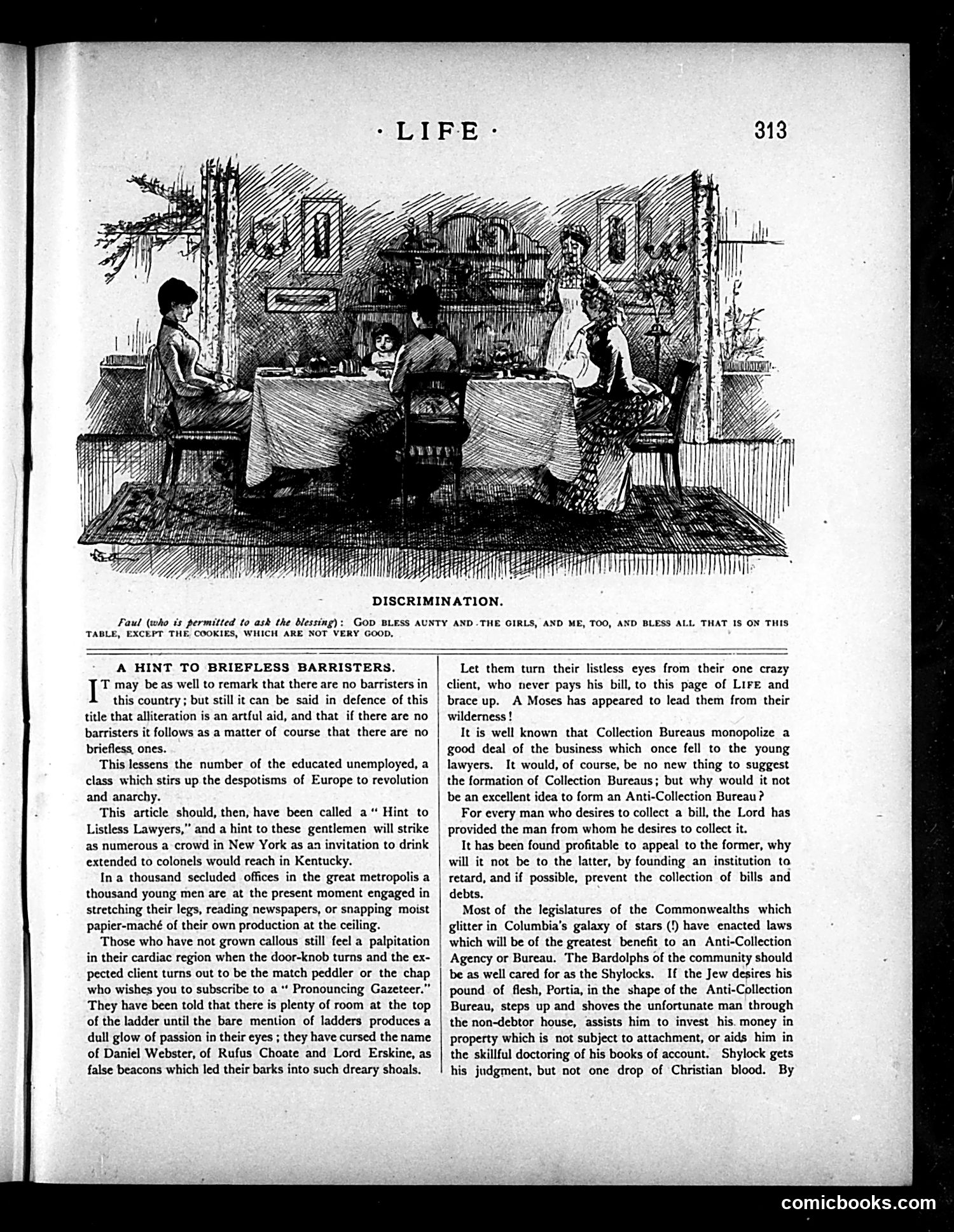
What you’re looking at
**The Cartoon:** Shows four well-dressed people dining together, illustrating the article's ironic title. **The Satire:** The piece mocks wealthy barristers (lawyers) who avoid paying their bills, labeling them hypocrites. The dinner blessing mentions blessing "all that is on this table, EXCEPT THE COOKIES, WHICH ARE NOT VERY GOOD"—sarcastically suggesting selective morality. **Main Argument:** The article proposes an "Anti-Collection Bureau" to protect debtors from bill collectors, arguing that Collection Bureaus exploit the poor. It critiques how wealthy lawyers and professionals use legal systems to avoid debt while ordinary people face harsh collection tactics. The satire suggests that "discrimination" (selective treatment) benefits the privileged class who can afford lawyers to shield themselves from financial consequences that ordinary citizens cannot escape.
📄 Transcribed text from this page (OCR, searchable)
Machine-transcribed from the original scan — historical spelling and the odd misread are preserved.
DISCRIMINATION. Faul (who is permitted to ask the blessing): GOD BLESS AUNTY ANDTHE GIRLS, AND ME, TOO, AND BLESS ALL THAT IS ON THIS TABLE, EXCEPT THE COOKIES, WHICH ARE NOT VERY GOoD, A HINT TO BRIEFLESS BARRISTERS. T" may be as well to remark that there are no barristers in this country ; but still it can be said in defence of this | title that alliteration is an artful aid, and that if there are no barristers it follows as a matter of course that there are no briefless, ones. This lessens the number of the educated unemployed, a class which stirs up the despotisms of Europe to revolution and anarchy. This article should, then, have been called a“ Hint to Listless Lawyers,” and a hint to these gentlemen will strike as numerous a crowd in New York as an invitation to drink extended to colonels would reach in Kentucky. In a thousand secluded offices in the great metropolis a thousand young men are at the present moment engaged in stretching their legs, reading newspapers, or snapping moist papier-maché of their own production at the ceiling. Those who have not grown callous still feel a palpitation in their cardiac region when the door-knob turns and the ex- pected client turns out to be the match peddler or the chap who wishes you to subscribe to a ** Pronouncing Gazeteer.” They have been told that there is plenty of room at the top of the ladder until the bare mention of ladders produces a dull glow of passion in their eyes ; they have cursed the name of Daniel Webster, of Rufus Choate and Lord Erskine, as false beacons which led their barks into such dreary shoals. Let them turn their listless eyes from their one crazy client, who never pays his bill, to this page of Lire and brace up. A Moses has appeared to lead them from their wilderness! It is well known that Collection Bureaus monopolize a good deal of the business which once fell to the young lawyers. It would, of course, be no new thing to suggest the formation of Collection Bureaus; but why would it not be an excellent idea to form an Anti-Collection Bureau? For every man who desires to collect a bill, the Lord has provided the man from whom he desires to collect it. It has been found profitable to appeal to the former, why will it not be to the latter, by founding an institution to | retard, and if possible, prevent the collection of bills and debts. Most of the legislatures of the Commonwealths which glitter in Columbia’s galaxy of stars (!) have enacted laws | which will be of the greatest benefit to an Anti-Collection Agency or Bureau. The Bardolphs of the community should be as well cared for as the Shylocks. If the Jew desires his pound of flesh, Portia, in the shape of the Anti-Collection Bureau, steps up and shoves the unfortunate man through the non-debtor house, assists him to invest his. money in property which is not subject to attachment, or aids him in the skillful doctoring of his books of account. Shylock gets his judgment, but not one drop of Christian blood. By comicbooks.com