
Life, 1885-10-29 · page 7 of 16
Life — October 29, 1885 — page 7: what you’re looking at
What you’re looking at
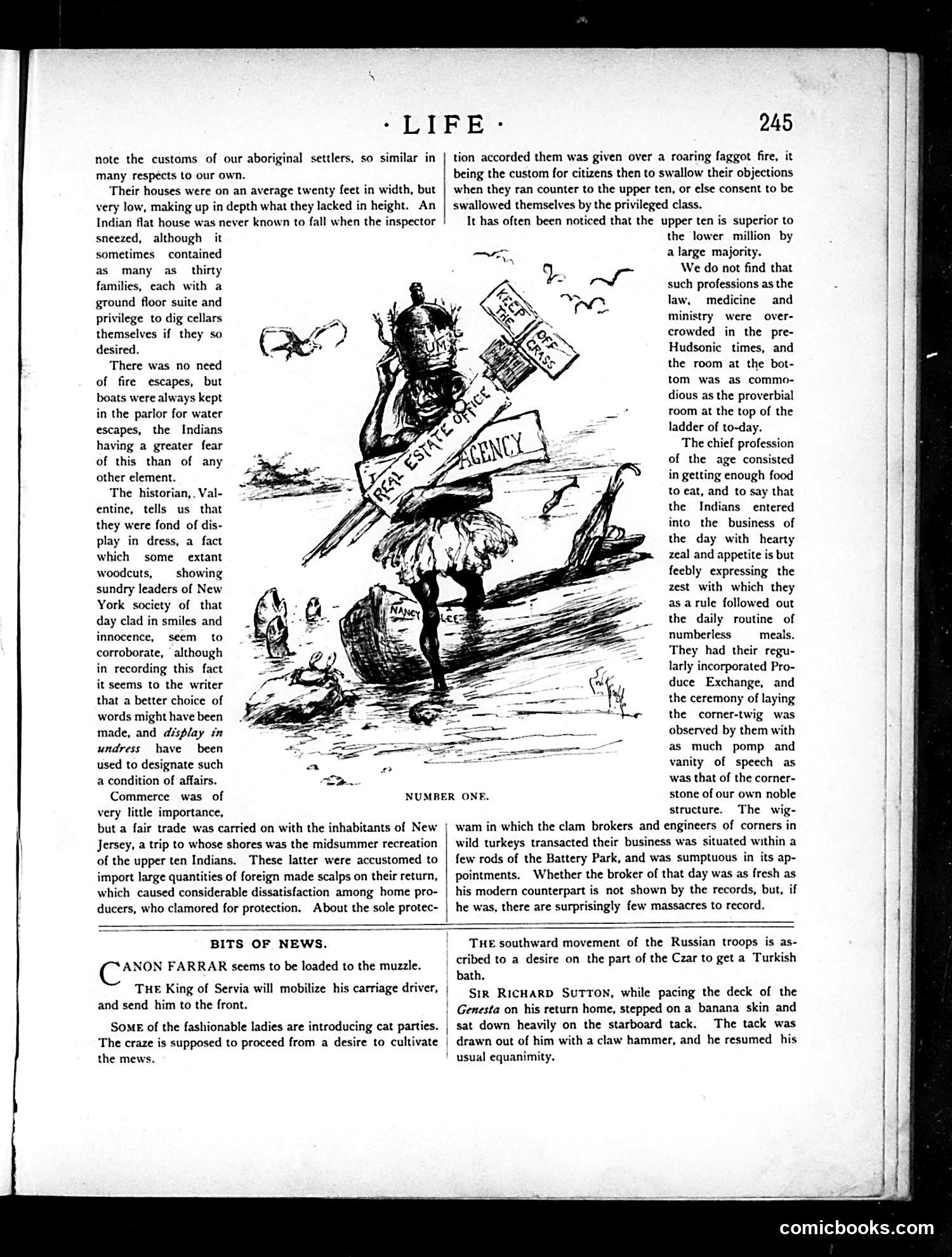
This cartoon satirizes **real estate speculation and financial excess** in what appears to be **early 20th-century New York City**. The central figure—a bloated, money-laden businessman weighted down by signs reading "REAL ESTATE AGENCY" and carrying property deeds—represents the speculative real estate broker or developer. He's depicted as literally collapsing under the burden of accumulated wealth and transactions, a visual metaphor for the unsustainable bubble of property speculation. The cartoonist mocks how real estate dealers had grown grotesquely fat on rapid urban development and speculation, particularly concerning land near lower Manhattan (Battery Park area is mentioned in the text). The satire suggests these speculators were simultaneously greedy and unstable—their fortunes built on inflated values rather than genuine worth.
📄 Transcribed text from this page (OCR, searchable)
Machine-transcribed from the original scan — historical spelling and the odd misread are preserved.
- LIFE: note the customs of our aboriginal settlers, so similar in many respects to our own. Their houses were on an average twenty feet in width, but very low, making up in depth what they lacked in height. An Indian flat house was never known to fall when the inspector sneezed, although it sometimes contained as many as_ thirty families, each with a ground floor suite and privilege to dig cellars themselves if they so desired. There was no need of fire escapes, but boats were always kept in the parlor for water escapes, the Indians having a greater fear of this than of any other element. The historian, . Val- entine, tells us that they were fond of dis- play in dress, a fact which some extant woodcuts, showing sundry leaders of New York society of that day clad in smiles and innocence, seem to corroborate, although in recording this fact it seems to the writer that a better choice of words might have been made, and display in undress have been used to designate such a condition of affairs. Commerce was of very little importance, but a fair trade was carried on with the inhabitants of New | Jersey, a trip to whose shores was the midsummer recreation of the upper ten Indians. These latter were accustomed to import large quantities of foreign made scalps on their return, which caused considerable dissatisfaction among home pro- ducers, who clamored for protection. About the sole protec- NUMBER ONE. 245 tion accorded them was given over a roaring faggot fire, it being the custom for citizens then to swallow their objections when they ran counter to the upper ten, or else consent to be swallowed themselves by the privileged class. It has often been noticed that the upper ten is superior to the lower million by a large majority. We do not find that such professions as the law, medicine and ministry were over- crowded in the pre- Hudsonic times, and the room at the bot- tom was as commo- dious as the proverbial room at the top of the ladder of to-day. The chief profession of the age consisted in getting enough food to eat, and to say that the Indians entered into the business of the day with hearty zeal and appetite is but feebly expressing the zest with which they as arule followed out the daily routine of numberless meals. They had their regu- larly incorporated Pro- duce Exchange, and the ceremony of laying the corner-twig was observed by them with as much pomp and vanity of speech as was that of the corner- stone of our own noble structure. The wig- wam in which the clam brokers and engineers of corners in wild turkeys transacted their business was situated within a few rods of the Battery Park, and was sumptuous in its ap- pointments. Whether the broker of that day was as fresh as his modern counterpart is not shown by the records, but, if he was, there are surprisingly few massacres to record. BITS OF NEWS. ANON FARRAR seems to be loaded to the muzzle. THE King of Servia will mobilize his carriage driver, and send him to the front. SOME of the fashionable ladies are introducing cat parties. | The craze is supposed to proceed from a desire to cultivate the mews. THE southward movement of the Russian troops is as- cribed to a desire on the part of the Czar to get a Turkish bath, Str RICHARD SuTTON, while pacing the deck of the | Genesta on his return home, stepped on a banana skin and sat down heavily on the starboard tack. The tack was drawn out of him with a claw hammer, and he resumed his ' usual equanimity. comicbooks.com