
Judge, 1928-07-14 · page 11 of 36
Judge — July 14, 1928 — page 11: what you’re looking at
What you’re looking at
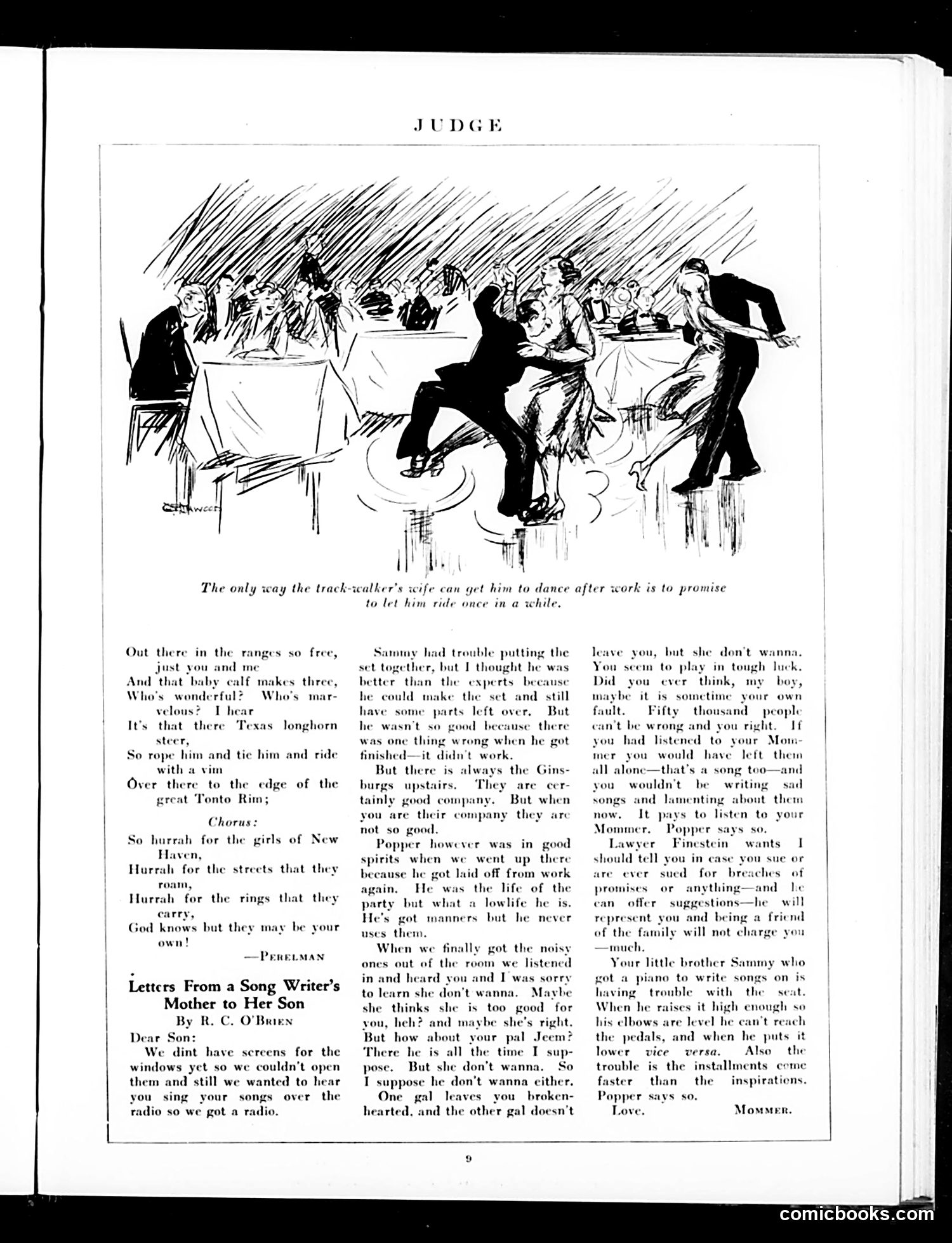
This page contains two separate pieces of satirical humor typical of Judge magazine's output: **Top Cartoon:** A dinner party scene mocking social pretension. The caption jokes that a track-walker's wife can only get him to dance by promising he can "ride once in a while"—satirizing working-class men's desire to escape domestic life, even briefly. **"Letters From a Song Writer's Mother":** A humorous column written as a mother's advice to her son, a radio songwriter. The satire targets several 1920s-30s social types: Sammy the amateur radio enthusiast who can't finish projects; the Ginsburgs (appears to reference Jewish neighbors); Popper, a chronically unemployed man pretending cheerfulness; and various romantic entanglements. The mother's folksy wisdom—"Fifty thousand people can't be wrong and you right"—mocks both maternal clichés and the son's artistic complaints. Mentions of lawyers and breach-of-promise suits reference period anxieties about litigation. Her son's younger brother struggling with piano installments satirizes consumer credit culture. The humor relies on recognizable ethnic stereotypes and working-class domestic situations of the era.
📄 Transcribed text from this page (OCR, searchable)
Machine-transcribed from the original scan — historical spelling and the odd misread are preserved.
Out there just y And that | Who's) wonderful? velous? that there steer, So rope him and tie him and ride with a vim Over there to the edge of the great Tonto Rim; anges so free, s three, Who's mar- It’s as longhorn Chorus: So hurrah for the girls of New Haven, Hurrah for the streets that they roam, Hurrah for the rings that they carry, God knows but they may be your own! —PErERELMAN Letters From a Song Writer’s Mother to Her Son By R. C. O'Brien Dear Son: We dint have screens for the windows yet so we couldn't open them and still we wanted to hear you sing your songs over the radio so we got a radio. JUDGE walker’s wife can get him to dance to let him ride once in a while, Sammy had trouble putting the set together, but I thought he was better than the experts because he could make the set and. still have some ts left over. But good there was one thing wrong when he got finished—it didn’t: work. But there is always the Gins- burgs They are cer- tainly good company. But when you are their company they ar not so good. Popper however was in’ good spirits when we went up there because he got laid off from work again, He was the life of the party but what a lowlife he is. He's got manners but he ne he wasn’t. s Use upstairs. uses them. When we finally got the noisy ones out of the room we listened in and heard you and I was sorry Maybe she thinks she is too good for you, heh? and maybe she’s right, But how about your pal Jecm? There he is all the time T sup- pose. But she don’t wanna, So T suppose he don’t wanna either. One gal leaves you broken- hearted, and the other gal doesn’t to learn she don’t wanna. after work is to promise leave you, but she don’t wanna. You seem to play in tough luck. Did you ever think, my maybe it is sometime your own fault. Fifty thousand — people can't be wrong and you right. If you had listened to your Mom mer you would have left. them all alone—that’s a song too—and you wouldn't be writing songs and lamenting about them now, It pays to listen to your Mommer. Popper says so. Lawyer wants I should ‘tell you in ease you sue or for breaches of anything—and he will friend boy, sad Finestein are ever sued promises offer suggestions—he represent you and being of the family will not charg —tuch. Your little brother Sz ot a piano to wr trouble or can mmny who songs on is the When he raises it high enough so seat. rt reach the pedals, and when he puts it lower vi versa. Also the trouble is the installments ceme faster than the — inspiratic Popper says so. Love. his elbows are level he e: Mommer. comicbooks.com