
Judge, 1925-06-13 · page 18 of 36
Judge — June 13, 1925 — page 18: what you’re looking at
What you’re looking at
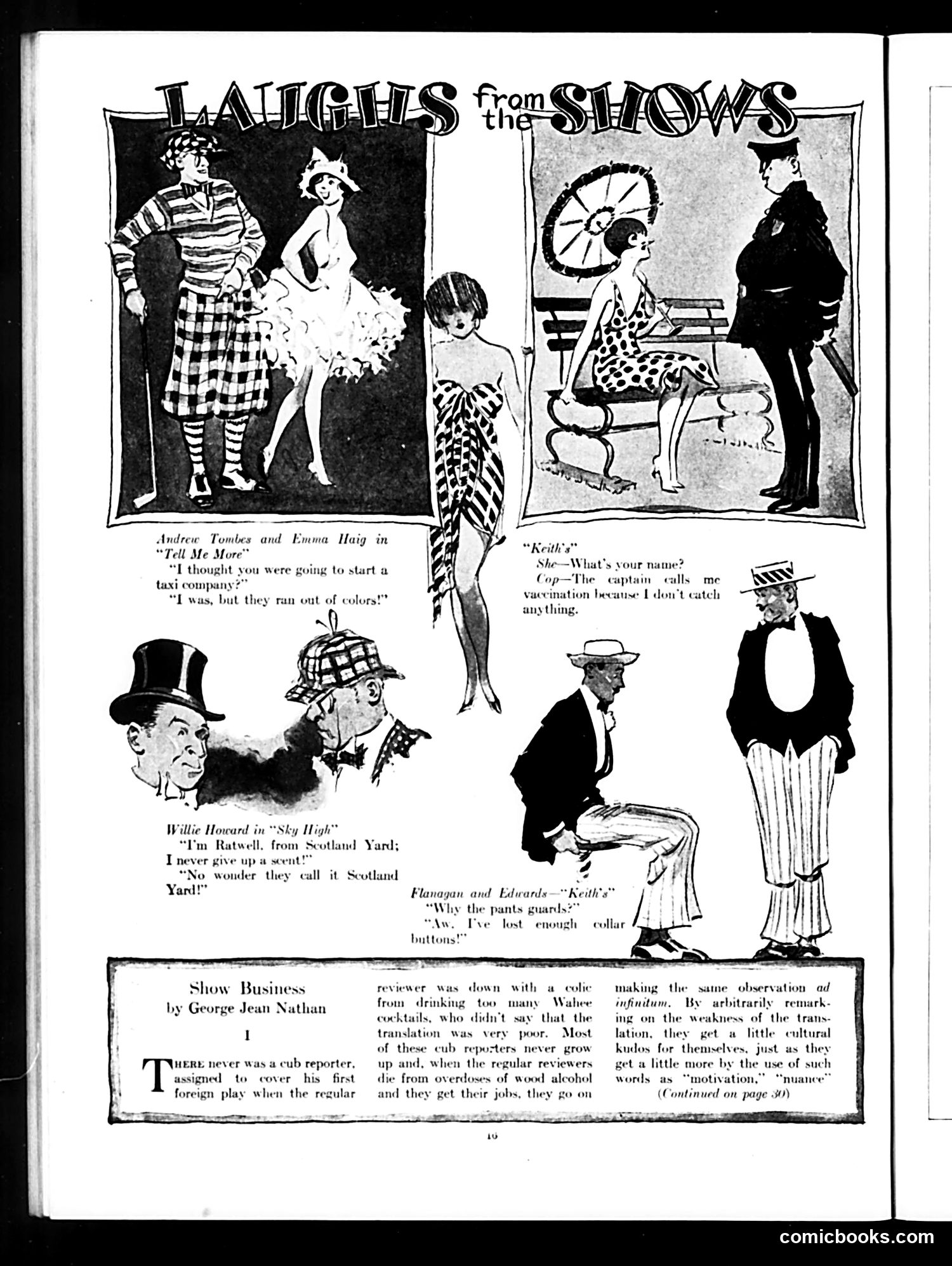
This is a theater humor page featuring jokes from contemporary Broadway productions (circa 1920s, based on style). The top panels show comedic dialogue from shows like "Tell Me More," "Sky High," and "Keith's." The main satirical article by George Jean Nathan targets theater critics—specifically young substitute reviewers filling in for drunk senior critics. Nathan mocks these inexperienced writers for reflexively criticizing foreign play *translations* as "poor" to sound cultured, using pretentious vocabulary like "motivation" and "nuance." He suggests they blindly repeat this criticism without genuine insight, merely parroting established reviewers' habits. The satire captures early-20th-century theater world dynamics: the hierarchical cub-reporter system, alcoholism among established critics, and the performative intellectualism of aspiring cultural commentators who use jargon to fake expertise. It's a pointed critique of critical pretension masquerading as serious analysis.
📄 Transcribed text from this page (OCR, searchable)
Machine-transcribed from the original scan — historical spelling and the odd misread are preserved.
Andrew “Tell Me More” “I though taxi compan) “[ was, but they ran out of colors!” Willie Howard in “Sky High” “Tm Ratwell. from Sc ver give up a scent! ou were going to start a Tombes and Emma Haig in anything. land Yard; » wonder they call it Scotland Show Business by George Jean Nathan 1 HERE never Was a cub reporter, assigned to cover his first foreign play when the regular Flanagan and Edwards “Why the pants guards? “Aw. Pye lost buttons!” enough reviewer Was down with a es from drinking too many Wahee cocktails, who didn’t say that the translation was very poor. Most of these cub reporters ne grow up and, when the regular reviewers die from overdoses of wood alcohol and they get their jobs, they go on She—What's your name? Cop—The vaccination because | don't catch captain ith’s” collar making the same observation ad infinitum, By arbitrarily remark- ing on the weakness of the trans- lation, they get a little cultural kudos for themselves, just as they get a little more by the use of such words as “motivation,” “nuance” (Continued on page 30) comicbooks.com