
Judge, 1923-03-17 · page 10 of 36
Judge — March 17, 1923 — page 10: what you’re looking at
What you’re looking at
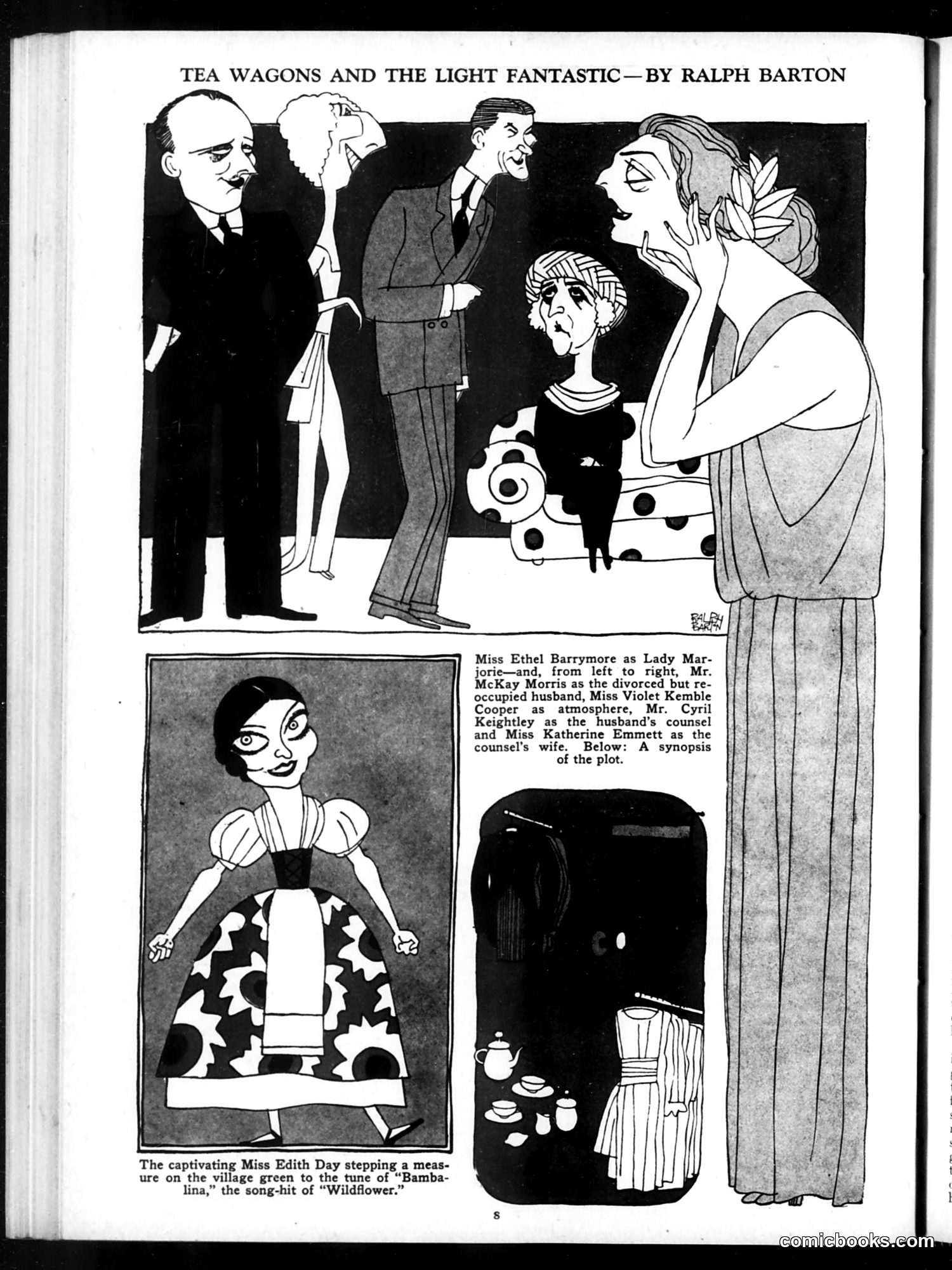
This page features Ralph Barton's theatrical illustration commentary on two Broadway productions. The top cartoon depicts a scene from a play starring prominent actress Ethel Barrymore as "Lady Marjorie," showing domestic drama involving divorce and legal counsel—suggesting marital discord comedy typical of 1920s theater. The lower illustrations promote two musicals: one featuring Edith Day dancing to "Bambalina" from *Wildflower*. The stylized caricature of Day emphasizes exaggerated features common in period illustrations. The satire appears gentle—poking fun at theatrical pretension and romantic entanglement plots rather than attacking specific figures. "Tea wagons" likely references drawing-room comedy conventions of the era. This is essentially theatrical promotion and social commentary wrapped in Judge magazine's signature illustrated format, celebrating Broadway's popular entertainments to contemporary readers.
📄 Transcribed text from this page (OCR, searchable)
Machine-transcribed from the original scan — historical spelling and the odd misread are preserved.
TEA WAGONS AND THE LIGHT FANTASTIC— BY RALPH BARTON Miss Ethel Barrymore as Lady Mar- jorie—and, from left to right, Mr. McKay Morris as the divorced but re- occupied husband, Miss Violet Kemble Cooper as atmosphere, Mr. Cyril Keightley as the husband’s counsel and Miss Katherine Emmett as the counsel’s wife. Below: A synopsis of the plot. The captivating Miss Edith Day stepping a meas- ure on the village green to the tune of “Bamba- lina,” the song-hit of “Wildflower.”