
Judge, 1922-09-30 · page 5 of 36
Judge — September 30, 1922 — page 5: what you’re looking at
What you’re looking at
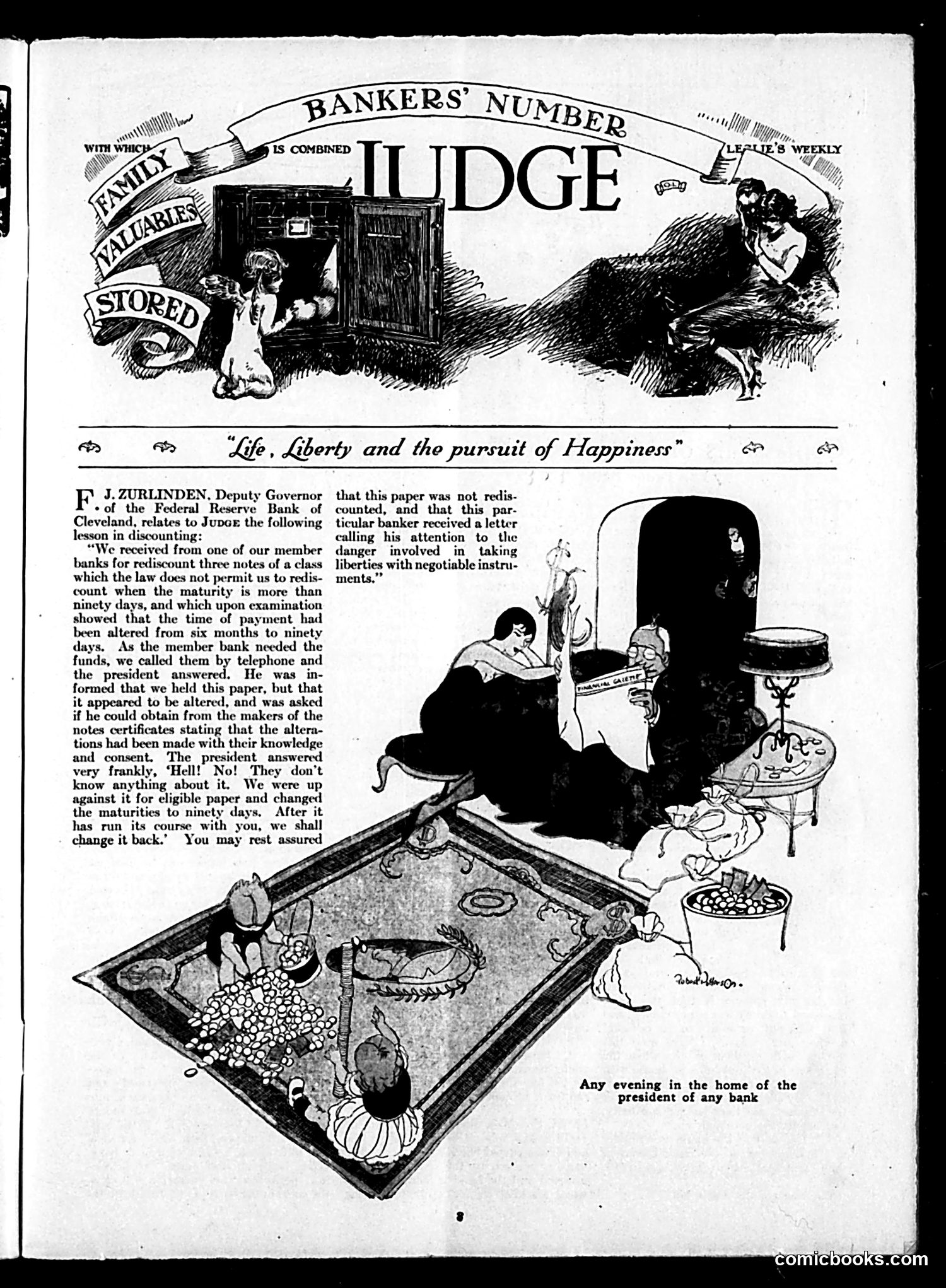
This page satirizes banking practices during the Federal Reserve era. The article features F.J. Zurlinden, Deputy Governor of the Federal Reserve Bank of Cleveland, describing a dispute where a member bank attempted to rediscount notes with altered maturity dates—changing them from six months to ninety days to obtain needed funds. The Federal Reserve refused, and the bank president allegedly claimed ignorance of the alterations. The illustration below captioned "Any evening in the home of the president of any bank" depicts a lavish dinner scene with wealthy figures and abundant food, satirizing bankers' opulent lifestyles. The implication is that despite claiming innocence about fraudulent paper alterations, bankers lived extravagantly—suggesting either dishonesty or gross negligence regarding their institutions' financial practices.
📄 Transcribed text from this page (OCR, searchable)
Machine-transcribed from the original scan — historical spelling and the odd misread are preserved.
With lity Ug Wty, LEZ ce) a Lie, Liberty and the pursuit of Happiness” é J. ZURLINDEN, Deputy Governor eof the Federal Reserve Bank of Cleveland, relates to Juve the following lesson in discounting: “We received from one of our member banks for rediscount three notes of a class which the law does not permit us to redis- count when the maturity is more than ninety days, and which upon examination showed that the time of payment had been altered from six months to ninety days. As the member bank needed the funds, we called them by telephone and the president answered. He was in- formed that we held this paper, but that it appeared to be altered, and was asked if he could obtain from the makers of the notes certificates stating that the altera- tions had been made with their knowledge and consent, The president answered very frankly, ‘Hell! No! They don’t know anything about it. We were up against it for eligible paper and changed the maturities to ninety days. After it has run its course with you, we shall change it back.’ You may rest assured that this paper was not redis- counted, and that this par- ticular banker received a letter calling his attention to the danger involved in taking liberties with negotiable instru- ments,” 3 Any evening in the home of the president of any bank