
Judge, 1922-09-23 · page 16 of 36
Judge — September 23, 1922 — page 16: what you’re looking at
What you’re looking at
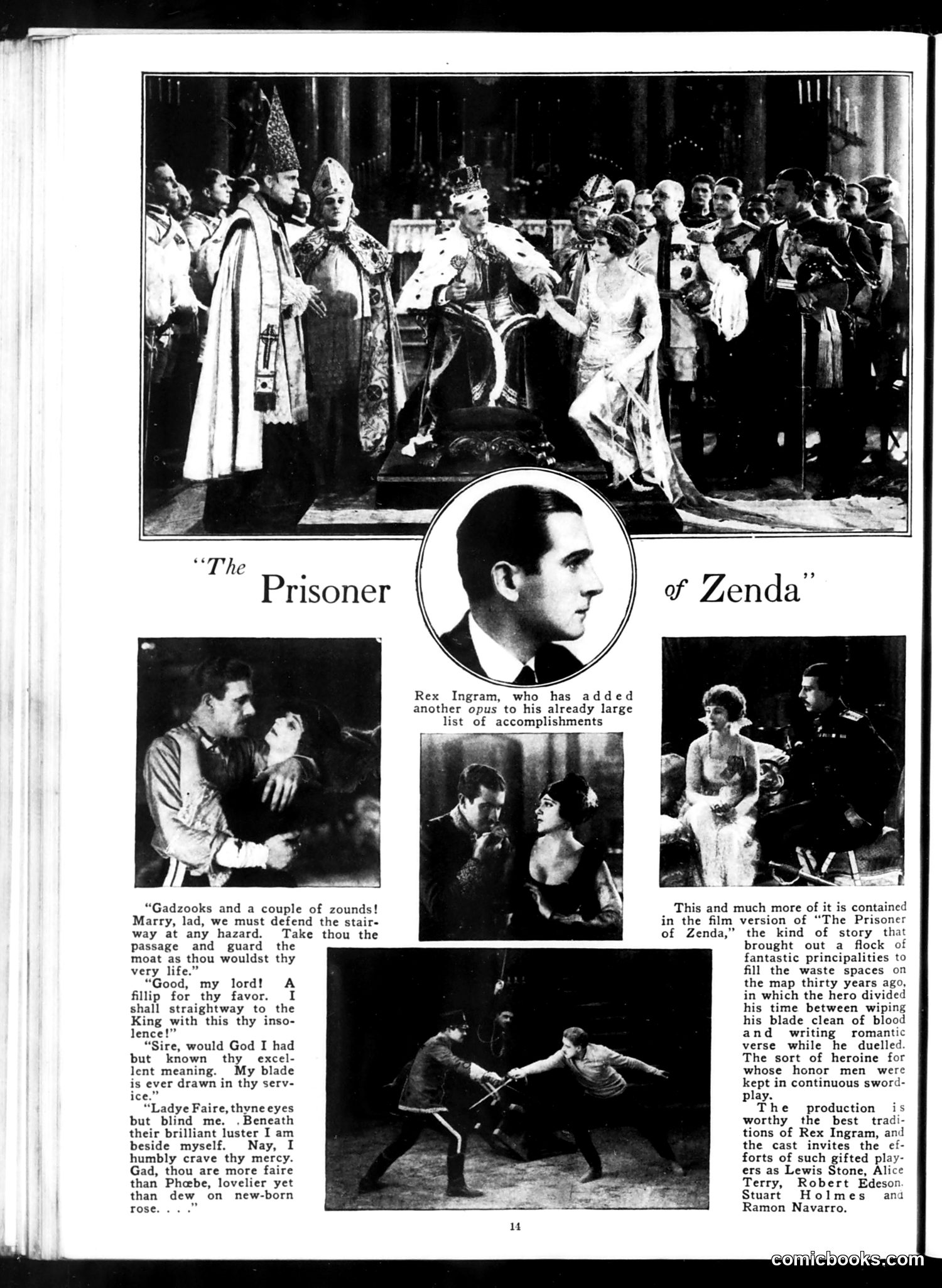
This is a Judge magazine review of director Rex Ingram's film adaptation of *The Prisoner of Zenda*. The page mocks the story's overwrought theatrical conventions—archaic dialogue ("Gadzooks," "thyne eyes"), melodramatic honor codes, and romantic sword-play that dominated swashbuckling adventure tales of the era. The quoted dialogue satirizes the florid, anachronistic language and absurd plot devices typical of such productions: servants pledging loyalty in pseudo-medieval speech, heroes torn between dueling and composing verse. The review notes the film features the "fantastic principalities" and romantic complications characteristic of this genre, which apparently still appealed thirty years prior. The cast—including Lewis Stone and Ramon Navarro—represents prestigious talent the reviewer credits to Ingram's directorial reputation. This appears straightforward entertainment criticism rather than political satire, mocking the genre's conventions for modern (1920s) audiences.
📄 Transcribed text from this page (OCR, searchable)
Machine-transcribed from the original scan — historical spelling and the odd misread are preserved.
“The Prisoner Rex Ingram, who has added another opus to his already large list of accomplishments This and much more of it is contained in the film version of “The Prisoner of Zenda,” the kind of story that “Gadzooks and a couple of zounds! Marry, lad, we must defend the stair- way at any hazard. Take thou the Passage and guard the moat as thou wouldst thy very life.” “Good, my lord! A fillip for thy favor. I shall straightway to the King with this thy inso- lence!” “Sire, would God I had but known thy excel- lent meaning. My blade is ever drawn in thy serv- ice.” “Ladye Faire, thyneeyes but blind me. . Beneath their brilliant luster I am beside myself. Nay, I humbly crave thy mercy. Gad, thou are more faire than Phebe, lovelier yet than dew on new-born rose... .” brought out a flock of fantastic principalities to fill the waste spaces on the map thirty years ago, in which the hero divided his time between wiping his blade clean of blood and writing romantic verse while he duelled. The sort of heroine for whose honor men were kept in continuous sword- play. The production is worthy the best tradi- tions of Rex Ingram, and the cast invites the ef- forts of such gifted play- ers as Lewis Stone, Alice Terry, Robert Edeson Stuart Holmes and Ramon Navarro.