
Judge, 1922-09-16 · page 14 of 36
Judge — September 16, 1922 — page 14: what you’re looking at
What you’re looking at
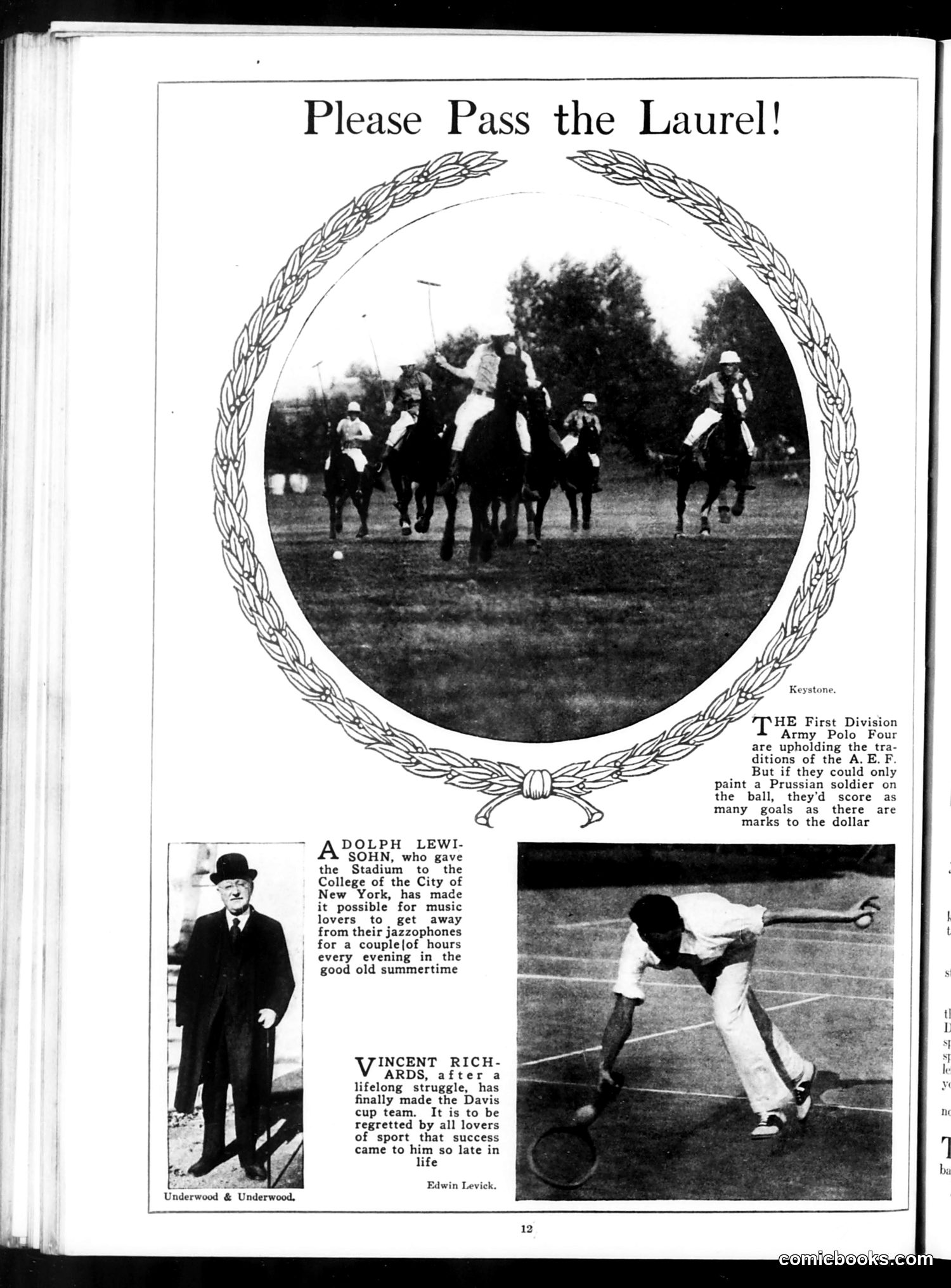
This page celebrates sporting and cultural achievements of wealthy American figures. The main image shows Army polo players—a prestigious sport associated with military elites and the wealthy. The caption jokes that if they could paint a "Prussian soldier" on the ball, they'd score prolifically, a reference to post-WWI anti-German sentiment still prevalent in the 1920s. The sidebar features **Adolph Lewisohn**, a wealthy philanthropist who donated a stadium to City College (presented as a cultural patron), and **Vincent Richards**, a tennis player who finally achieved the prestigious Davis Cup team despite a lifetime of effort. The satire gently mocks how success and recognition come easily to the privileged (Army polo players) while deserving athletes like Richards struggle for years. The page reflects Jazz Age anxieties about leisure, elitism, and American sporting achievement during the prosperous 1920s.
📄 Transcribed text from this page (OCR, searchable)
Machine-transcribed from the original scan — historical spelling and the odd misread are preserved.
2 eae Underwood & Underwood, DOLPH LEWI- SOHN, who gave the Stadium to the College of the City of New York, has made it possible for music lovers to get away from their jazzophones for a couplejof hours every evening in the good old summertime INCENT RICH- ARDS, after a lifelong struggle, has finally made the Davis cup team. It is to be regretted by all lovers of sport that success came to him so late in life Edwin Levick. ME I HE First Division Army Polo Four are upholding the tra- ditions of the A. E. F. But if they could only paint a Prussian soldier on the ball, they'd score as many goals as there are marks to the dollar