
Judge, 1922-06-10 · page 17 of 36
Judge — June 10, 1922 — page 17: what you’re looking at
What you’re looking at
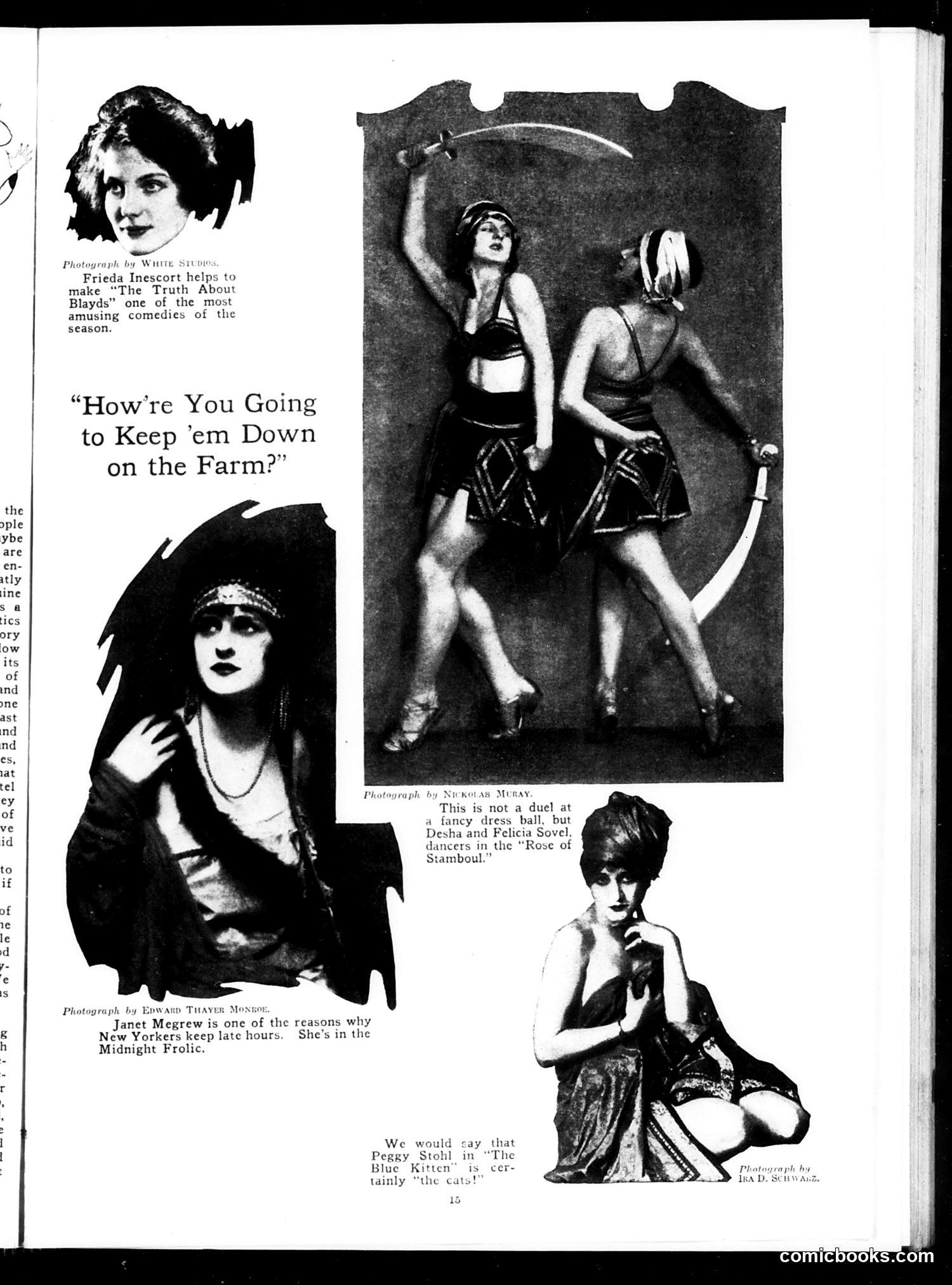
This page features theatrical publicity photographs and promotes Broadway shows of the era. The title "How're You Going to Keep 'em Down on the Farm?" references a famous 1919 song expressing concern that soldiers returning from WWI wouldn't settle for rural life after urban excitement. The satire works by applying this anxiety to actresses: the photographs showcase glamorous performers in popular stage productions ("The Truth About Blayds," "Rose of Stamboul," "Midnight Frolic," "The Blue Kitten"), suggesting they represent the alluring urban entertainment distracting young people—particularly women—from traditional domestic/rural life. The "cat's" reference uses period slang meaning "attractive" or "excellent." This is essentially entertainment advertising dressed as social commentary, reflecting Jazz Age concerns about modernity, urbanization, and changing social norms.
📄 Transcribed text from this page (OCR, searchable)
Machine-transcribed from the original scan — historical spelling and the odd misread are preserved.
—_— Photograph by Wurte Stvpi Frieda Inescort helps to make “The Truth About Blayds” one of the most amusing comedies of the season. “How're You Going to Keep ‘em Down on the Farm?” Photograph by Nickotas Muray This is not a duel at a fancy dress ball, but Desha and Felicia Sovel, dancers in the “Rose of Stamboul.” Photograph by Epwanp THAYER Moxnor Janet Megrew is one of the reasons why New Yorkers keep late hours. She’s in the Midnight Frolic. We would say that Peggy Stohl in “The Blue Kitten” is cer- tainly “the cats!” Photograph by IkA D. SCHWAuz, 15