
Judge, 1922-04-29 · page 11 of 36
Judge — April 29, 1922 — page 11: what you’re looking at
What you’re looking at
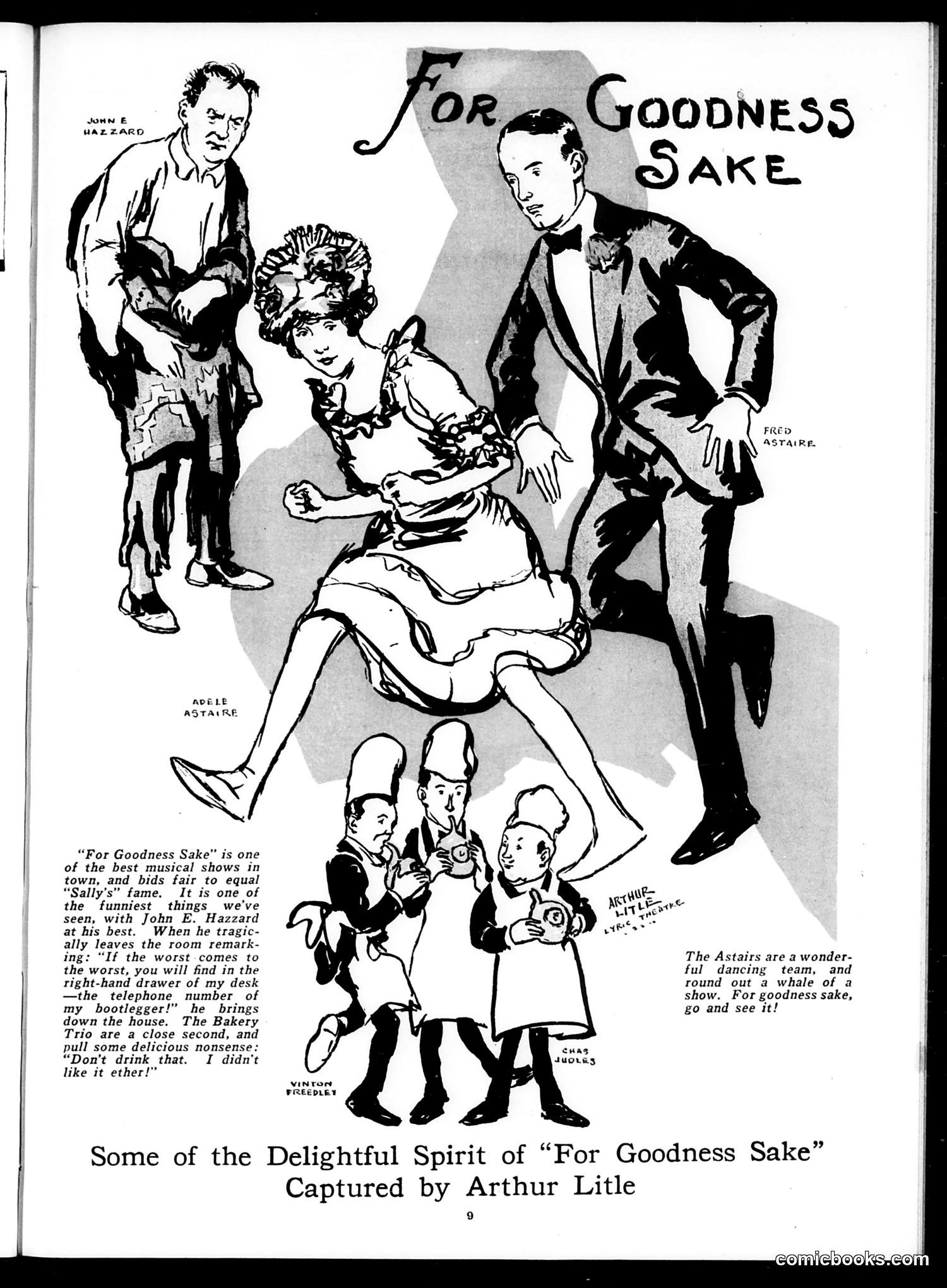
This page promotes a theatrical musical comedy called *"For Goodness Sake,"* featuring the celebrated Astaire siblings (Fred and Adele). The illustrated vignettes, drawn by Arthur Little, capture comedic moments from the show. The humor references Prohibition-era America: one scene depicts a character joking about keeping his "bootlegger's" phone number in a desk drawer—a topical joke given alcohol's illegality at the time. Another bit involves characters debating whether to drink something questionable, reflecting contemporary anxieties about illicit alcohol quality and safety. The review emphasizes the Astaires' dancing prowess and praises performer John E. Hazzard's comedic timing. The "Bakery Trio" provides additional comic relief with nonsensical banter. The cartoons capture vaudeville-style theatrical humor: physical comedy, absurdist dialogue, and social commentary woven into entertainment. This represents typical Judge magazine content—using theatrical reviews as vehicles for satire and humor commentary on contemporary American life.
📄 Transcribed text from this page (OCR, searchable)
Machine-transcribed from the original scan — historical spelling and the odd misread are preserved.
FRED ASTAIRE. ADELE ASTAIRE “For Goodness Sake” is one of the best musical shows in town, and bids fair to equal “Sally's” fame. It is one of WWE the funniest things we've Se cin seen, with John E. Hazzard be: pi er = at his best. When he tragic- ally leaves the room remark- ing: “If the worst comes to the worst, you will find in the right-hand drawer of my desk —the telephone number of my bootlegger!” he brings down the house. The Bakery Trio are a close second, and pull some delicious nonsense: “Don't drink that. I didn't like it ether!” The Astairs are a wonder- ful dancing team, and round out a whale of a show. For goodness sake, go and see it! viIntTod FREEDLED Some of the Delightful Spirit of “For Goodness Sake” Captured by Arthur Litle