
Judge, 1922-02-18 · page 11 of 36
Judge — February 18, 1922 — page 11: what you’re looking at
What you’re looking at
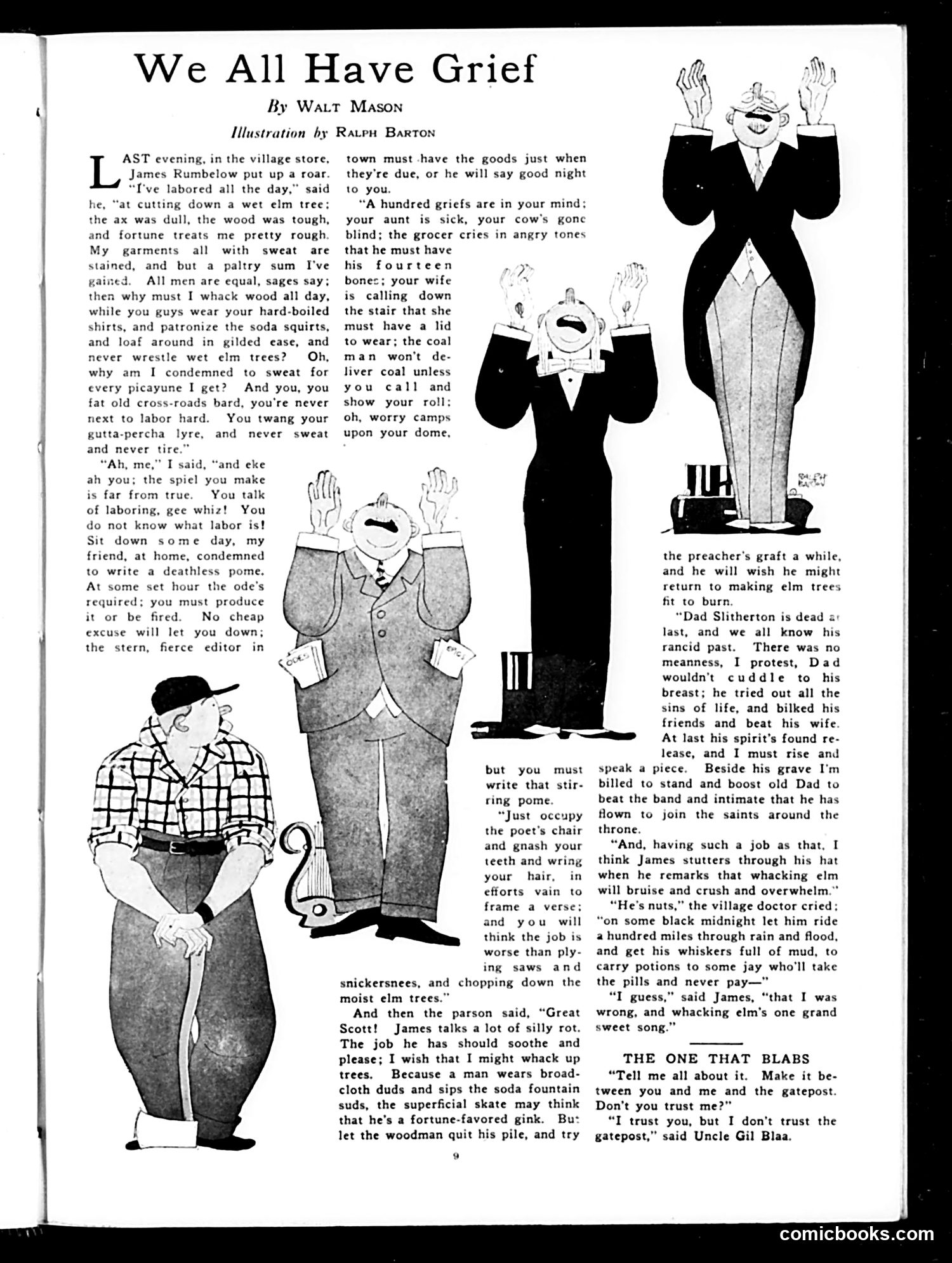
This is a humorous poem by Walt Mason arguing that **everyone has legitimate grievances**, regardless of social class or profession. James Rumbelow, a woodcutter, complains about his hard labor while others enjoy leisure. The narrator (a poet) counters that writing poetry under editorial deadlines is equally torturous. A parson then admits that even his cushy job—giving sermons at funerals for disreputable people like "Dad Slitherton"—is burdensome. Finally, a village doctor describes exhausting midnight medical calls through bad weather. The satire's point: **different occupations carry different hardships**. There's no hierarchy of suffering. The working-class woodcutter shouldn't envy white-collar professionals; they all face genuine stress. The accompanying illustrations by Ralph Barton show exaggerated, distressed figures to emphasize this universal condition. The brief joke at the end ("The One That Blabs") is separate, about Uncle Gil Blaa distrusting the gatepost—suggesting gossip spreads through even unlikely channels.
📄 Transcribed text from this page (OCR, searchable)
Machine-transcribed from the original scan — historical spelling and the odd misread are preserved.
<2 We All Have Grief By Watt Mason Illustration by Rave Barton AST evening, in the village store, James Rumbelow put up a roar. “I've labored all the day,” said he, “at cutting down a wet elm tree; the ax was dull, the wood was tough, and fortune treats me pretty rough. My garments all with sweat are stained, and but a paltry sum I've gained. All men are equal, sages say; then why must I whack wood all day, while you guys wear your hard-boiled shirts, and patronize the soda squirts, and loaf around in gilded ease, and never wrestle wet elm trees? Oh, why am I condemned to sweat for every picayune I get? And you, you fat old cross-roads bard, you're never next to labor hard. You twang your gutta-percha lyre, and never sweat and never tire.” “Ah, me,” I said, “and eke ah you; the spiel you make is far from true. You talk of laboring, gee whiz! You do not know what labor is! Sit down some day, my friend, at home, condemned to write a deathless pome. At some set hour the ode’s required; you must produce it or be fired No cheap you down; in excuse will let the stern, fierce editor town must have the goods just when they're due, or he will say good night to you. “A hundred griefs are in your mind; your aunt is sick, your cow's gone blind; the grocer cries in angry tones that he must have his fourteen bones; your wife is calling down the stair that she must have a lid to wear; the coal man won't de- liver coal unless you call and show your roll; oh, worry camps upon your dome, —_ but you must write that stir- ring pome. “Just occupy the poet's chair and gnash your teeth and wring your hair, in efforts vain to frame a verse; and you will think the job is worse than ply- ing saws and snickersnees, and chopping down the moist elm trees.” And then the parson said, “Great Scott! James talks a lot of silly rot. The job he has should soothe and please; I wish that I might whack up trees. Because a man wears broad- cloth duds and sips the soda fountain suds, the superficial skate may think that he’s a fortune-favored gink. Bu: let the woodman quit his pile, and try the preacher's graft a while, and he will wish he might return to making elm trees fit to burn, “Dad Slitherton is dead a: last, and we all know his rancid past. There was no meanness, I protest, Dad wouldn't cuddle to his breast; he tried out all the sins of life, and bilked his friends and beat his wife. At last his spirit’s found re- lease, and I must rise and speak a piece. Beside his grave I'm billed to stand and boost old Dad to beat the band and intimate that he has flown to join the saints around the throne. “And, having such a job as that, I think James stutters through his hat when he remarks that whacking elm will bruise and crush and overwhelm.” “He's nuts,” the village doctor cried; “on some black midnight let him ride a hundred miles through rain and flood, and get his whiskers full of mud, to carry potions to some jay who'll take the pills and never pay—” “I guess,” said James, “that I was wrong, and whacking elm’s one grand sweet song.” THE ONE THAT BLABS “Tell me all about it. Make it be- tween you and me and the gatepost. Don't you trust me?” “I trust you, but I don't trust the gatepost,” said Uncle Gil Blaa. comicbooks.com