
Judge, 1921-09-17 · page 13 of 36
Judge — September 17, 1921 — page 13: what you’re looking at
What you’re looking at
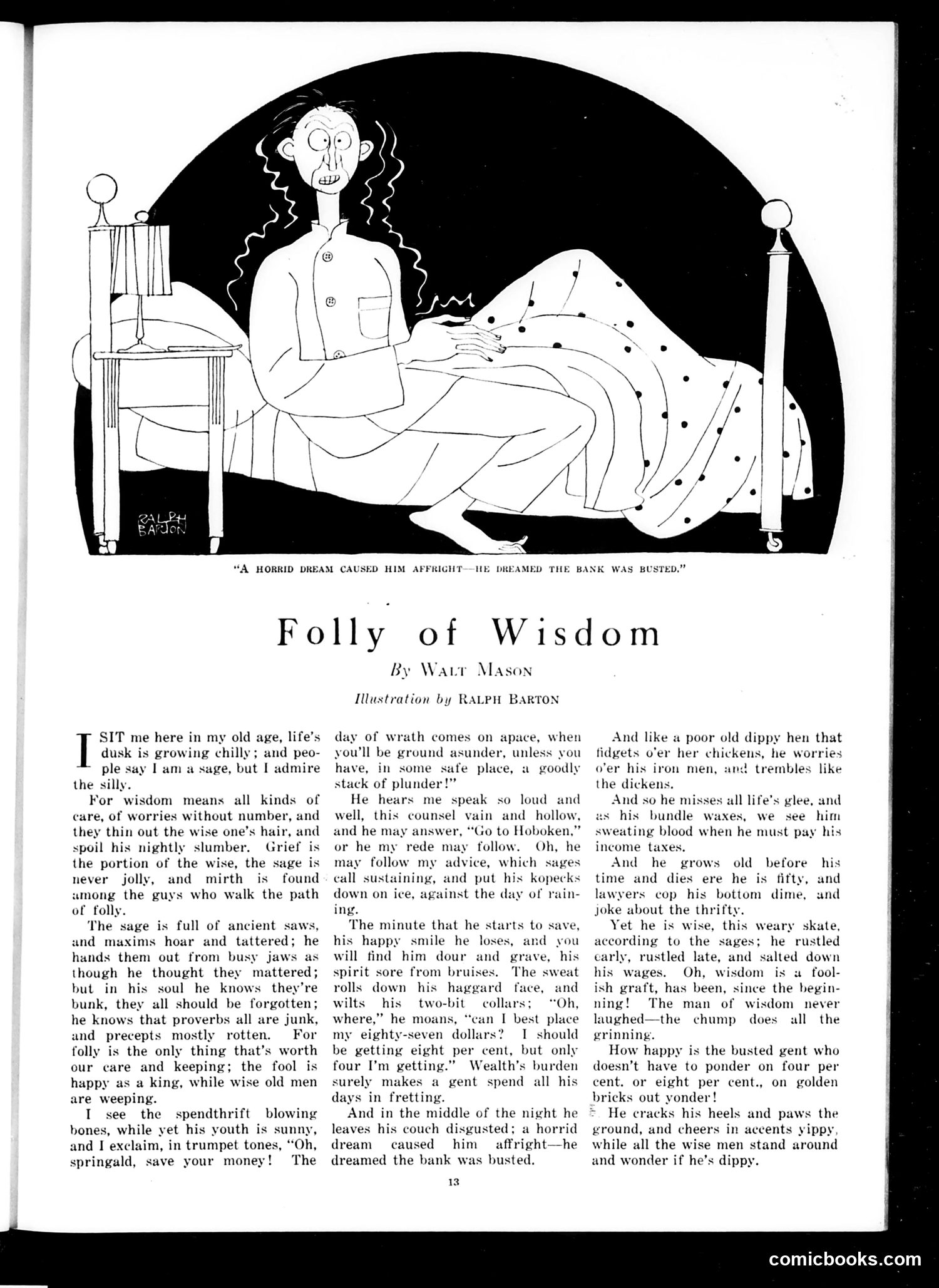
This illustrated essay satirizes conventional financial wisdom. The cartoon depicts a man experiencing a nightmare about bank failure—visualizing the anxiety that comes with trying to save money responsibly. Mason's essay argues that pursuing financial security through careful saving actually destroys happiness. The "wise" man who saves obsessively worries constantly about interest rates, taxes, and bank failures, becomes haggard and miserable, and dies without enjoying life. Meanwhile, the "fool" who spends freely lives happily, cracks jokes, and enjoys himself. The satire mocks the era's conventional morality around thrift and self-denial. Mason inverses the typical wisdom: he claims the carefree spender is actually wiser because he experiences joy, while the prudent saver becomes a neurotic wreck—"wise" only by society's hollow standards. This reflects early 20th-century skepticism toward the Protestant work ethic and delayed gratification ideology.
📄 Transcribed text from this page (OCR, searchable)
Machine-transcribed from the original scan — historical spelling and the odd misread are preserved.
“A HORRID DREAM CAUSED HIM AFFRIGHT HE DREAMED THE BANK WAS BUSTED,” Folly of Wisdom SIT me here in my old age, life’s dusk is growing chilly ; and peo- I ple say I am a sage, but I admire the silly. For wisdom means all kinds of care, of worries without number, and they thin out the wise one’s hair, and spoil his nightly slumber. Grief is the portion of the wise, the sage is never jolly, and mirth is found umong the guys who walk the path of folly. The sage is full of ancient saws, and maxims hoar and tattered; he hands them out from busy jaws as though he thought they mattered; but in his soul he knows they’re bunk, they all should be forgotten; he knows that proverbs all are junk, and precepts mostly rotten. For folly is the only thing that’s worth our care and keeping; the fool is happy as a king, while wise old men are weeping. I see the spendthrift blowing bones, while yet his youth is sunny, and I exclaim, in trumpet tones, “Oh, springald, save your money! The By Wavy Mason Illustration by RALPH BARTON day of wrath comes on apace, when you'll be ground asunder, unless you have, in some safe place, a goodly stack of plunder!” He hears me speak so loud and well, this counsel vain and hollow, and he may answer, “Go to Hoboken,” or he my rede may follow. Oh, he may follow my advice, which sages call sustaining, and put his kopecks down on ice, against the day of rain- ing. The minute that he starts to save, his happy smile he loses, and you will find him dour and grave, his spirit sore from bruises. The sweat rolls down his haggard and wilts his two-bit collars; “Oh, where,” he moans, “can I best place my eighty-seven dollars? I should be getting eight per cent, but only four I’m getting.” Wealth’s burden surely makes a gent spend all his days in fretting. And in the middle of the night he leaves his couch disgusted; a horrid dream caused him affright—he dreamed the bank was busted. face, 13 And like a poor old dippy hen that fidgets o'er her chickens, he worries o'er his iron men, and trembles like the dickens. And so he misses all life’s glee, and as his bundle w: we see him sweating blood when he must pay his income taxes. And he grows his time and dies ere he is fit and lawyers cop his bottom dime, and joke about the thrifty. Yet he is wise, this weary skate, according to the sages; he rustled carly, rustled late, and salted down his wages. Oh, wisdom fool- ish graft, has been, since the begin- ning! The man of wisdom never laughed—the chump does all the grinning. How happy is the busted gent who doesn’t have to ponder on four per cent. or eight per cent., on golden bricks out yonder! He cracks his heels and paws the ground, and cheers in accents yippy while all the wise men stand around and wonder if he’s dippy. old before is a comicbooks.com