
Judge, 1920-08-21 · page 7 of 36
Judge — August 21, 1920 — page 7: what you’re looking at
What you’re looking at
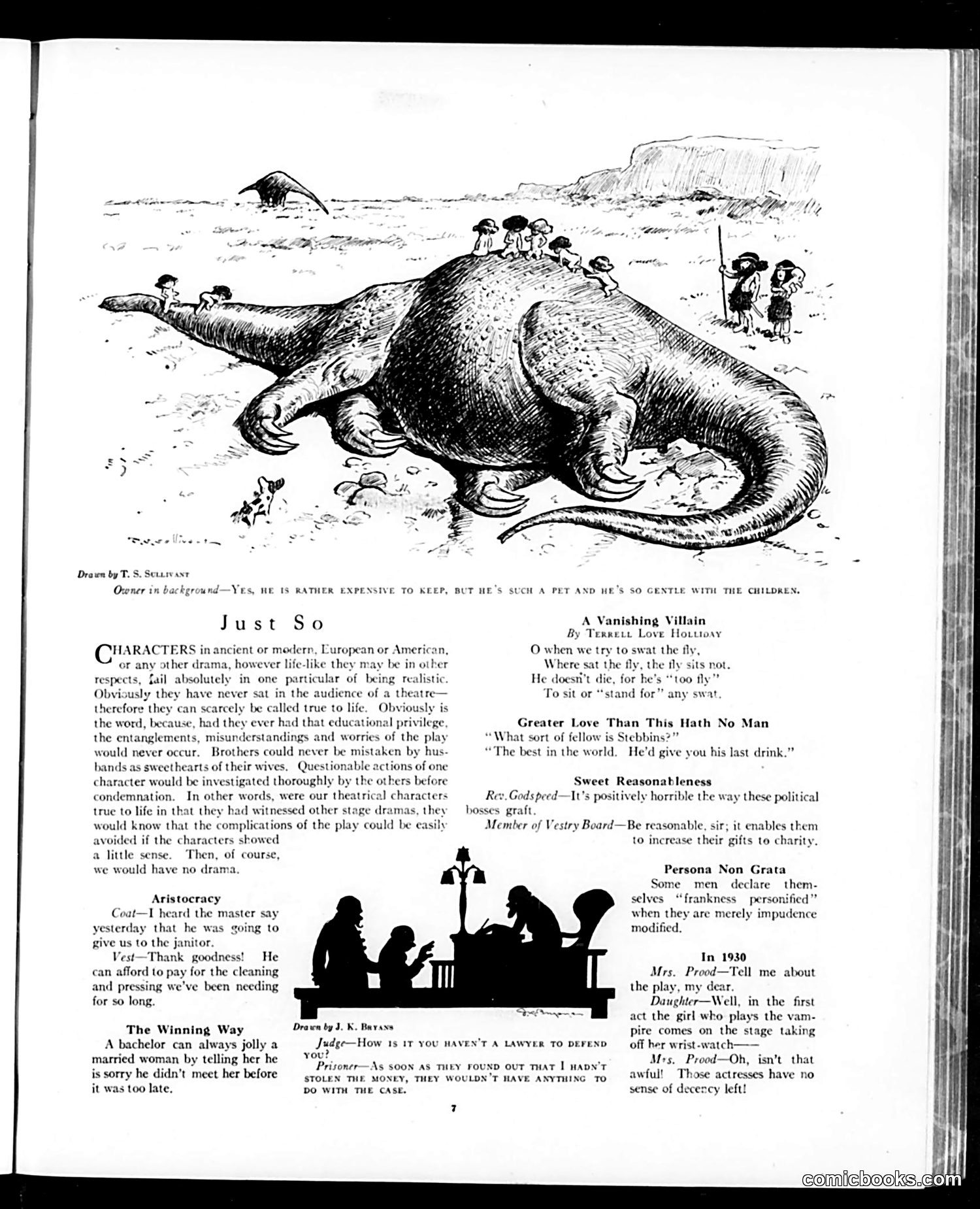
This page from Judge magazine contains multiple satirical pieces critiquing social hypocrisy and theater conventions. The main cartoon depicts a massive dinosaur (likely meant as an exotic pet) with children climbing on it. The caption establishes ironic class commentary: a wealthy owner keeps this expensive animal because he's "gentle with the children"—suggesting the absurd priorities of the wealthy and their naive assumptions about dangerous things. The text pieces mock theatrical realism (characters lacking common sense), class pretension (servants discussing master's finances), and political corruption ("Sweet Reasonableness" joke about grafting politicians using bribes to increase charitable donations—a satirical jab at how corruption gets rationalized). The 1930 piece ridicules modern theater audiences' selective morality: they object to an actress removing her watch onstage as indecent, while apparently accepting vampire roles. It's commentary on contemporary prudishness and contradictory social values. Overall, the page targets theatrical conventions, class absurdities, and hypocritical social standards of the era.
📄 Transcribed text from this page (OCR, searchable)
Machine-transcribed from the original scan — historical spelling and the odd misread are preserved.
Drawn by T. S. Seutiv ast Ovoner in backgrownd—Ves, WE 1S RATHER EXPENSIVE So HARACTERS in ancient or modern, European or American, any other drama, however life-like they may be in other respects, fail absolutely in one particular of being realistic. Obviously they have never sat in the audience of a t therefore they can scarcely be called true to life. Obv y the word, because, had they ever had that educational privilege. the entanglements, misunderstandings and worries of the play would never occur. Brothers could never be mistaken by hus- bands as sweethearts of their wives. Questionable actions of one character would be investigated thoroughly by the others before condemnation. In other words, were our theatrical characters true to life in that they had witnessed other stage dramas, they would know that the complications of the play could be easily avoided if the characters showed a little sense. Then, of course, we would have no drama. Aristocracy Coat—I heard the master say yesterday that he was goi give us to the janitor. Vest ank goodness! He can afford to pay for the cleaning and pressing we've been needing for so long. The Winning Way Draven by J. K. Bavass A bachelor can always jolly a married woman by telling her he is sorry he didn’t meet her before it was too late. you? Prisoner DO WITH THE CASE. Judge—How 15 17 you HAVEN'T A LAWYER TO DEFEND As SOON AS THEY FOUND ouT THAT I HADN'T STOLEN THE MONEY, THEY WOULDN'T HAVE ANYTHING TO TO KEEP, BUT HE'S SUCH A PET AND HE'S SO GENTLE WITH THE CHILDREN, A Vanishing Villain By Terrect Love Hotttoay O when we try to swat the fly, Where sat the fly, the fly sits not. He doesn’t die, for he’s “too fly” To sit or “stand for” any swat Greater Love Than This Hath No Man “What sort of fellow is Stebbins?” “The best in the world, He'd give you his last drink.” Sweet Reasonableness 2. Gods peed—It’s positively horrible the way these political bosses graft Member of Vestry Board—Be reasonable, sir; it enables them to increase their gifts to charity. Persona Non Grata Some men declare them- selves “frankness personified” when they are merely impudence modified. In 1930 Mrs. Prood—Tell me about the play, my dear. Daughter—Well, in the first ct the girl who plays the vam- pire comes on the stage taking off her wrist -watch—— Mrs, Prood—Oh, isn’t that awful! Those actresses have no sense of decency left! comichooks.co