
Judge, 1919-11-29 · page 27 of 36
Judge — November 29, 1919 — page 27: what you’re looking at
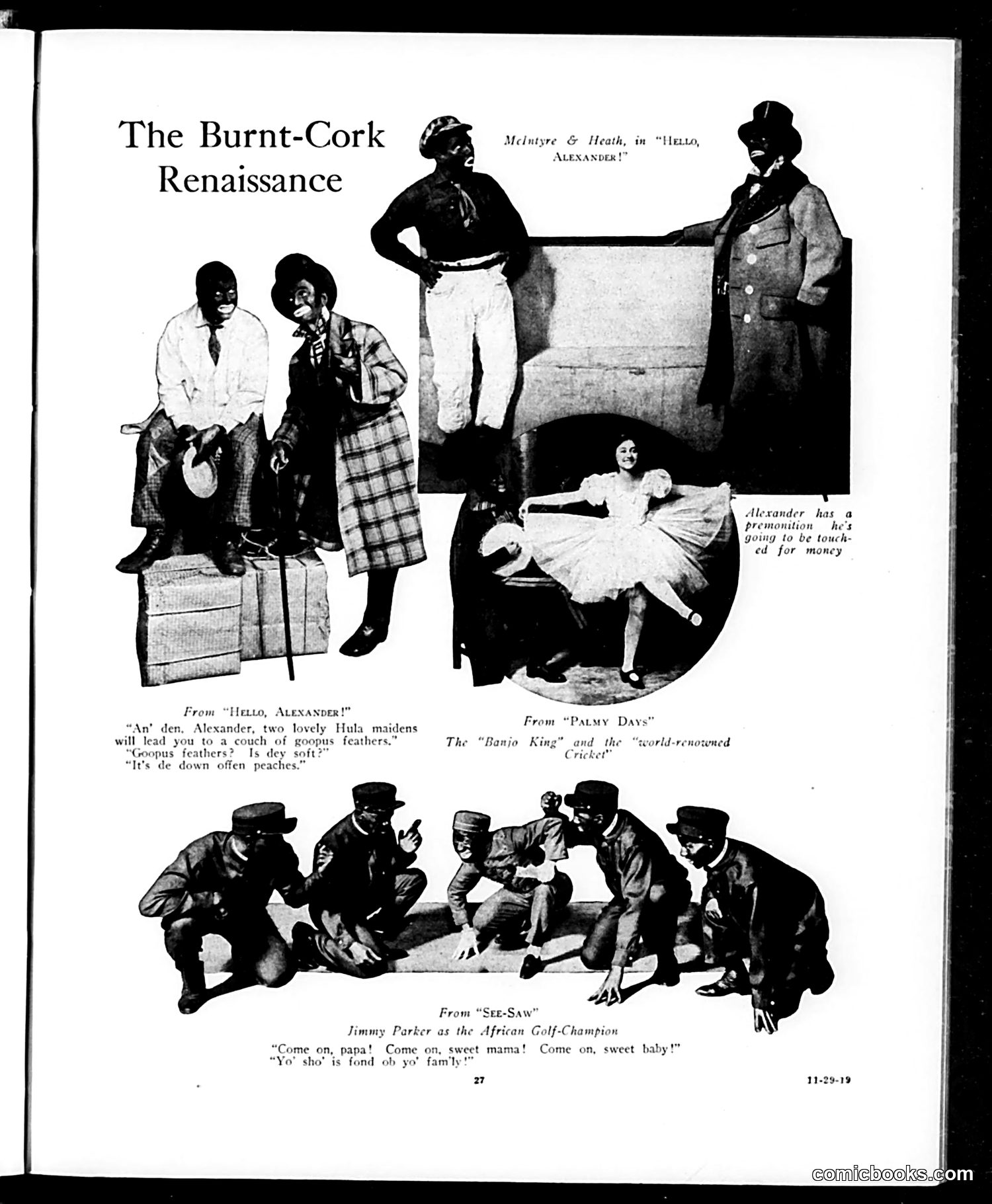
What you’re looking at
This page satirizes white entertainers performing in blackface—a racist practice common in early 20th-century American theater. The title mocks a supposed "renaissance" of such performances. Four scenes show characters from different theatrical productions, all featuring performers in blackface caricature portraying Black people with exaggerated dialect and stereotypical behavior: Hawaiian "hula maidens," a banjo player, a golf champion, and family scenes using phonetic dialect ("Yo' sho' is fond ob yo' fam'ly"). The satire appears to criticize both the prevalence of blackface entertainment and its stereotypical depictions—suggesting this was a degrading trend dominating American popular theater circa 1919. The "renaissance" reference is ironic, implying such performances represented cultural regression rather than progress. This represents Judge magazine's commentary on entertainment industry racism of the era.
📄 Transcribed text from this page (OCR, searchable)
Machine-transcribed from the original scan — historical spelling and the odd misread are preserved.
The Burnt-Cork a Metre & Heath, in “Mero Renaissance Alexander has a premonition — he's going to be touch- ed for money From “Hetto, ALeEXanper!” “An’ den, Alexander, two lovely Hula maidens From “Patuy Das feathers. © “Banjo King” and the “world-renowned From “See-Saw" Jimmy Parker as the African Golf-Champion “Come on, papa! Come on, sweet mama! Come on, sweet baby!" “Yo’ sho’ is fond ob yo’ fam'ly!” 27 11-29-19 comichooks.celu)