
Judge, 1919-11-08 · page 27 of 36
Judge — November 8, 1919 — page 27: what you’re looking at
What you’re looking at
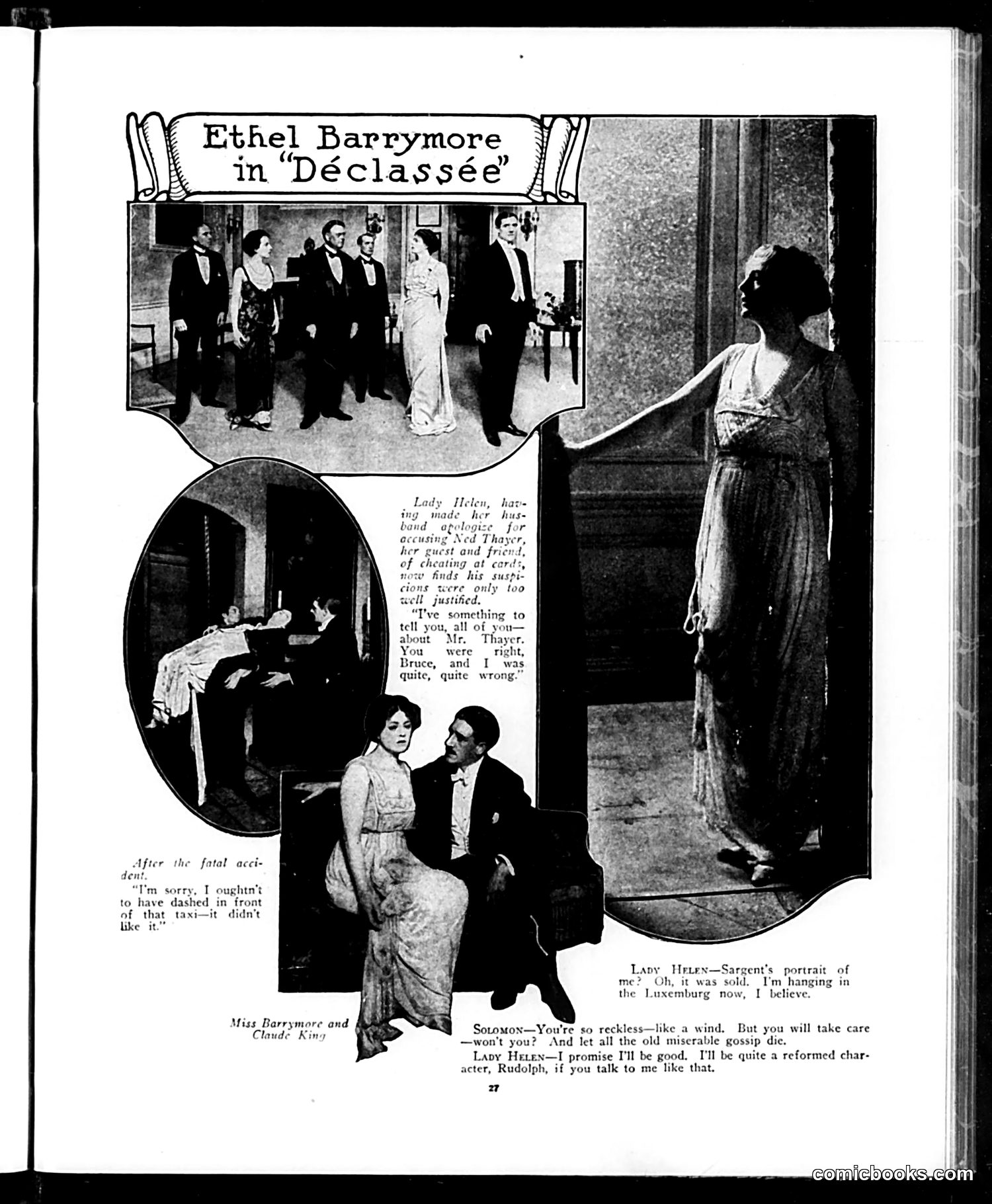
This page showcases scenes from Ethel Barrymore's theatrical production "Déclassée," a play about social scandal and redemption. The multiple scenes depict dramatic moments: a formal social gathering, a confrontation involving accusations of infidelity (the "Ned Thayer" card-cheating scandal), and reconciliation dialogue. The narrative arc shows a character named Solomon warning Lady Helen about recklessness and gossip, while she promises reform. Another scene features Miss Barrymore with Claude King, while a separate moment captures her alone, apparently distressed. The satire reflects early 20th-century theatrical melodrama—specifically the "fallen woman" trope common in period plays, where characters face social ruin through moral missteps but seek redemption. Judge's coverage treats this theatrical morality tale with gentle mockery typical of the magazine's entertainment commentary.
📄 Transcribed text from this page (OCR, searchable)
Machine-transcribed from the original scan — historical spelling and the odd misread are preserved.
Ethel Barrymore in “Déclassée finds his sus} were only too well justified, “T've something to tell you, all of yc about Mr. You — were Bruce, and Iw: quite, quite wrong.” After the dent: “I'm sorry, T oughtn’t to have dashed in front of that taxi—it didn't like it.” fatal acci- Miss Barrymore and Claude Kiny acter, Rudolph, if you talk to me like that. a Lapy Hrtex—Sargent’s portrait of Oh, it was sold. > Luxemburg now, ‘ou're so reckless—like a wind, But you will take care And let all the old miserable gossip die. —I promise I'll be good. I'll be quite a reformed char-