
Judge, 1919-10-04 · page 7 of 36
Judge — October 4, 1919 — page 7: what you’re looking at
What you’re looking at
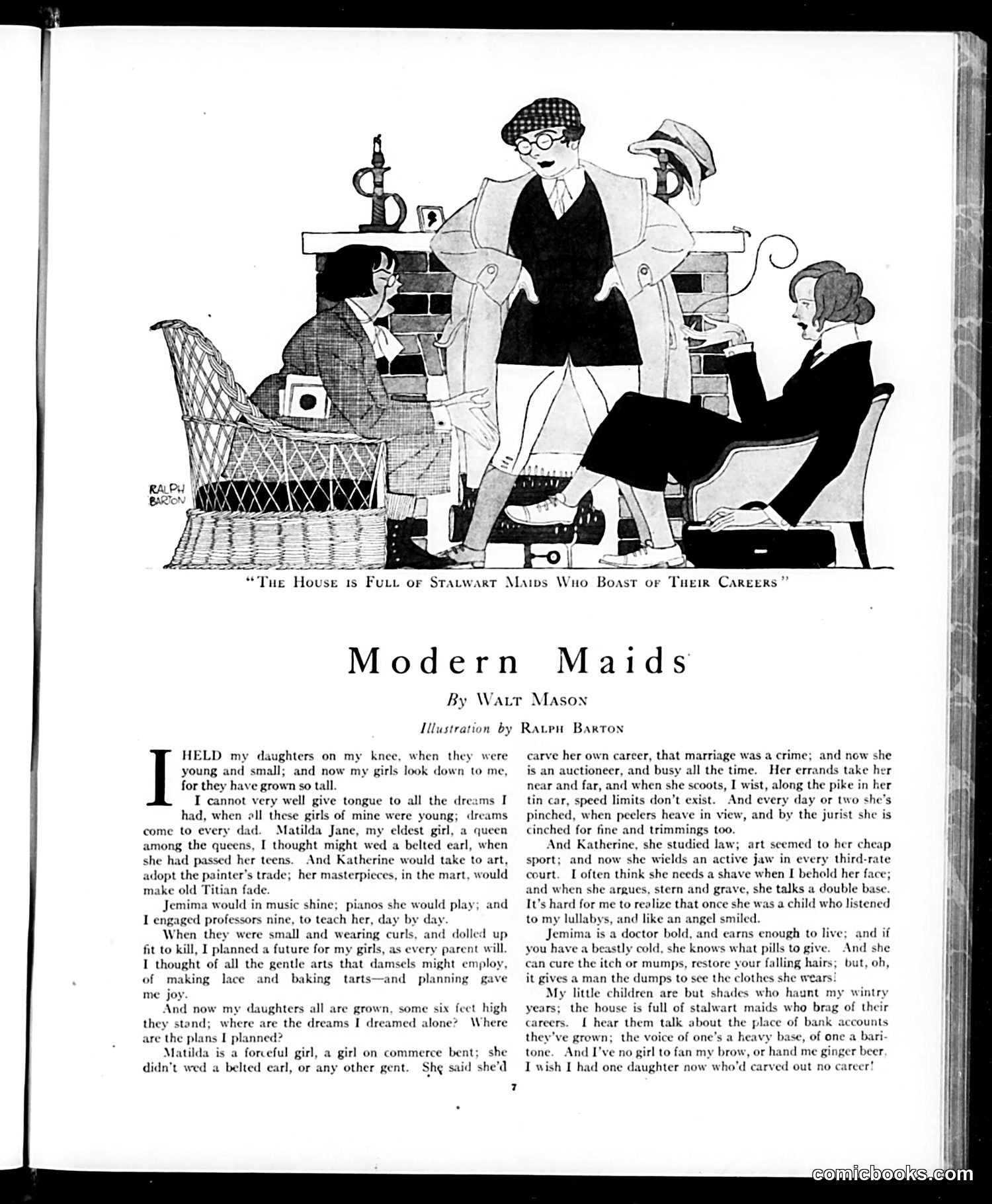
This 1920s-era satirical piece lambastes the "New Woman" phenomenon. The narrator, a nostalgic father, mourns his daughters' rejection of traditional domesticity. Instead of marrying well or becoming refined artists, they've pursued careers: Matilda is an aggressive auctioneer who speeds in a car and gets arrested; Katherine studies law and argues in court (the joke implies she's mannish); Jemima, a doctor, wears unfeminine clothing. The satire mocks both the daughters' independence and the father's outdated expectations. The irony: he once dreamed his daughters would excel—but only in "feminine" arts (music, painting, needlework). Now that they've achieved genuine professional success and self-sufficiency, he's dismayed they won't fan his brow or serve him. The cartoon lampoons anxieties about female emancipation while simultaneously exposing how limited—and servile—previous generations' "dreams" for women truly were.
📄 Transcribed text from this page (OCR, searchable)
Machine-transcribed from the original scan — historical spelling and the odd misread are preserved.
| ] “Tue House 1s Futt or Starwart Maiws Wuo Boast or Tueir Careers’ Modern By Watt Maids Mason Illustration by Raven Barton HELD my daughters on my knee, when they were young and small; and now my girls look down to me, for they have grown so tall. I cannot very well give tongue to all the dreams I had, when all these girls of mine were young; dreams come to every dad. Matilda Jane, my eldest girl, a queen among the queens, I thought might wed a belted earl, when she had passed her teens. And Katherine would take to art, adopt the painter’s trade; her masterpieces, in the mart, would make old Titian fade. Jemima would in music shine; pianos she would play; and I engaged professors nine, to teach her, day by day. When they were small and wearing curls, and dolled up fit to kill, I planned a future for my girls, as every parent will. I thought of all the gentle arts that damsels might employ, of making lace and baking tarts—and planning gave me joy And now my daughters all are grown, some six feet high they stand; where are the dreams I dreamed alone? Where are the plans I planned? Matilda is a forceful girl, a girl on commerce bent; she didn’t wed a belted earl, or any other gent. Shg said she'd 7 carve her own carcer, that marriage was a crime; and now she is an auctioneer, and busy all the time. Her errands take her near and far, and when she scoots, I wist, along the pike in her tin car, speed limits don’t exist. And every day or two she’s pinched, when peelers heave in view, and by the jurist she is cinched for fine and trimmings too. And Katherine, she studied law; art seemed to her cheap sport; and now she wields an active jaw in every third-rate court. I often think she nceds a shave when I behold her face; and when she argues, stern and grave, she talks a double base. It’s hard for me to realize that once she was a child who listened to my lullabys, and like an angel smiled. Jemima is a doctor bold, and earns enough to live; and if you have a beastly cold, she knows what pills to give. And she can cure the itch or mumps, restore your falling hairs; but, oh, it gives a man the dumps to sce the clothes she wears! My little children are but shades who haunt my wintry years; the house is full of stalwart maids who brag of their careers. I hear them talk about the place of bank accounts they’ve grown; the voice of one’s a heavy base, of one a bari. tone. And I've no girl to fan my brow, or hand me ginger beer. I wish I had one daughter now who'd carved out no career! COMMEDOO