
Judge, 1919-02-22 · page 13 of 32
Judge — February 22, 1919 — page 13: what you’re looking at
What you’re looking at
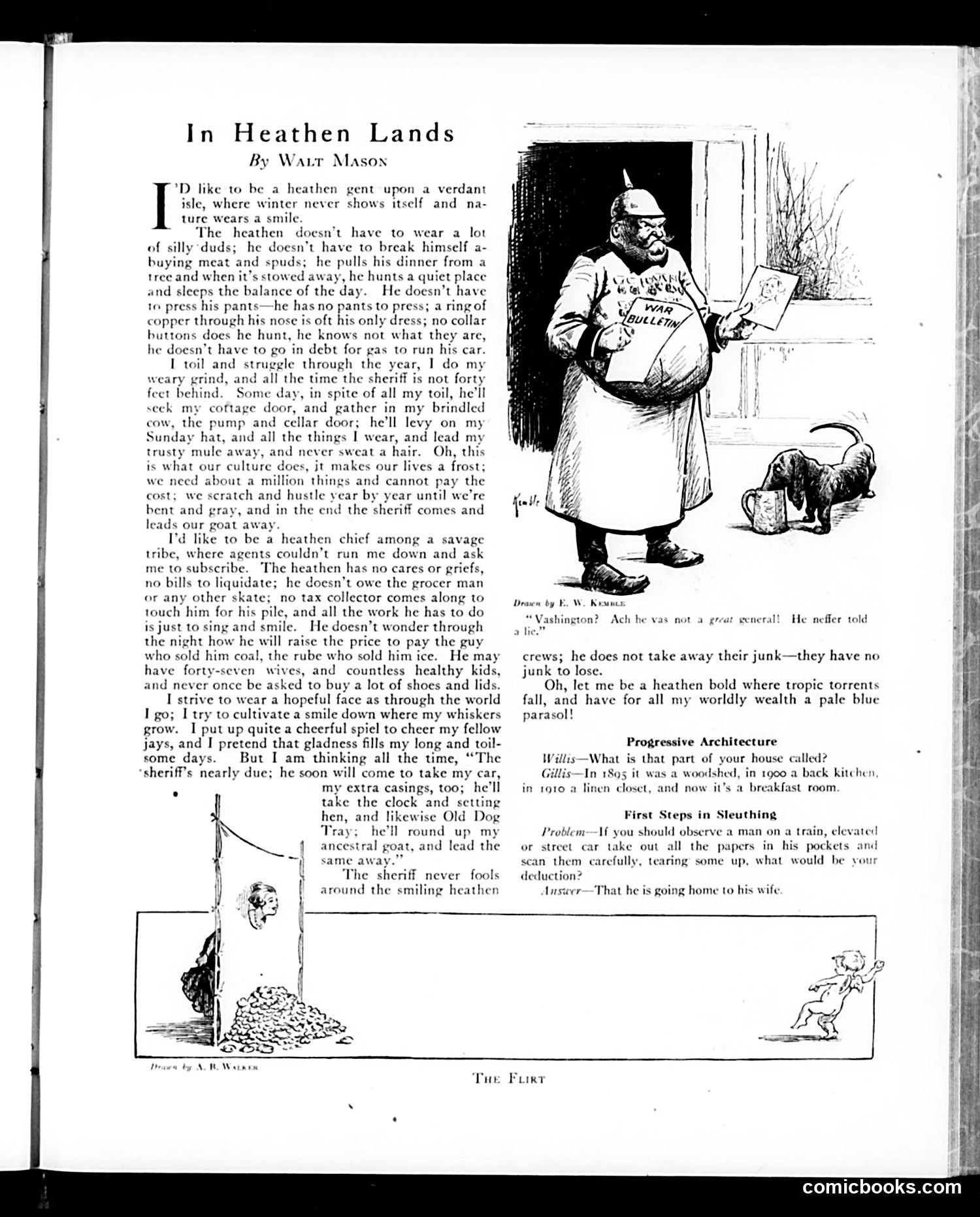
**Main Piece:** "In Heathen Lands" by Wau Mason satirizes modern American economic anxiety. The speaker envies "heathen" peoples living simply without material burdens—no debts, no bills, no sheriffs seizing property. The joke exposes early 20th-century working-class frustration: despite constant labor ("toil and struggle"), Americans face relentless creditors and debt collectors. The "heathen" lifestyle represents freedom from capitalist obligations. The accompanying illustration shows a German soldier reading, captioned with a joke about Washington not being a great general because "he never told a lie"—a jab at American exceptionalism or wartime propaganda. **Secondary Items:** "Progressive Architecture" jokes about rebranding old spaces (woodshed→breakfast room) as fashionable. "First Steps in Sleuthing" humorously suggests a man destroying documents on a train is going home to his wife—implying marital deception or domestic anxiety. The page reflects pre-WWI American discontent with consumer culture and financial obligation.
📄 Transcribed text from this page (OCR, searchable)
Machine-transcribed from the original scan — historical spelling and the odd misread are preserved.
In Heathen Lands By Wau °D like to be a heathen gent upon a verdant isle, where winter never shows itself and na- j ture wears a smile. The heathen doesn’t have to wear a lot of silly duds; he doesn’t have to break himself a- buying meat and spuds; he pulls his dinner from a tree and when it’s stowed away, he hunts a quiet place and sleeps the balance of the day. He doesn’t have to press his pants—he has no pants to press; a ring of copper through his nose is oft his only dress; no collar buttons does he hunt, he knows not what they are, he doesn’t have to go in debt for gas to run his car. I toil and struggle through the year, I do my y grind, and all the time the sheriff is not forty feet behind. Some day, in spite of all my toil, he'll seck my coftage door, and gather in my brindled cow, the pump and cellar door; he'll levy on my Sunday hat, and all the things I wear, and lead my trusty mule away, and never sweat a hair. Oh, this is what our culture does, jt makes our lives a frost; we need about a million things and cannot pay the cost; we scratch and hustle year by year until we're bent and gray, and in the end the sheriff comes and leads our goat away. I'd like to be a heathen chief among a savage tribe, where agents couldn’t run me down and ask me to subscribe. The heathen has no cares or griefs, no bills to liquidate; he doesn’t owe the grocer man or any other skate; no tax collector comes along to touch him for his pile, and all the work he has to do is just to sing and smile. He doesn’t wonder through the night how he will raise the price to pay the guy who sold him coal, the rube who sold him ice. He may have forty-seven wives, and countless healthy kids, and never once be asked to buy a lot of shoes and lids. I strive to wear a hopeful face as through the world I go; I try to cultivate a smile down where my whiskers grow. I put up quite a cheerful spiel to cheer my fellow jays, and I pretend that gladness fills my long and toil- some day But I am thinking all the time, “The ‘sheriff's nearly due; he soon will come to take my car, my extra casings, too; he'll take the clock and setting hen, and likewise Old Dog Tray; he'll round up my ancestral goat, and lead the same away The sheriff never fools around the smiling heathen Mason Draven by Be W Kewnes “Vashington? Ach he vas not a great general! He neffer told a lie” crews; he does not take away their junk—they have no junk to lose. Oh, let me be a heathen bold where tropic torrents fall, and have for all my worldly wealth a pale blue parasol! Progressive Architecture Willis—What is that part of your house called? Gillis—In 1895 it was a woodshed, in 1900 a back kitchen in 1910 @ linen closet, and now it’s a breakfast room. First Steps in Sleuthing Problem—Vf you should observe a man on a train, elevated or street car take out all the papers in his pockets and scan them carefully, tearing some up, what would be your deduction? tnswer—That he is going home to his wife. Deven by NB Warnen Tue Furr comicbooks.com