
Judge, 1919-02-01 · page 23 of 32
Judge — February 1, 1919 — page 23: what you’re looking at
What you’re looking at
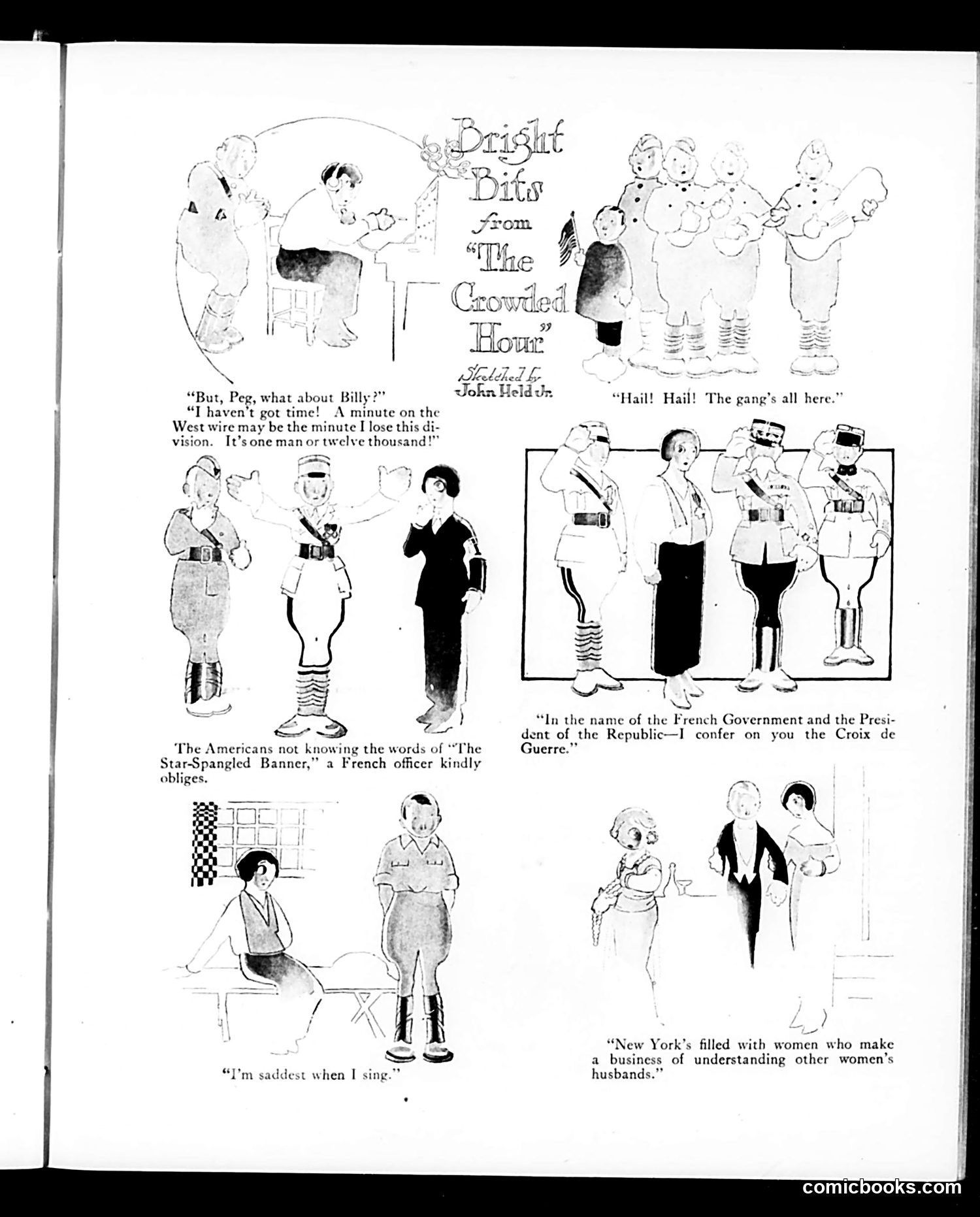
This page from *Judge* satirizes American military involvement in World War I through several vignettes illustrated by John Held Jr. The top scene mocks an American officer prioritizing military communications over personal concerns—a soldier dismisses his wife's worry about their son Billy, claiming military duty supersedes family. Another panel jokes about American soldiers' ignorance: unable to sing "The Star-Spangled Banner," they require a French officer to teach them their own national anthem—satirizing American cultural illiteracy. The "Croix de Guerre" panel depicts French military decoration ceremony, likely commenting on the alliance between American and French forces. The final panels shift to domestic satire: one jokes about women who meddle in others' marriages, another plays on a singer's melancholy. These reflect broader *Judge* humor about American home-front society during wartime, mixing military commentary with social observation about gender relations and American character.
📄 Transcribed text from this page (OCR, searchable)
Machine-transcribed from the original scan — historical spelling and the odd misread are preserved.
4 : “But, Peg, what about Billy?” Jokn H “T haven’t got time! A minute on the West wire may be the minute I lose this di- vision. It’s one man or twelve thousand!” é ) “In the name of the “rench Government and the Presi- Z. es mail dent of the Republic—I confer on you the Croix de ‘The Americans not knowing the words of “The Guerre.” Star-Spangled Banner,” a French officer kindly obliges. / “New York’s filled with women who make a business of understanding other women’s “I'm saddest when I sing.” husbands.” comicbooks.com