
Judge, 1918-12-28 · page 7 of 33
Judge — December 28, 1918 — page 7: what you’re looking at
What you’re looking at
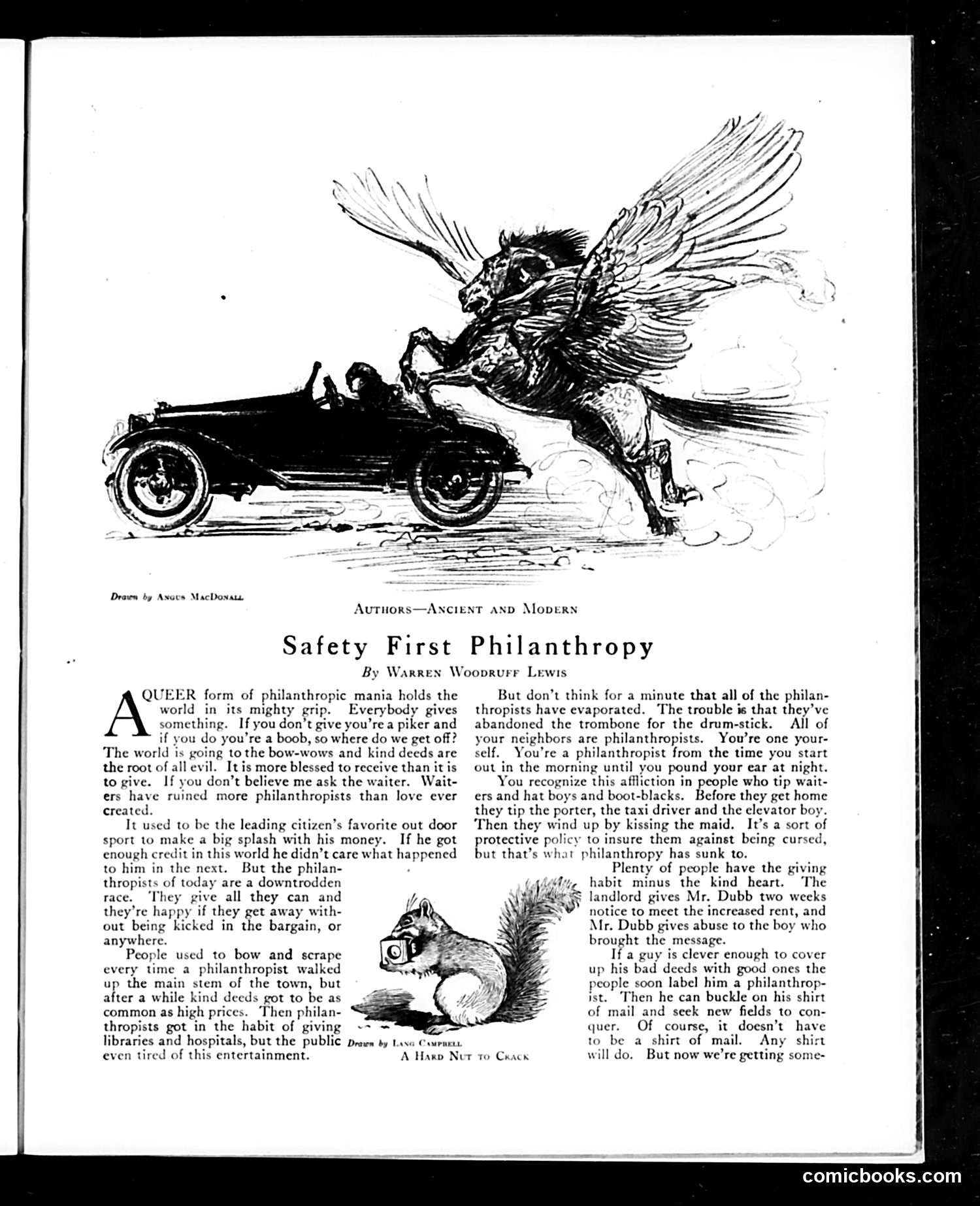
This satirical article by Warren Woodruff Lewis mocks the early 20th-century craze of ostentatious charitable giving. Lewis argues that philanthropy has become performative and hollow—driven by social reputation rather than genuine kindness. The piece critiques how "giving" has become reflexive: wealthy people tip everyone (waiters, porters, taxi drivers, elevator boys) not from generosity but as protective insurance against curses. The humor targets the absurdity that even Mr. Dubb—apparently a working-class tenant—has become a "philanthropist" by abusing a messenger boy while paying increased rent. Lewis suggests philanthropy's "golden age" (when donors received public adulation for libraries and hospitals) has passed, replaced by mandatory tipping and superficial kindness masking selfish motives. The cartoons by MacDonald and Lowe visually reinforce this: a winged figure (likely representing generosity or charity) being dragged by a speeding automobile, and a squirrel operating machinery—both suggesting philanthropy has become mechanical, chaotic, and absurd. The satire reflects anxiety about industrialization eroding authentic human values.
📄 Transcribed text from this page (OCR, searchable)
Machine-transcribed from the original scan — historical spelling and the odd misread are preserved.
Drawn by Axovs MacDonate Autuors—ANCIENT AND MopERN Safety First Philanthropy By Warren Wooprurr Lewis QUEER form of philanthropic mania holds the world in its mighty grip. Everybody gives something. If you don’t give you’rea piker and if you do you're a boob, so where do we get off? The world is going to the bow-wows and kind deeds are the root of all evil. It is more blessed to receive than it is to give. If you don’t believe me ask the waiter. Wait- ers have ruined more philanthropists than love ever created. It used to be the leading citizen’s favorite out door sport to make a big splash with his money. If he got enough credit in this world he didn’t care what happened to him in the next. But the philan- thropists of today are a downtrodden race. They give all they can and they’re happy if they get away with- out being kicked in the bargain, or anywhere. People used to bow and scrape every time a philanthropist walked up the main stem of the town, but after a while kind deeds got to be as common as high prices. Then philan- thropists got in the habit of giving libraries and hospitals, but the public Drown by Lave Cowrnent even tired of this entertainment. A Harp Net to Crack But don’t think for a minute that all of the philan- thropists have evaporated. The trouble is that they’ve abandoned the trombone for the drum-stick. All of your neighbors are philanthropists. You’re one your- self. You're a philanthropist from the time you start out in the morning until you pound your ear at night. You recognize this affliction in people who tip wait- ers and hat boys and boot-blacks. Before they get home they tip the porter, the taxi driver and the elevator boy. ‘Then they wind up by kissing the maid. It’s a sort of protective policy to insure them against being cursed, bie that’s what philanthropy has sunk to. Plenty of people have the giving habit minus the kind heart. The landlord gives Mr. Dubb two weeks notice to meet the increased rent, and “Mr. Dubb gives abuse to the boy who brought the message. If a guy is clever enough to cover up his bad deeds with good ones the people soon label him a philanthrop- ist. Then he can buckle on his shirt of mail and seek new fields to con- quer. Of course, it doesn’t have to be a shirt of mail. Any shirt will do. But now we’re getting some- comicbooks.com