
Judge, 1918-10-19 · page 8 of 32
Judge — October 19, 1918 — page 8: what you’re looking at
What you’re looking at
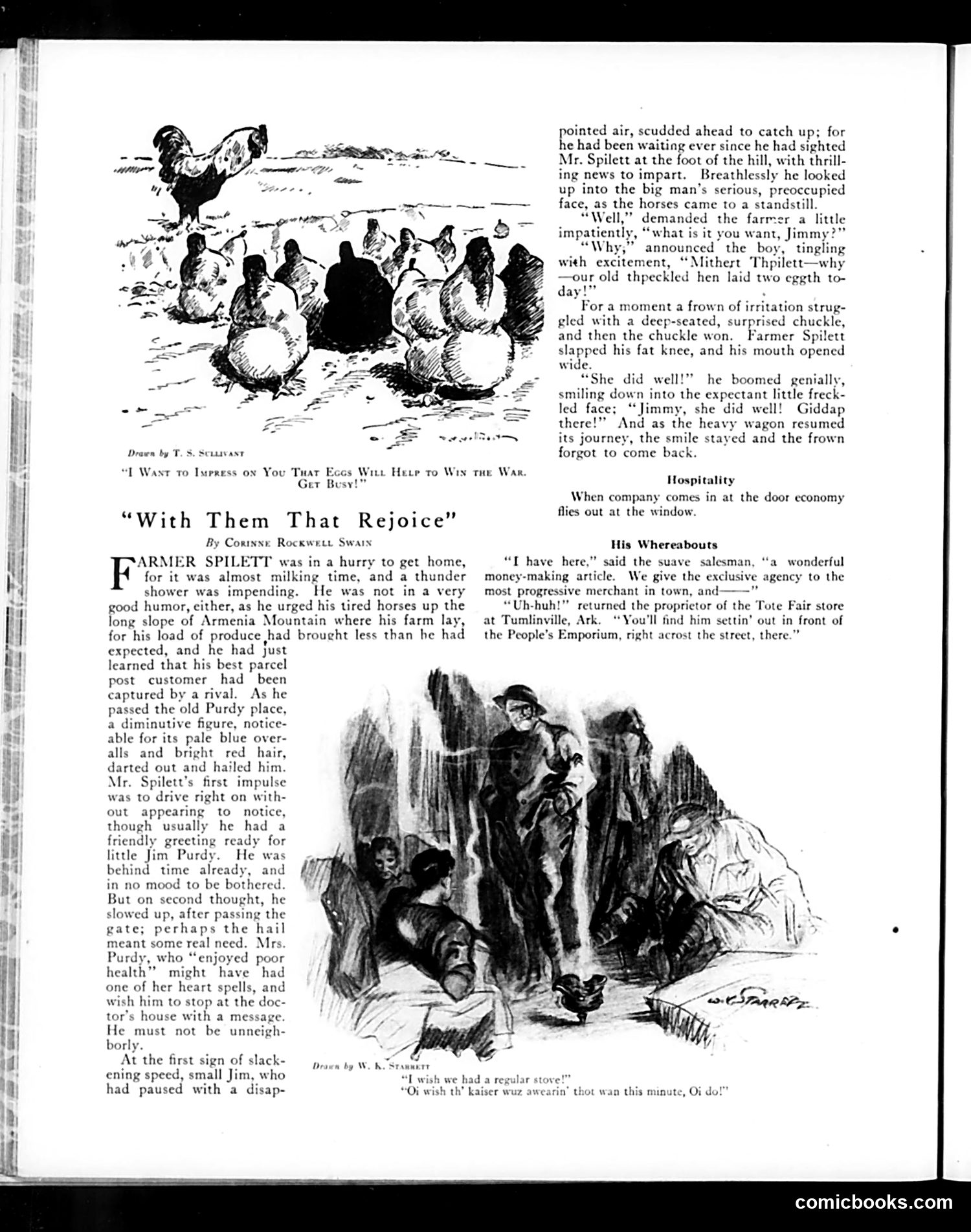
This story by Corinne Rockwell Swain uses a sentimental domestic scene to make a wartime point. Farmer Spilett, hurried and frustrated after poor market sales, is stopped by young Jim Purdy with trivial news: their neighbor's hen laid two eggs. Initially annoyed, Spilett's irritation dissolves into genuine joy at the child's simple enthusiasm. The title and moral are clear: during wartime (implied by the WWI-era references in other page content), Americans should find happiness in small domestic victories and share in others' simple joys rather than dwelling on losses and hardship. The story advocates emotional resilience and community solidarity during national crisis—"rejoicing with them that rejoice" regardless of broader economic or military troubles. It's prescriptive wartime sentiment: maintain morale through shared human warmth.
📄 Transcribed text from this page (OCR, searchable)
Machine-transcribed from the original scan — historical spelling and the odd misread are preserved.
‘ we ae ek a, Drawn by T. 5. Scusavast “IT Wast to Ispress ox You Twat Eocs Witt Here to Win tHe War. Ger Busy!" “With Them That Rejoice” By Coninxe Rockwett Swain ARMER SPILETT was in a hurry to get home, for it was almost milking time, and a thunder shower was impending. He was not in a very good humor, either, as he urged his tired horses up the long slope of Armenia Mountain where his farm lay, for his load of produce had brought less than he had expected, and he had just learned that his best parcel post customer had been captured by a rival. As he passed the old Purdy place, a diminutive figure, notice- able for its pale blue over- alls and bright red_ hair, darted out and hailed him. Mr. Spilett’s first impulse was to drive right on with- out appearing to notice, though usually he had a friendly greeting ready for little Jim Purdy. He was behind time already, and in no mood to be bothered. But on second thought, he slowed up, after passing the gate; perhaps the hail meant some real need. Mrs. Purdy, who “enjoyed poor health” might have had one of her heart spells, and wish him to stop at the doc- tor’s house with a message. He must not be unneigh- borly. At the first sign of slack- ening speed, small Jim, who had paused with a disap- wish we had an “Oi wish th’ kaiser wuz awea “TI have money-making art most progressive merchant in tow “Uh-hu' at Tumlinville, Ark. ‘You'll find him settin’ out in the People’s E: pointed air, scudded ahead to catch up; for he had been waiting ever since he had sighted Mr. Spilett at the foot of the hill, with thrill- ing news to impart. Breathlessly he looked up into the big man’s serious, preoccupied face, as the horses came to a standstill. “Well,” demanded the farrzer a little impatiently, “what is it you want, Jimmy “Why,” announced the boy, tingling with excitement, “Mithert Thpilett—why —our old thpeckled hen laid two eggth to- day!” For a moment a frown of irritation strug- gled with a deep-seated, surprised chuckle, and then the chuckle won. Farmer Spilett slapped his fat knee, and his mouth opened wide. “She did well!” he boomed genially, smiling down into the expectant little freck- led face; ‘Jimmy, she did well! Giddap there!” And as the heavy wagon resumed its journey, the smile stayed and the frown forgot to come back. Hospitality When company comes in at the door economy flies out at the window. His Whereabouts here,” said the suave salesman, We give the exclusi and—— returned the proprietor of the Tote ‘a wonderful e agency to the air store front of mporium, right acrost the street, there ot wan this minute, Oi do!” comicbooks.com