
Judge, 1918-07-06 · page 14 of 36
Judge — July 6, 1918 — page 14: what you’re looking at
What you’re looking at
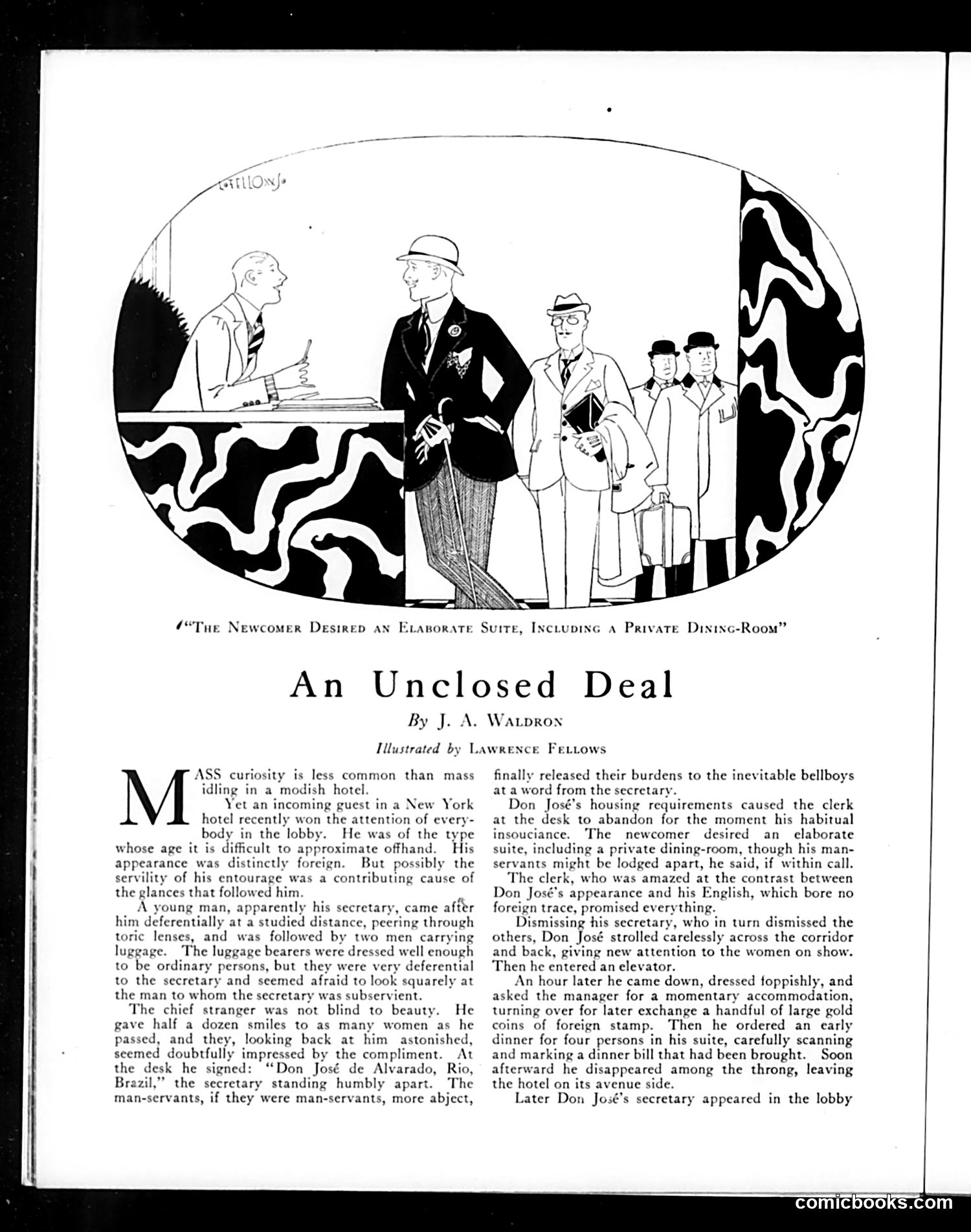
This is a short story (not a political cartoon) about a mysterious wealthy foreigner. "Don José de Alvarado" from Brazil arrives at a New York hotel with an entourage of deferential servants. His appearance is notably foreign, yet his English is fluent and accentless—a deliberate contradiction. He demands an elaborate suite with private dining room, flirts with women in the lobby, then mysteriously orders dinner for four and disappears. The satire targets the pretension and inscrutability of foreign wealth in Gilded Age America. The "unclosed deal" of the title suggests deception: Don José's contradictions (foreign appearance/perfect English, formal requests/casual behavior) hint he's a con artist or something more sinister. The story plays on American anxieties about wealthy foreign visitors whose true intentions and identities remain obscure—a common Judge theme mocking gullible hotel clerks and urban sophistication.
📄 Transcribed text from this page (OCR, searchable)
Machine-transcribed from the original scan — historical spelling and the odd misread are preserved.
An Unclosed Deal By J. A. Watpron Illustrated by LAWRENCE ASS curiosity is less common than mass idling in a modish hotel. Yet an incoming guest in a New York hotel recently won the attention of every- body in the lobby. He was of the type whose age it is difficult to approximate offhand. His appearance was distinctly foreign. But possibly the servility of his entourage was a contributing cause of the glances that followed him 7 A young man, apparently his secretary, came after him deferentially at a studied distance, peering throu toric lenses, and was followed by two men carrying luggage. The luggage bearers were dressed well enough to be ordinary persons, but they were very deferential to the secretary and seemed afraid to look squarely at the man to whom the secretary was subservient. The chief stranger was not blind to beauty. He gave half a dozen smiles to as many women as he passed, and they, looking back at him astonished, seemed doubtfully impressed by the compliment. At the desk he signed: “Don José de Alvarado, Rio, Brazil,” the secretary standing humbly apart. The man-servants, if they were man-servants, more abject, FeLtows finally released their burdens to the inevitable bellboys at a word from the secretary. Don José’s housing requirements caused the clerk at the desk to abandon for the moment his habitual insouciance. The newcomer desired an_ elaborate suite, including a private dining-room, though his man- servants might be lodged apart, he said, if within call. The clerk, who was amazed at the contrast between Don José’s appearance and his English, which bore no foreign trace, promised everything. Dismissing his secretary, who in turn dismissed the others, Don José strolled carelessly across the corridor and back, giving new attention to the women on show. Then he entered an elevator. An hour later he came down, dressed foppishly, and asked the manager for a momentary accommodation, turning over for later exchange a handful of large gold coins of foreign stamp. Then he ordered an early dinner for four persons in his suite, carefully scanning and marking a dinner bill that had been brought. Soon afterward he disappeared among the throng, leaving the hotel on its avenue side. Later Don José’s secretary appeared in the lobby