
Judge, 1918-05-04 · page 9 of 38
Judge — May 4, 1918 — page 9: what you’re looking at
What you’re looking at
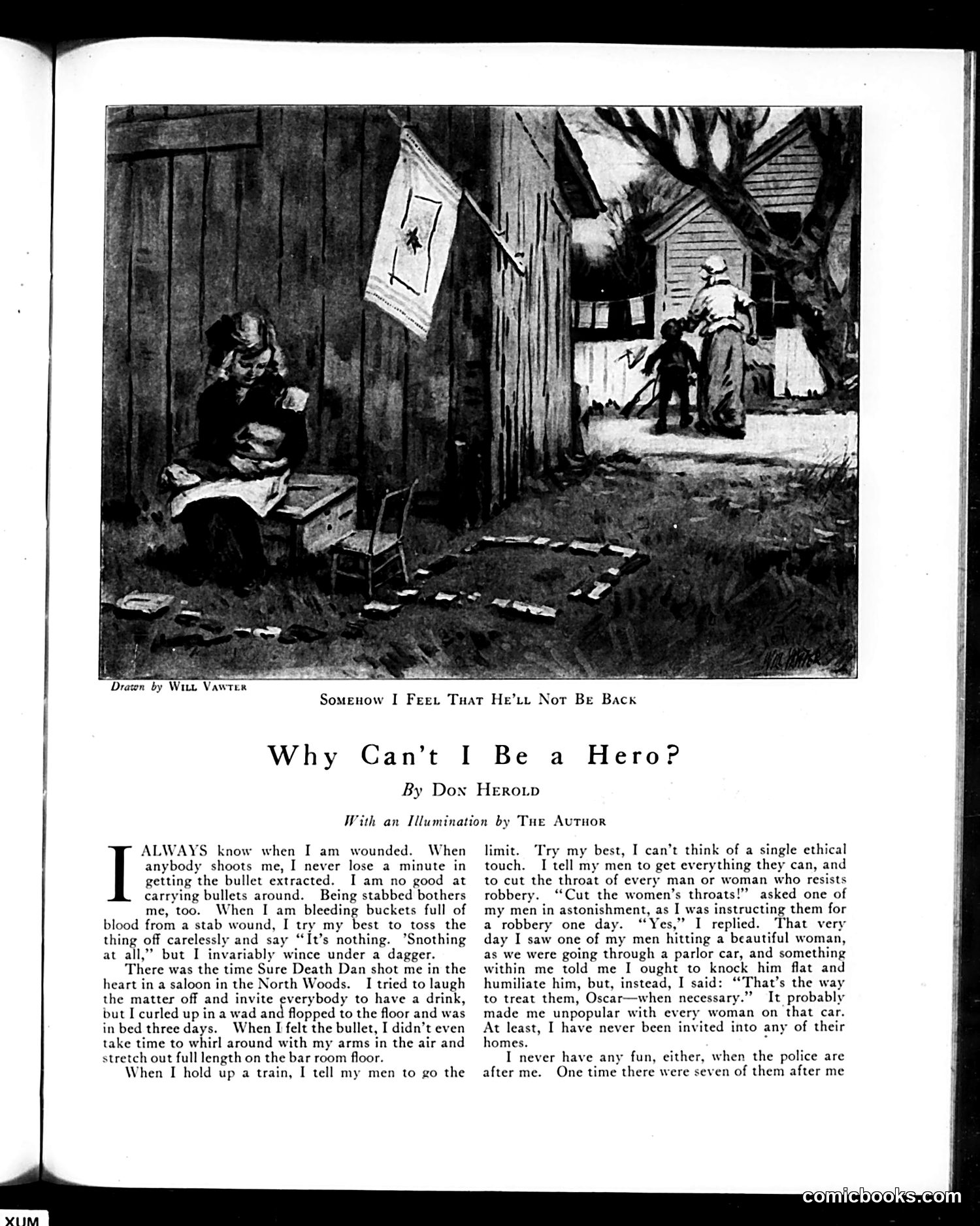
This story by Don Herold satirizes the literary archetype of the "hard-boiled outlaw hero" popular in early 20th-century pulp fiction and adventure stories. The unnamed narrator is a criminal—a train robber and murderer—who complains he cannot achieve heroic stature despite his violent exploits. The satire's point: the narrator fails at villainy because basic human decency keeps intruding. He winces at wounds instead of laughing them off. He wants to brutalize women during robberies but feels compelled toward chivalry instead. He cannot enjoy criminal success because conscience and social propriety undermine his criminal persona. Herold mocks both the unrealistic heroes of popular fiction (who shrug off mortal wounds) and society's genteel expectations, which prevent even outlaws from fully embracing lawlessness. The cartoon illustration shows a woman with a child watching a man depart, reinforcing themes of domestic feeling disrupting criminal mythology.
📄 Transcribed text from this page (OCR, searchable)
Machine-transcribed from the original scan — historical spelling and the odd misread are preserved.
it Okey ~ Drawn by With Vawter Somenow I Feet Tuat He’tt Not Be Back Why Can’t I Be a HeroP By Dox Heroip With an Illumination by Tue Autuor ALWAYS know when I am wounded. When anybody shoots me, I never lose a minute in getting the bullet extracted. I am no good at carrying bullets around. Being stabbed bothers me, too. When I am bleeding buckets full of blood from a stab wound, I try my best to toss the thing off carelessly and say “It’s nothing. ’Snothing at all,” but I invariably wince under a dagger. There was the time Sure Death Dan shot me in the heart in a saloon in the North Woods. I tried to laugh the matter off and invite everybody to have a drink, but I curled up in a wad and flopped to the floor and was in bed three days. When I felt the bullet, I didn’t even take time to whirl around with my arms in the air and stretch out full length on the bar room floor. When I hold up a train, I tell my men to go the limit. Try my best, I can’t think of a single ethical touch. I tell my men to get everything they can, and to cut the throat of every man or woman who resists robbery. ‘Cut the women’s throats!’ asked one of my men in astonishment, as I was instructing them for a robbery one day. “Yes,” I replied. That very day I saw one of my men hitting a beautiful woman, as we were going through a parlor car, and something within me told me I ought to knock him flat and humiliate him, but, instead, I said: “That’s the way to treat them, Oscar—when necessary.” It probably made me unpopular with every woman on that car. At least, I have never been invited into any of their homes. . I never have any fun, either, when the police are after me. One time there were seven of them after me