
Judge, 1918-04-20 · page 24 of 36
Judge — April 20, 1918 — page 24: what you’re looking at
What you’re looking at
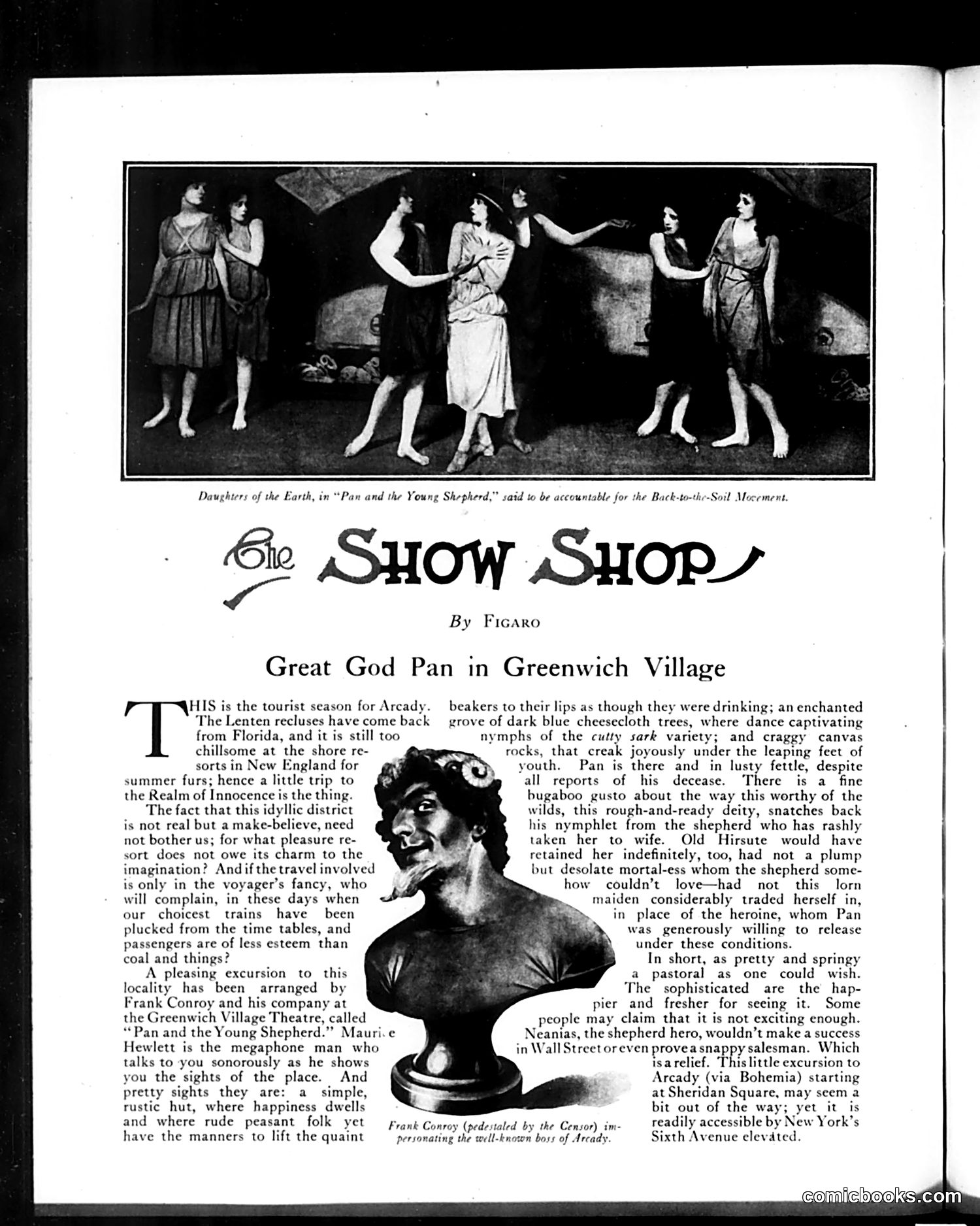
This is a theater review by Figaro (a Judge columnist) of a play at Greenwich Village Theatre. The satire targets both the play itself and the audience's nostalgia for "Arcady" — an imagined pastoral paradise. The joke: New Yorkers seeking escape from modern life (crowded trains, coal shortages post-WWI) attend this deliberately fake, cheaply-made production featuring "dark blue cheesecloth trees" and creaky canvas rocks. They pretend it transports them to an innocent, rustic world where Pan (the classical god of nature) and shepherds live simply. Figaro mocks this fantasy as pure imagination, yet acknowledges its appeal. He's especially sardonic about the plot: the shepherd can't keep the nymph he loves, so swaps for a "plump" mortal woman nobody else wants — hardly the romantic escape advertised. The real target: the Greenwich Village bohemian scene itself, which Figaro treats as artificial make-believe consumed by "sophisticated" urbanites desperate to believe in something genuine.
📄 Transcribed text from this page (OCR, searchable)
Machine-transcribed from the original scan — historical spelling and the odd misread are preserved.
Daughters of the Earth, in Pan and the Young Shepherd,” said to be accountable for the Back-to-th Soil Mocement. By Ficaro Great God Pan in Greenwich Village HIS is the tourist The Lenten recluses from Florida, and it is chillsome at the shore re- sorts in New England for summer furs; hence a little trip to the Realm of Innocence is the thing. The fact that this id district is not real but a make-believe, need not bother us; for what pleasure re- sort does not owe its charm to the imagination? Andifthe travel involved is only in the voyager’s fancy, who will complain, in these days when our choicest trains have been plucked from the time tables, and passengers are of less esteem than coal and things? A pleasing excursion to this locality has been arranged by Frank Conroy and his company at the Greenwich Village Theatre, called “Pan and the Young Shepherd.” Mauri.e Hewlett is the megaphone man who talks to you sonorously as he shows you the sights of the place. And pretty sights they are: a simple, rustic hut, where happiness dwells and where rude peasant folk yet have the manners to lift the quaint season for Arcady. have come back still too beakers to their lips as though they were drinking; an enchanted grove of dark blue cheesecloth trees, where dance captivating nymphs of the cutty sark varie and craggy canvas rocks, that creak joyously under the leaping feet of youth. Pan is there and in lusty fettle, despite all reports of his decease. There is a fine bugaboo gusto about the way this worthy of the wilds, this rough-and-ready deity, snatches back his nymphlet from the shepherd who has rashly taken her to wife. Old Hirsute would have retained her indefinitely, too, had not a plump but desolate mortal-ess whom the shepherd some- how couldn’t love—had not this lorn maiden considerably traded herself in, => in place of the heroine, whom Pan was generously willing to release under these conditions. In short, as pretty and springy a pastoral as one could wish. The sophisticated are the hap- pier and fresher for seeing it. Some people may claim that it is not exciting enough. Neanias, the shepherd hero, wouldn’t make a success in Wall Street or even provea snappy salesman. Which isarelief. This little excursion to Arcady (via Bohemia) starting at Sheridan Square, may seem a bit out of the way; yet it is readily accessible by New York’s Frank Conroy (pedestaled by the Censor) im- re Sixth Avenue elevated. personating the twell-knoten boss of Arcady.