
Judge, 1918-03-30 · page 5 of 36
Judge — March 30, 1918 — page 5: what you’re looking at
What you’re looking at
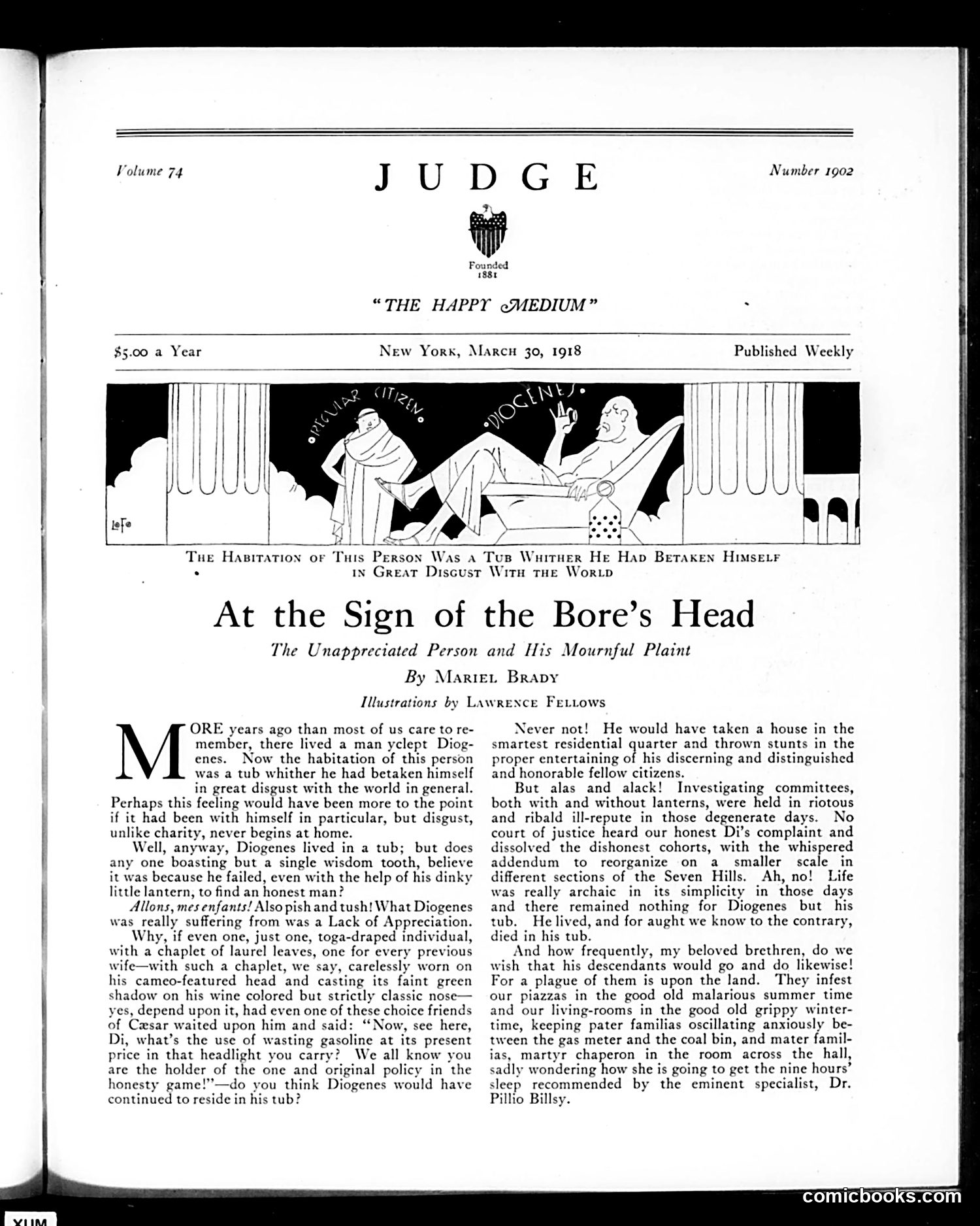
This March 30, 1918 *Judge* page satirizes an "unappreciated person" through the story of Diogenes (the ancient Greek philosopher famous for living ascetically in a tub). The cartoon depicts this person complaining about lack of recognition despite supposed merit. The satire mocks someone who believes themselves distinguished and worthy of honor but has been rejected by society and subjected to investigating committees and "ribald ill-repute." The piece argues this person's suffering stems not from injustice but from a "Lack of Appreciation"—suggesting the subject is simply tedious and unlikeable, not unfairly treated. The cartoon illustrates the figure in a tub-like setting, reinforcing the Diogenes comparison and the theme of self-imposed or deserved isolation from respectable society.
📄 Transcribed text from this page (OCR, searchable)
Machine-transcribed from the original scan — historical spelling and the odd misread are preserved.
| | | Volume 74 Founded 1881 “THE HAPPY eMEDIUM” Number 1902 $5.00 a Year New York, Marcu 30, 1918 Published Weekly NN HIMSELF . in Great Discust With tHe Worip At the Sign of the Bore’s Head The Unappreciated Person and His Mournful Plaint By Mariet Brapy Illustrations by Lawrence FeLtows ORE years ago than most of us care to re- member, there lived a man yclept Diog- enes. Now the habitation of this person was a tub whither he had betaken himself in great disgust with the world in general. Perhaps this feeling would have been more to the point if it had been with himself in particular, but disgust, unlike charity, never begins at home. Well, anyway, Diogenes lived in a tub; but does any one boasting but a single wisdom tooth, believe it was because he failed, even with the help of his dinky little lantern, to find an honest man? Allons, mes enfants! Also pish and tush! What Diogenes was really suffering from was a Lack of Appreciation. Why, if even one, just one, toga-draped individual, with a chaplet of laurel leaves, one for every previous wife—with such a chaplet, we say, carelessly worn on his cameo-featured head and casting its faint green shadow on his wine colored but strictly classic nose— yes, depend upon it, had even one of these choice friends of Cxsar waited upon him and said: “Now, see here, Di, what’s the use of wasting gasoline at its present price in that headlight you carry? We all know you are the holder of the one and original policy in the honesty game!"’"—do you think Diogenes would have continued to reside in his tub? Never not! He would have taken a house in the smartest residential quarter and thrown stunts in the proper entertaining of his discerning and distinguished and honorable fellow citizens. But alas and alack! Investigating committees, both with and without lanterns, were held in riotous and ribald ill-repute in those degenerate days. No court of justice heard our honest Di’s complaint and dissolved the dishonest cohorts, with the whispered addendum to reorganize on a_ smaller scale in different sections of the Seven Hills. Ah, no! Life was really archaic in its simplicity in those days and there remained nothing for Diogenes but his tub. He lived, and for aught we know to the contrary, died in his tub. And how frequently, my beloved brethren, do we wish that his descendants would go and do likewise! For a plague of them is upon the land. They infest our piazzas in the good old malarious summer time and our living-rooms in the good old grippy winter- time, keeping pater familias oscillating anxiously be- tween the gas meter and the coal bin, and mater famil- ias, martyr chaperon in the room across the hall, sadly wondering how she is going to get the nine hours’ sleep recommended by the eminent specialist, Dr. Pillio Billsy.