
Judge, 1918-01-26 · page 10 of 28
Judge — January 26, 1918 — page 10: what you’re looking at
What you’re looking at
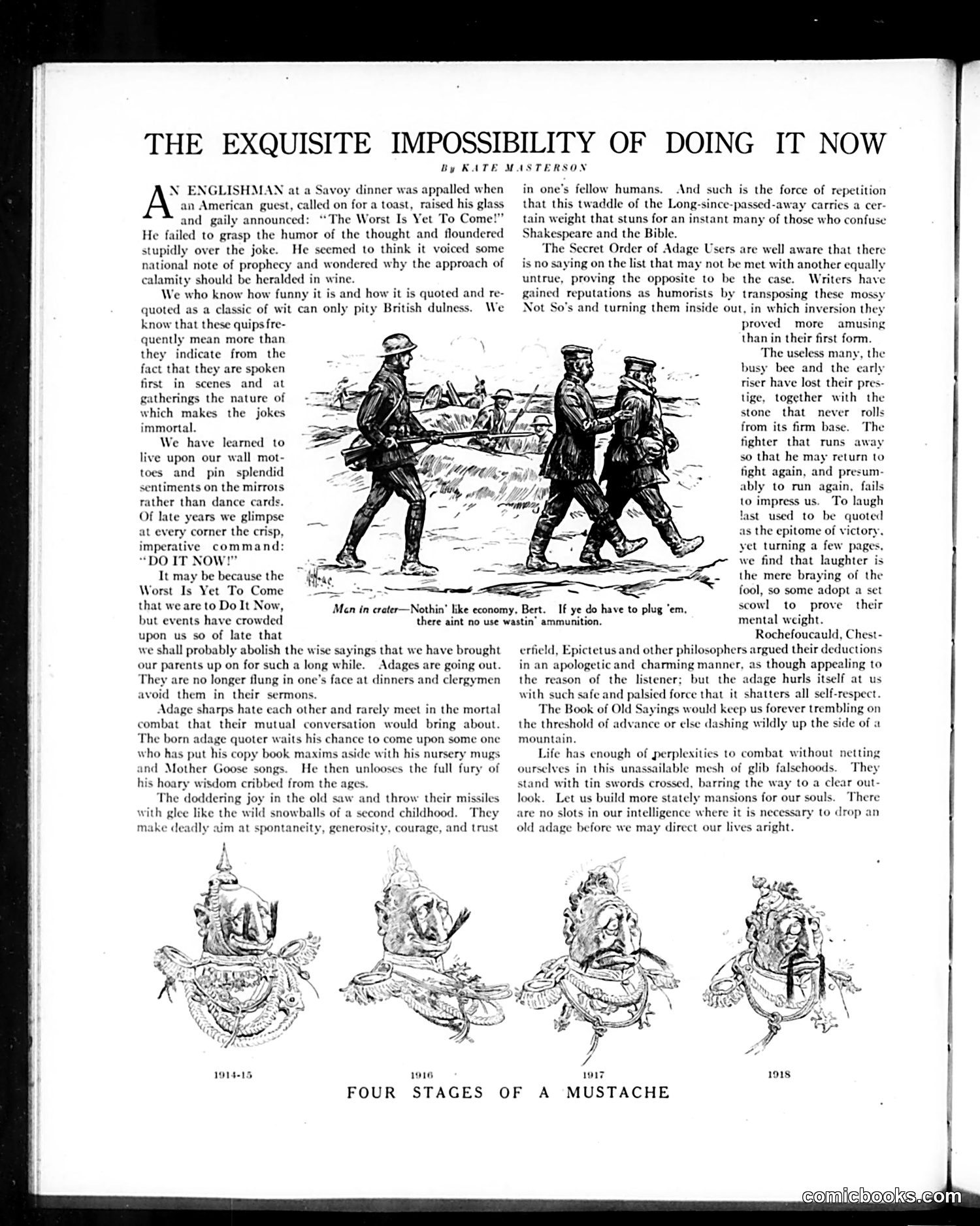
This 1918 Judge magazine page satirizes the overuse of old adages and proverbs in American culture. **Main Satire:** Writer Kate Masterson argues that tired sayings like "The Worst Is Yet To Come" have lost their wit through repetition. She contrasts an Englishman's literal interpretation of an American's joke toast with American sophistication in understanding such ironic inversions. **The Cartoon:** The middle illustration showing soldiers in a WWI trench exemplifies this theme—a soldier quips about "economy" in ammunition while men die around him, gallows humor rendered cynical rather than clever. **"Four Stages of a Mustache" (1914-1918):** This appears to track grooming changes during World War I's progression, likely satirizing how even personal appearance reflects wartime's grinding toll. **Context:** Published during final year of WWI, the piece critiques how Americans hide behind witty sayings and old wisdom rather than confronting harsh modern realities directly. The adages have become intellectual cowardice.
📄 Transcribed text from this page (OCR, searchable)
Machine-transcribed from the original scan — historical spelling and the odd misread are preserved.
THE EXQUISITE IMPOSSIBILITY OF DOING IT NOW By KATE MASTERSON N ENGLISHMAN at a Savoy dinner was appalled when an American guest, called on for a toast, raised his glass and gaily announced: “The Worst Is Yet To Come He failed to grasp the humor of the thought and floundered stupidly over the joke. He seemed to think it voiced some national note of prophecy and wondered why the approach of calamity should be heralded in wine. We who know how funny it is and how it is quoted and re- quoted as a classic of wit can only pity British dulness. We know that these quips fre quently mean more than they indicate from the fact that they are spoken first in scenes and at gatherings the nature of which makes the jokes immortal. We have learned to live upon our wall mot- toes and pin splendid sentiments on the mirro1s rather than dance cards. Of late years we glimpse corner the crisp, Worst Is Yet To Come that we are to Do It Now, but events have crowded upon us so of late that we shall probably abolish the wise sayings that we have brought our parents up on for such a long while. Adages are going out. They are no longer flung in one’s face at dinners and clergymen avoid them in their sermons. Adage sharps hate each othe combat that their mutual convers id rarely meet in the mortal tion would bring about. The born adage quoter waits his chance to come upon some one who has put his copy book maxims aside with his nursery mugs and Mother Goose songs. He then unlooses the full fury of his hoary wisdom cribbed from the ages. The doddering joy in the old saw and throw their missiles with glee like the wild snowballs of a second childhood. They make deadly aim at spontaneity, generosity, courage, and trust FOUR STAGES OF A Men in crater—Nothin’ like economy, Bert. If ye do have to plug ‘em, there aint no use wastin’ ammunition. in one’s fellow humans. And such is the force of repetition that this twaddle of the Long-since-passed-away carries a cer- n weight that stuns for an instant many of those who confuse Shakespeare and the Bible. The Secret Order of Adage Users are well aware that there is no saying on the list that may not be met with another equally untrue, proving the opposite to be the case. Writers have gained reputations as humorists by transposing these mossy Not So's and turning them inside out, in which inversion they proved more amusing than in their first form. The useless many, the busy bee and the early riser have lost their pres- tige, together with the stone that never rolls from its firm base. The fighter that runs away so that he may return to ain, and presum- ably to run again, fails to impress us. To laugh last used to be quoted the epitome of victory. yet turning a few page we find that laughter is the mere braying of the fool, so some adopt a set scowl to prove their mental weight. Rochefoucauld, Chest- erfield, Epictetus and other philosophers argued their deductions in an apologetic and charming manner, as though appealing to the reason of the listener; but the adage hurls itself at us with such safe and palsied force that it shatters all self-respect. The Book of Old Sayings would keep us forever trembling on the threshold of advance or else dashing wildly up the side of a mountain. Life has enough of perplexities to combat without netting ourselves in this unassailable mesh of glib falsehoods. They stand with tin swords crossed, barring the way to a clear out- look. Let us build more stately mansions for our souls. There are no slots in our intelligence where it is necessary to drop an old adage before we may direct our lives aright. MUSTACHE