
Judge, 1918-01-05 · page 13 of 28
Judge — January 5, 1918 — page 13: what you’re looking at
What you’re looking at
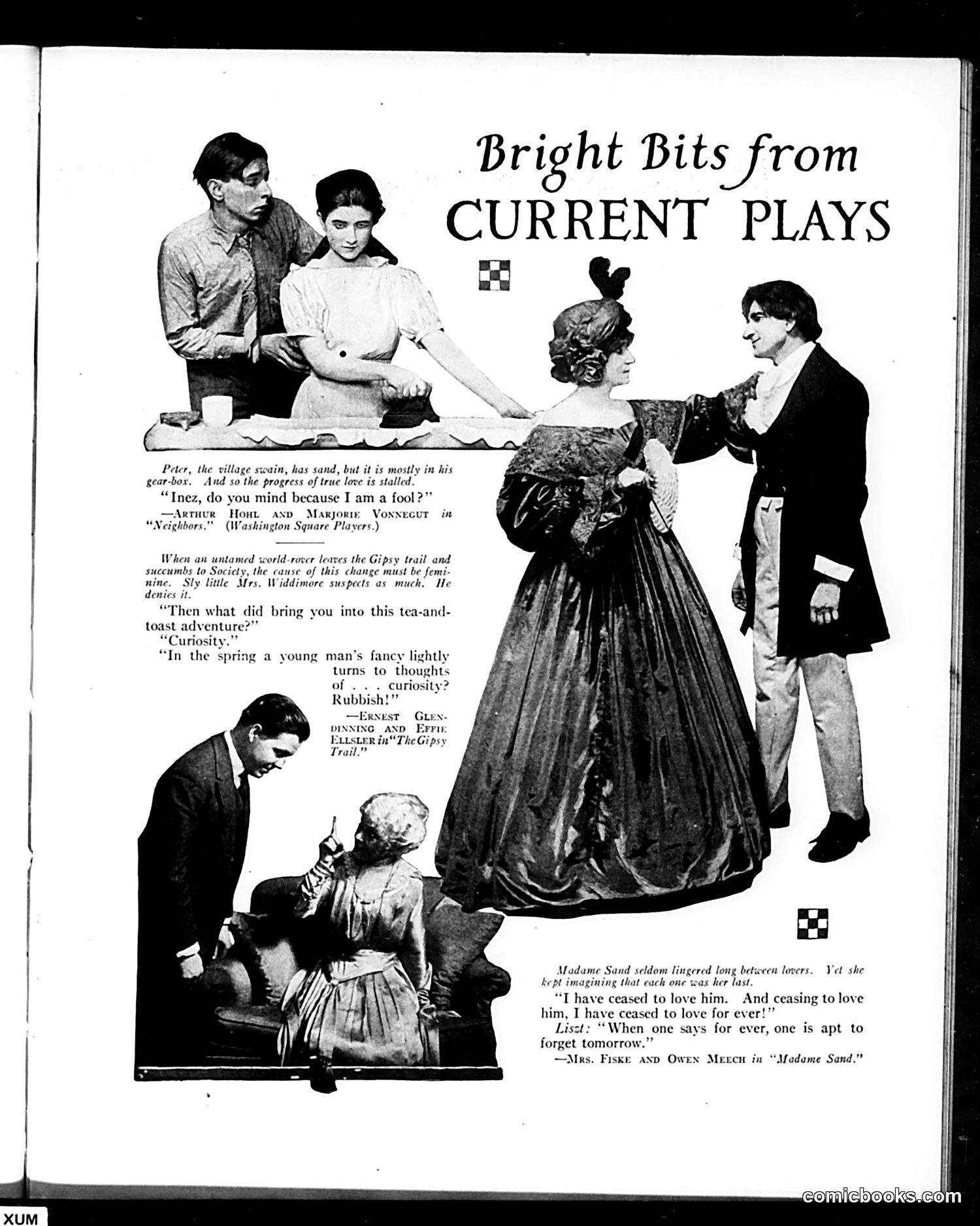
This page showcases theatrical humor from three Broadway productions. Rather than political satire, it presents comedic moments from contemporary plays: 1. **"Neighbors"** (Washington Square Players): A scene mocking a bumbling suitor ("Peter") who lacks romantic competence, with the woman questioning his intelligence. 2. **"The Gipsy Trail"**: A joke about a adventurous man seduced into respectable society by a woman, ironically attributing his transformation to "curiosity." 3. **"Madame Sand"**: A scene between the historical figure George Sand and Franz Liszt, satirizing her romantic fickleness. She declares she's "ceased to love" him "forever," but Liszt cynically observes that people who say "forever" typically forget by tomorrow. The humor trades on contemporary theatrical tropes: fumbling courtship, female manipulation, and satirical portrayals of historical romantic figures. This is entertainment journalism rather than political commentary.
📄 Transcribed text from this page (OCR, searchable)
Machine-transcribed from the original scan — historical spelling and the odd misread are preserved.
| Bright Bits from CURRENT PLAYS Peter, the village swain, has sand, but it is mostly in his gear-box. And so the progress of true love is stalled. “Inez, do you mind because I am a fool?” Artur Hot axp Marjorie Vownecut in “Neighbors.” (Washington Square Players.) | When an untamed world-rover leaves the Gipsy trail and succumbs to Society, the cause of this change must be femi- nis Sly little Mrs. Widdimore suspects as much. He denies it. “Then what did bring you into this tea-and- adventure?” uriosity.” “In the sp a young man’s fancy lightly turns to thoughts . curiosity? ” ELLSLER in“ The Gipsy Trail.” Madame Sand seldom lingered long betiocen lovers. Yet she kept imagining that cach one was her last. “T have ceased to love him. And ceasing to love him, I have ceased to love for ever!” Liszt: “When one says for ever, one is apt to forget tomorrow.” —Mps. Fiske anp Owen Meecnu in “Afadame Sand.” i XUM