
Judge, 1917-11-03 · page 13 of 28
Judge — November 3, 1917 — page 13: what you’re looking at
What you’re looking at
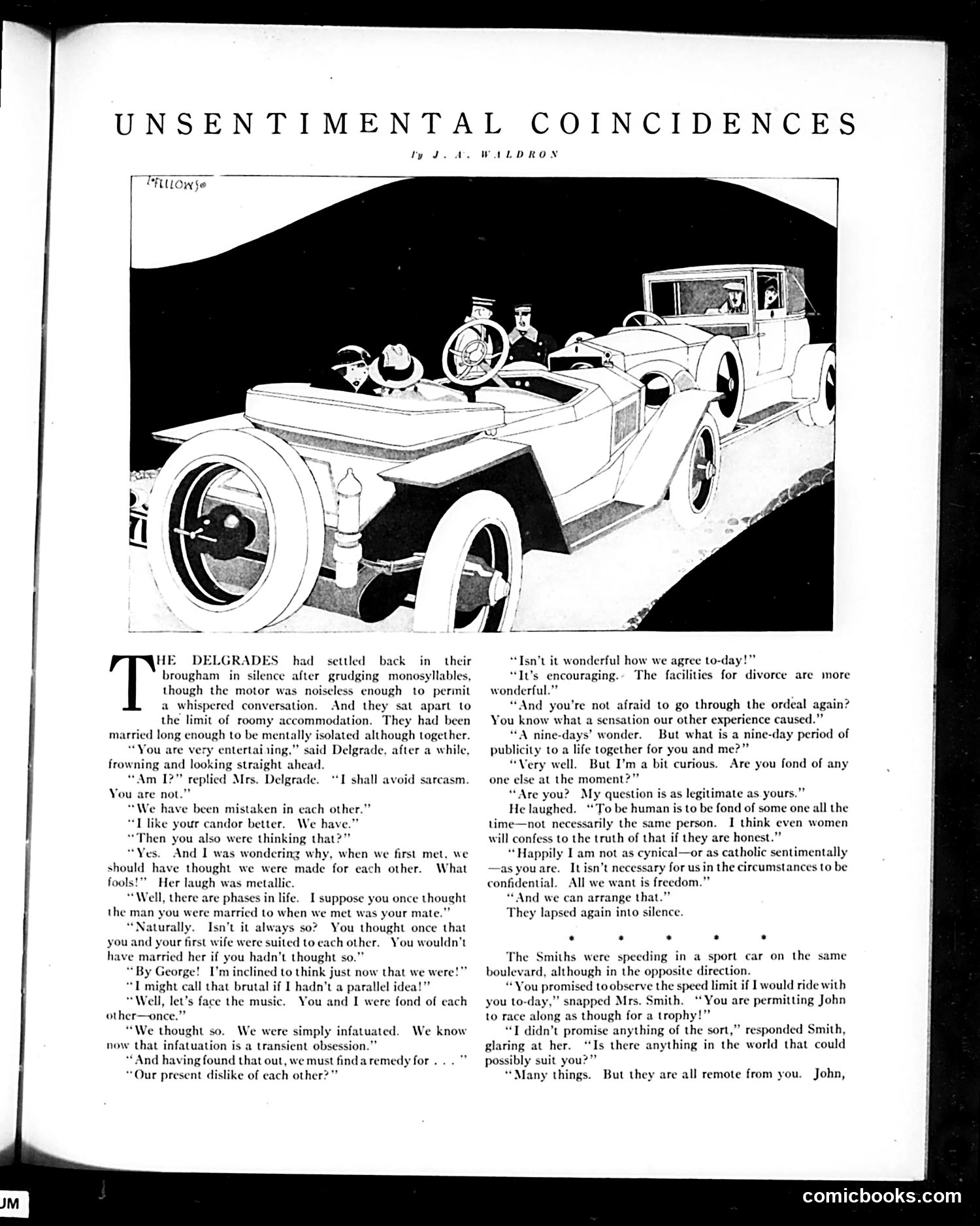
This story satirizes the casual attitudes toward marriage and divorce emerging in early 20th-century American society. The Delgrades, a married couple, acknowledge their marriage was based on infatuation rather than genuine compatibility. They discuss divorce with striking indifference, joking about "facilities for divorce" being "wonderful" and dismissing the scandal of their previous divorce as merely a "nine-days' wonder." The satire's point: modern divorce has become so normalized and emotionally detached that married people can discuss separation as pragmatically as discussing the weather. The parallel scene with the Smiths—quarreling over speeding—reinforces the theme: relationships are transactional and unsentimental, lacking deeper commitment. The title captures the irony: these unhappy marriages are "coincidences" rather than genuine matches, yet people treat such profound life changes with remarkable coldness.
📄 Transcribed text from this page (OCR, searchable)
Machine-transcribed from the original scan — historical spelling and the odd misread are preserved.
[ “Attonse settled back in their brougham in silence after grudging monosyllables, though the motor was noiseless enough to permit a whispered conversation. And they sat apart to the limit of roomy accommodation. They had been married long enough to be mentally isolated although together. “You are very entertai ting,” said Delgrade, after a while, frowning and looking straight ahead. “Am I?” replied Mrs. Delgrade. You are not.” We have been mistaken in cach other.” “T like your candor better. We have.” Is | avoid sarcasm. hen you also were thinking that?” Yes. ‘And I was wondering why, when we first met, we should have thought we were made for each other. What fools!” Her laugh was metallic. Well, there are phases in life. I suppose thought the man you were married to when we met was your mate.” Naturally. Isn't it alw: so? You thought once that you and your first wife were suited to each other. You wouldn’t have married her if you hadn’t thought so.” “By George! I'm inclined to think just now that we wert “LT might call that brutal if I hadn’t a parallel idea!” “Well, let’s face the music. You and I were fond of each other—once.”” “We thought so. We were simply infatuated. now that infatuation is a transient obsession.” * And having found that out, we must finda remedy for...” “Our present dislike of each other? We know UNSENTIMENTAL COINCIDENCES 1LDRON n't it wonderful how we agree to-day!’ “It's encouraging.- The facilities for divorce are more wonderful.” “And you're not afraid to go through the ordeal again? You know what a sensation our other experience caused. “4 nine-days’ wonder. But what is a nine-day period of publicity to a life together for you and me?” “Very well. But I’m a bit curious. Are you fond of any one else at the moment?” “Are you? My question is as legitimate as yours.” He laughed. ‘To be human is to be fond of some one all the time—not necessarily the same person. I think even women will confess to the truth of that if they are honest.”” “Happily I am not as cynical—or as catholic sentimentally It isn’t necessary for us in the circumstances to be confidential. All we want is freedom.” “And we can arrange that.” They lapsed again into silence. you are. The Smiths were speeding in a sport car on the same boulevard, although in the opposite direction. “You promised to observe the speed limit if I would ride with you to-day,” snapped Mrs. Smith. “You are permitting John to race along as though for a trophy!” “T didn’t promise anything of the sort, responded Smith, Is there anything in the world that could glaring at her. possibly suit you? “Many things. But they are all remote from you. John, comicbooks.com