
Judge, 1917-04-21 · page 11 of 32
Judge — April 21, 1917 — page 11: what you’re looking at
What you’re looking at
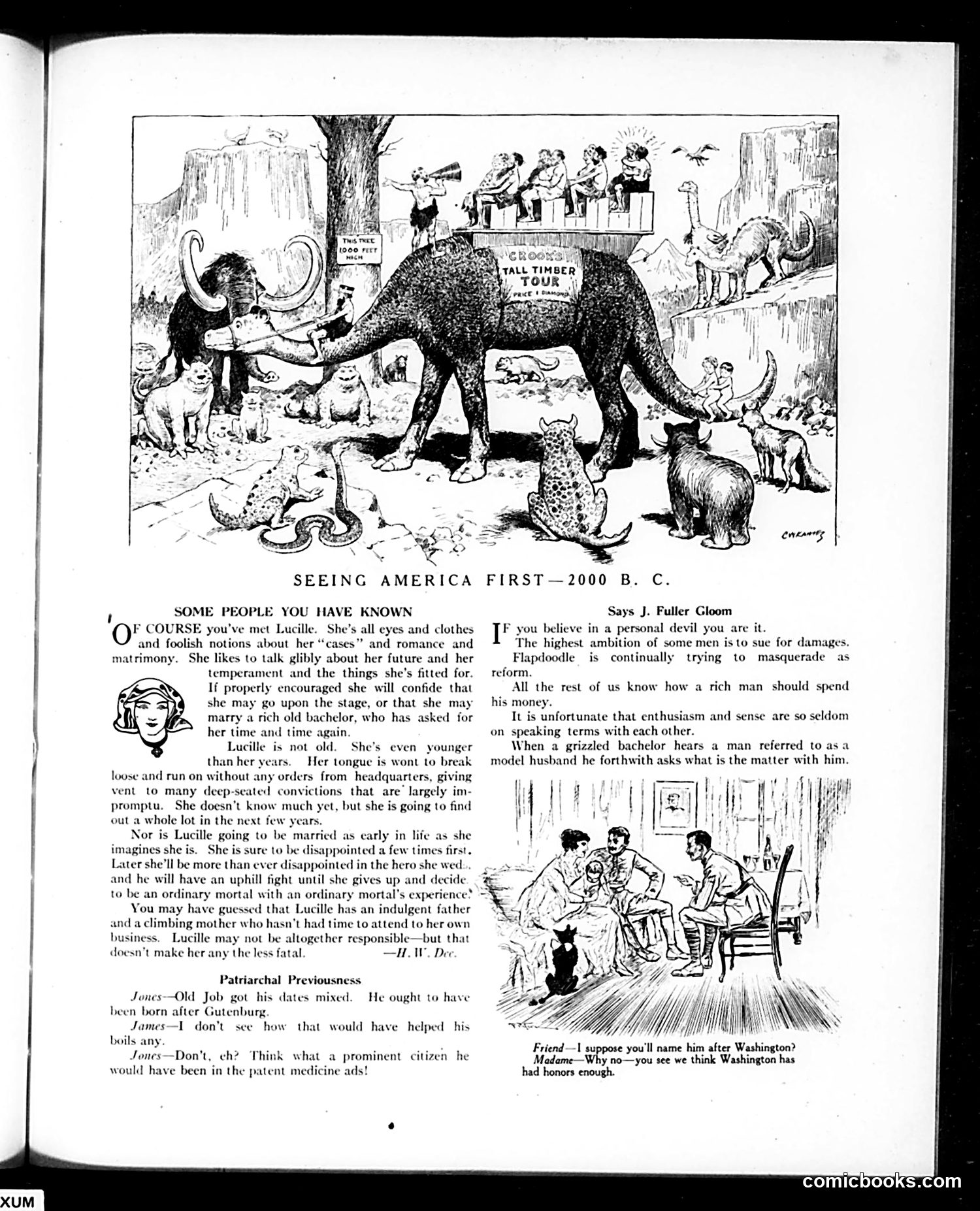
This page from Judge magazine satirizes early 20th-century American social types and attitudes through multiple pieces. **Top Cartoon**: "Seeing America First—2000 B.C." depicts a dinosaur-themed "Groomer's Tall Timber Tour," mocking the popular "See America First" tourism movement. The satire suggests that touring America's natural wonders attracts pretentious sightseers. **Main Article**: J. Fuller Gloom's "Some People You Have Known" targets a character named Lucille—a shallow, talkative young woman from an indulgent family who romanticizes about marrying wealth or becoming an actress, yet lacks real ambition or self-awareness. The author mocks her inevitable disappointment in life and love. **Brief Jokes**: Side commentary ridicules old-fashioned attitudes ("patriarchal previousness"), divine retribution beliefs, wealth, and insincere reform efforts. **Lower Cartoon**: A domestic scene where friends debate naming a newborn "Washington," with the punch line that Washington has already received sufficient honors—a mild jab at American hero-worship. Overall, the page reflects Jazz Age cynicism toward American optimism, class pretensions, and social conventions.
📄 Transcribed text from this page (OCR, searchable)
Machine-transcribed from the original scan — historical spelling and the odd misread are preserved.
XUM SEEING AMERICA FIRST—2000 B. C. SOME PEOPLE YOU HAVE KNOWN Says J. Fuller Gloom F COURSE you've met Lucille. She’s all eyes and clothes F you believe in a personal devil you are it. and foolish notions about her “cases” and romance and Phe highest ambition of some men isto sue for damages. matrimony. She likes to talk glibly about her future and her Flapdoodle is continually trying to masquerade as temperament and the things she's fitted for. reform. If properly encouraged she will confide that All the rest of us know how a rich man should spend she may go upon the stage, or that she may _ his money. marry a rich old bachelor, who has asked for It is unfortunate that enthusiasm and sense are so seldom her time and time again. on speaking terms with each other. Lucille is not old. She’s even younger When a grizzled bachelor hears a man referred to as a than her years. Her tongue is wont to break — model husband he forthwith asks what is the matter with him. loose and run on without any orders from headquarters, giving vent to many deep-seated convictions that are’ largely im- promptu. She doesn’t know much yet, but she is going to find out a whole lot in the next few ye Nor is Lucille going to be married as carly in life as she imagines she is. She is sure to be disappointed a few times first. Later she'll be more than ever disappointed in the hero she wed». and he will an uphill fight until she gives up and decide to be an ordin mortal with an ordinary mortal’s experience: You may have guessed that Lucille has an indulgent father and a climbing mother who hasn't had time to attend to her own business. Lucille may not be altogether responsible—but that doesn’t make her any the less fatal HW. Dec Patriarchal Previousness Jones—Old Job got his dates mixed. He ought to have James—1 don't see how that would have helped his wE-2 LY Mi been born after Gutenburg. boils any ; a nies + . Friend—I s ¢ you'll name him after Washington? Jones—Don't, ch? Think what a prominent citizen he fod Wir wo you see we think ‘Washington has would have been in the patent medicine ads! had honors enough.