
Judge, 1917-02-17 · page 6 of 28
Judge — February 17, 1917 — page 6: what you’re looking at
What you’re looking at
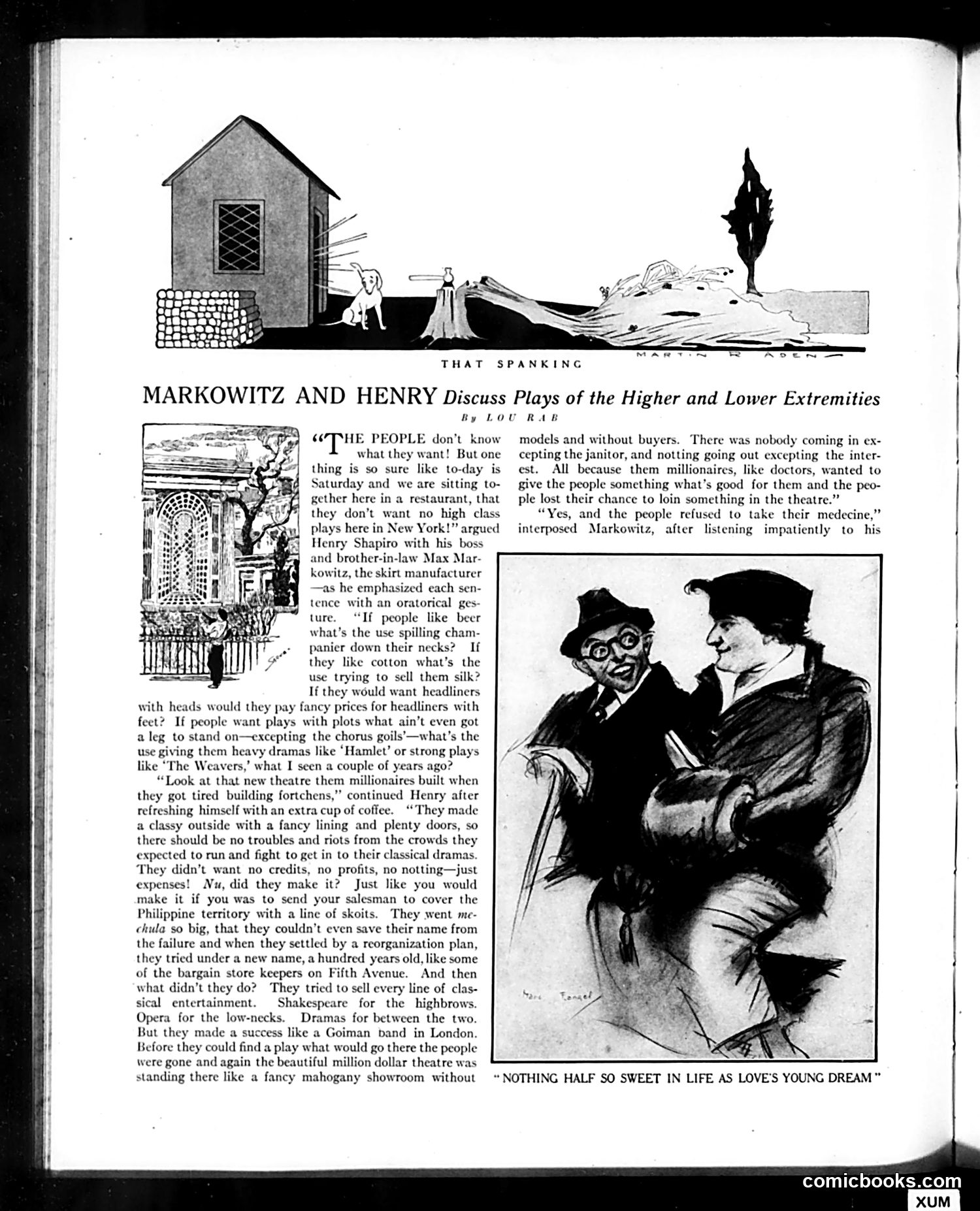
This page from *Judge* magazine features a discussion between two theatrical figures—likely Markowitz and Henry Shapiro (identified in the text as a skirt manufacturer and boss)—debating the commercial viability of serious drama. **The Satire's Point:** Henry argues that Broadway theaters built grand playhouses expecting to produce prestigious works like *Hamlet*, but failed because the business model was unsustainable. They couldn't attract audiences without gimmicks. He contrasts this with successful entertainment strategies: opera for wealthy patrons, dramas for middle-class audiences, and Shakespeare adaptations for mass appeal. **The Social Critique:** The satire mocks American theatrical commercialism—the impossibility of sustaining high art in a market-driven system. Theater owners couldn't survive on artistic merit alone; they needed profitable entertainment, ultimately resorting to lowbrow productions. The caption "Nothing Half So Sweet in Life as Love's Young Dream" appears ironic commentary on theatrical idealism versus market realities.
📄 Transcribed text from this page (OCR, searchable)
Machine-transcribed from the original scan — historical spelling and the odd misread are preserved.
ey ae H&S THAT SPANKING MARKOWITZ AND HENRY Discuss Plays of the Higher and Lower Extremities By LOU RAB E PEOPLE don’t know models and without buyers. There was nobody coming in ex- what they want! Butone — cepting the janitor, and notting going out excepting the inter- thing is so sure like to-day is est. All because them millionaires, like doctors, wanted to Saturday and we are sitting to- give the people something what’s good for them and the peo- gether here in a restaurant, that _ ple lost their chance to loin something in the theatre.” they don’t want no high class “Yes, and the people refused to take their medecine,” plays here in New York!” argued interposed Markowitz, after listening impatiently to his | Henry Shapiro with his boss | and brother-in-law Max Mar- kowitz, the skirt manufacturer —as he emphasized each sen- tence with an oratorical ges- ture. “If people like beer what’s the use spilling cham- panier down their necks? If they like cotton what’s the use trying to sell them silk? If they would want headliners with heads would they pay fancy prices for headliners with feet? If people want plays with plots what ain’t even got a leg to stand on—excepting the chorus goils’—what’s the ing them heavy dramas like ‘Hamlet’ or strong plays he Weavers,’ what I seen a couple of years ago? “Look at that new theatre them millionaires built when they got tired building fortchens,” continued Henry after refreshing himself with an extra cup of coffee. “They made a classy outside with a fancy lining and plenty doors, so there should be no troubles and riots from the crowds they expected to run and fight to get in to their classical dramas. They didn’t want no credits, no profits, no notting—just expenses! Nu, did they make it? Just like you would make it if you was to send your salesman to cover the Philippine territory with a line of skoits. They went me- chula so big, that they couldn’t even save their name from the failure and when they settled by a reorganization plan, they tried under a new name, a hundred years old, like some of the bargain store keepers on Fifth Avenue. And then what didn’t they do? They tried to sell every line of clas- sical entertainment. Shakespeare for the highbrows. Opera for the low-necks. Dramas for between the two. ' But they made a success like a Goiman band in London. I] Before they could find a play what would go there the people were gone and again the beautiful million dollar theatre was standing there like a fancy mahogany showroom without “ NOTHING HALF SO SWEET IN LIFE AS LOVE'S YOUNG DREAM” comicbooks.com