
Judge, 1916-11-25 · page 7 of 32
Judge — November 25, 1916 — page 7: what you’re looking at
What you’re looking at
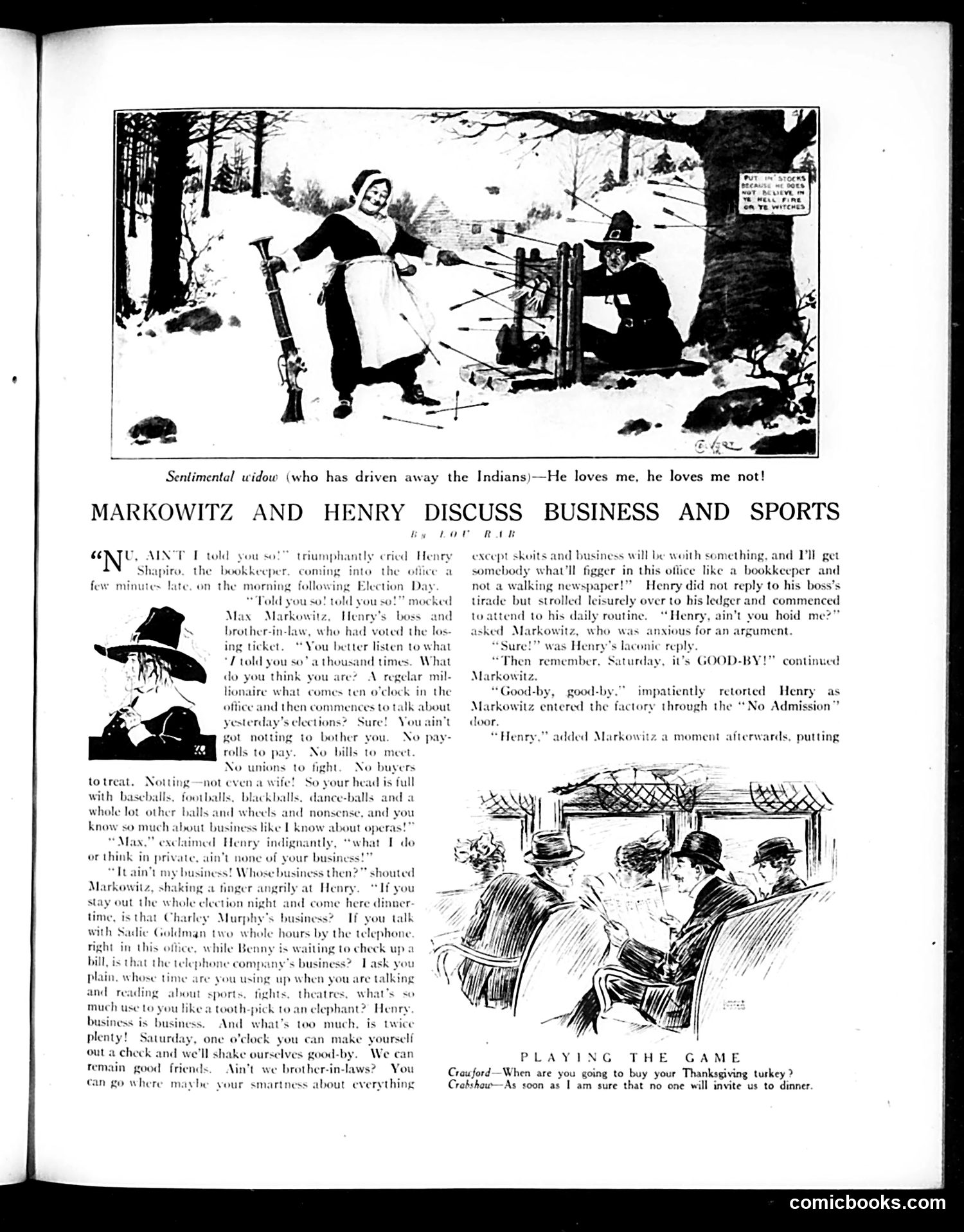
This page from *Judge* magazine contains two satirical pieces: **Top cartoon:** A "Sentimental Widow" plucking flower petals ("he loves me, he loves me not") while a Pilgrim-era figure sits nearby with a rifle. The caption implies she's driven away Native Americans. This is dark colonial-era satire, likely mocking sentimental romanticism about frontier conquest. **Main story:** "Markowitz and Henry Discuss Business and Sports" depicts a boss-employee conflict. Max Markowitz (the owner) berates his bookkeeper Henry for being late the day after an election, then launches into a tirade about Henry wasting company time thinking about sports, elections, and entertainment instead of work. Henry responds tersely, and Markowitz fires him, saying they'll "shake hands good-by Saturday." The satire targets working-class immigrant characters (Jewish surnames) and mocks both the overbearing, chatty boss and the disengaged employee. The bottom cartoon jokes about buying Thanksgiving turkey only if no one invites you to dinner—social commentary on economic hardship or social isolation.
📄 Transcribed text from this page (OCR, searchable)
Machine-transcribed from the original scan — historical spelling and the odd misread are preserved.
Sentimental widow (who has driven away the Indians)—He loves me, he loves me not! MARKOWITZ AND HENRY DISCUSS BUSINESS AND SPORTS Be LOU RAB oNE. AINTT [told you so!” triumphantly eried Henry except skeits and business will be woith something, and Vl get Shapiro. the bookkeeper. coming into the office a somebody what'll figger in this office like a bookkeeper and few minutes late. on the morning following Election Day not a walking newspaper!” Henry did not reply to his boss’s “Told you so! told you so!” mocked — tirade but strolled leisurely over to his ledger and commenced Max Markowitz, Henry’s boss and — to attend to his daily routine. “Henry, ain't you hoid me?” brother-in-law, who had voted the los- asked Markowitz, who was anxious for an argument, ing ticket. “You better listen to what “Sure!” was Henry’s laconic reply *Ttold you so’ a thousand times. What “Then remember, Saturday, it’s GOOD-BY!" continued do you think you are? A regelar mil- Markowitz. lionaire what comes ten o'clock inthe Good- good-by.” impatiently retorted Henry as office and then commences totalk about 3 itz y factory through the ‘No Admission” sterday’sclections? Sure! Youain't door. got notting to bother you. No pay- “Henry.” added Markowitz a moment afterwards, putting rolls to pay. No bills to meet No unions to fight. No buyers totreat. Notting not even a wife! So your head is full with baseballs, footballs, blackballs. dance-balls and a whole lot other balls and wheels and nonsense, and you know so much about business like | know about operas May.” exclaimed Henry indignantly, “what I do or think in private, ain't none of your business!” “Teain’t my business! Whose business then?” shouted Markowitz, shaking at finger angrily at Henry. “If you stay out the wh ight and come here dinner time, is thar © ya s business? Tf you talk y the telephi in this office, while Benny is waiting to check is that the telephone company’s business? L ask you plain. whose time are you using up when you are tal and reading about sports. fights. theatres, wha much use to you like a tooth-pick toan elephant?) Henry business is business. And what's too much, is twice plenty! Saturday, one o'clock you can make yourseli out a check and we'll shake ourselves good-by. We can PLAYING THE GAME remain good friends. Ain't we brother-in-laws? You Crauford—When are you going to buy your Thanksgiving turkey ? can go where maybe your smartness about everything Crakshaw—As soon as | am sure that no one will invite us to dinner comicbooks.com