
Judge, 1916-09-02 · page 19 of 28
Judge — September 2, 1916 — page 19: what you’re looking at
What you’re looking at
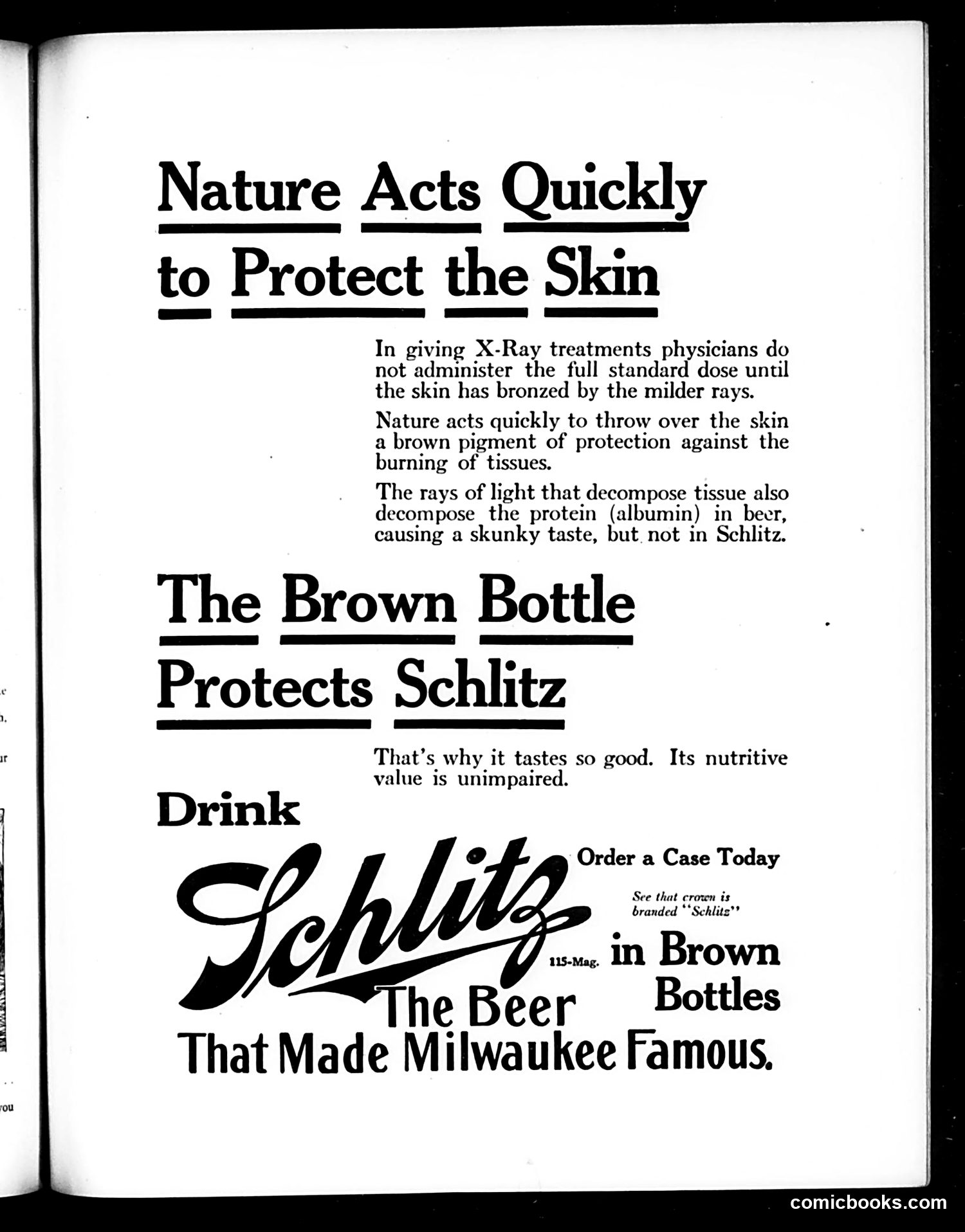
This is primarily a **Schlitz beer advertisement**, not political satire. The ad makes a pseudo-scientific argument to sell beer: The copywriter draws an analogy between how skin naturally protects itself from X-ray damage (by developing brown pigmentation) and how Schlitz's brown bottles protect beer from light damage. The argument claims that light rays decompose beer's protein, creating a "skunky taste"—but brown bottles block this, preserving Schlitz's quality. This is **misleading marketing disguised as science**. The X-ray comparison lends false credibility to what is essentially a product differentiation claim. While light *does* affect beer, the connection to medical X-ray protection is tenuous advertising rhetoric rather than genuine scientific explanation. The page reflects early 20th-century advertising's tendency to appropriate scientific language and imagery to make products seem sophisticated and trustworthy—a practice modern readers would recognize as deceptive marketing.
📄 Transcribed text from this page (OCR, searchable)
Machine-transcribed from the original scan — historical spelling and the odd misread are preserved.
Nature Acts Quickly to Protect the Skin In giving X-Ray treatments physicians do not administer the full standard dose until the skin has bronzed by the milder rays. Nature acts quickly to throw over the skin a brown pigment of protection against the burning of tissues. The rays of light that decompose tissue also decompose the protein (albumin) in beer, causing a skunky taste, but. not in Schlitz. The Brown Bottle Protects Schlitz That’s why it tastes so good. Its nutritive value is unimpaired. Drink @ Order a Case Today See that crown is branded **Schlits”” ww, in Brown er Bottles That Made Milwaukee Famous. comicbooks.com