
Judge, 1916-08-12 · page 16 of 28
Judge — August 12, 1916 — page 16: what you’re looking at
What you’re looking at
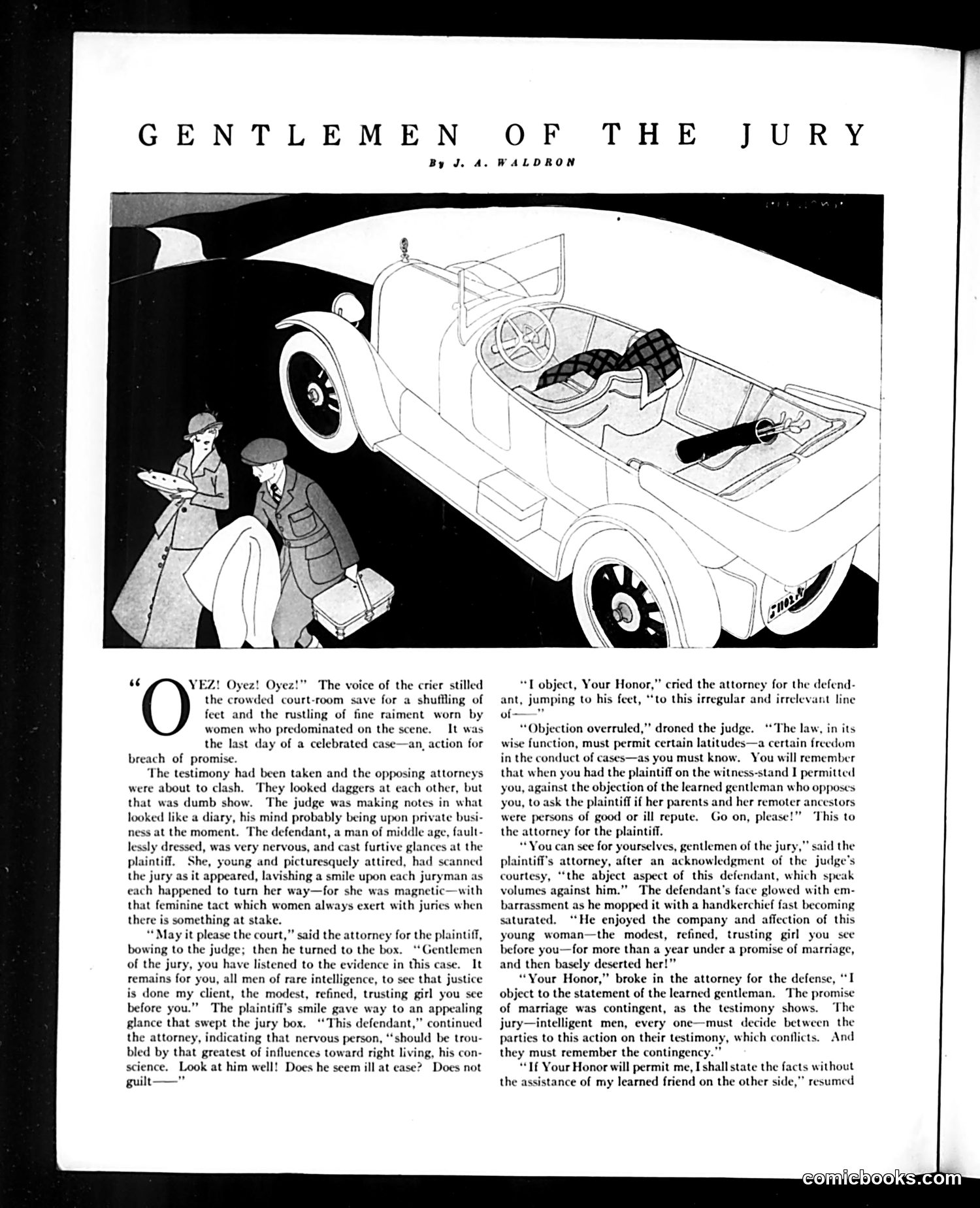
This is a satirical story illustrated with a courtroom scene depicting a breach-of-promise lawsuit—a common legal action in early 20th-century America where a woman could sue a man who broke an engagement. The satire targets **jury manipulation and courtroom bias**. The plaintiff's attorney exploits the all-male jury's susceptibility to the young woman's appearance and charm ("lavishing a smile upon each juryman"), while the judge repeatedly permits improper emotional appeals and questionable questions. The defendant's nervousness and guilty appearance become evidence merely because the attorney points them out dramatically. The cartoon shows the woman's supporters arriving with luggage, suggesting opportunistic gold-digging or premeditated legal strategy. The satire mocks how juries ignore actual evidence in favor of emotional performance and how the judicial system permits such manipulation, particularly when an attractive woman is the plaintiff. The defense attorney's technical objections cannot compete with the performative nature of the trial.
📄 Transcribed text from this page (OCR, searchable)
Machine-transcribed from the original scan — historical spelling and the odd misread are preserved.
GENTLEMEN By J. !" The voice of the crier stilled the crowded court-room save for a shuffling of fect and the rustling of fine raiment worn by women who predominated on the scene. It was the last day of a celebrated case—an, action for breach of promise. The testimony had been taken and the opposing attorneys were about to clash. The at each other, but that was dumb show. The judge was making notes in what looked like a diary, his mind probably being upon private busi- ness at the moment. The defendant, a man of middle age, fault- lessly dressed, was very nervous, and cast furtiv plaintiff. She, young and picturesquely attired, the jury as it appeared, lavishing a smile upon each juryman as each happened to turn her way—for she was magnetic—with that feminine tact which women always exert with jurics when there is something at stake. “* May it please the court,” said the attorney for the plaintiff, bowing to the judge; then he turned to the box. ntlemen of the jury, you have listened to the evidence in this case. It remains for you, all men of rare intelligence, to see that justice is done my client, the modest, refined, trusting girl you sce before you.” The plaintiff's smile gave way to an appealing glance that swept the jury box. ‘This defendant,” continued the attorney, indicating that nervous person, “should be trou- bled by that greatest of influences toward right living, his con- science. Look at him well! Does he seem ill at case? Does not guilt——" OF THE JURY A. WALDRON “TL object, Your Honor,” cried the attorney for the defend- ant, jumping to his feet, “to this irregular and irrelevant line of—” “Objection overruled,” droned the judge. “The law, in its wise function, must permit certain latitudes—a certain freedom in the conduct of cases—as you must know. You will remember that when you had the plaintiff on the witness-stand I permitted you, against the objection of the learned gentleman who opposes you, to ask the plaintiff if her parents and her remoter ancestors were persons of good or ill repute. Go on, please!” This to the attorney for the plaintiff. “You can see for yourselves, gentlemen of the jury,” said the plaintiff's attorney, after an acknowledgment of the judge's courtesy, “the abject aspect of this defendant, which speak volumes against him.” The defendant's face glowed with em- barrassment as he mopped it with a handkerchief fast becoming saturated. ‘He enjoyed the company and affection of this young woman—the modest, refined, trusting girl you sce before you—for more than a year under a promise of marriage, and then basely deserted her! “Your Honor,” broke in the attorney for the defense, object to the statement of the learned gentleman. The promise of marriage was contingent, as the testimony shows. The ntelligent men, every one—must decide between the ies to this action on their testimony, which conflicts. And they must remember the contingency.” “If Your Honor will permit me, I shall state the facts without the assistance of my learned friend on the other side,” resumed