
Judge, 1916-04-08 · page 16 of 28
Judge — April 8, 1916 — page 16: what you’re looking at
What you’re looking at
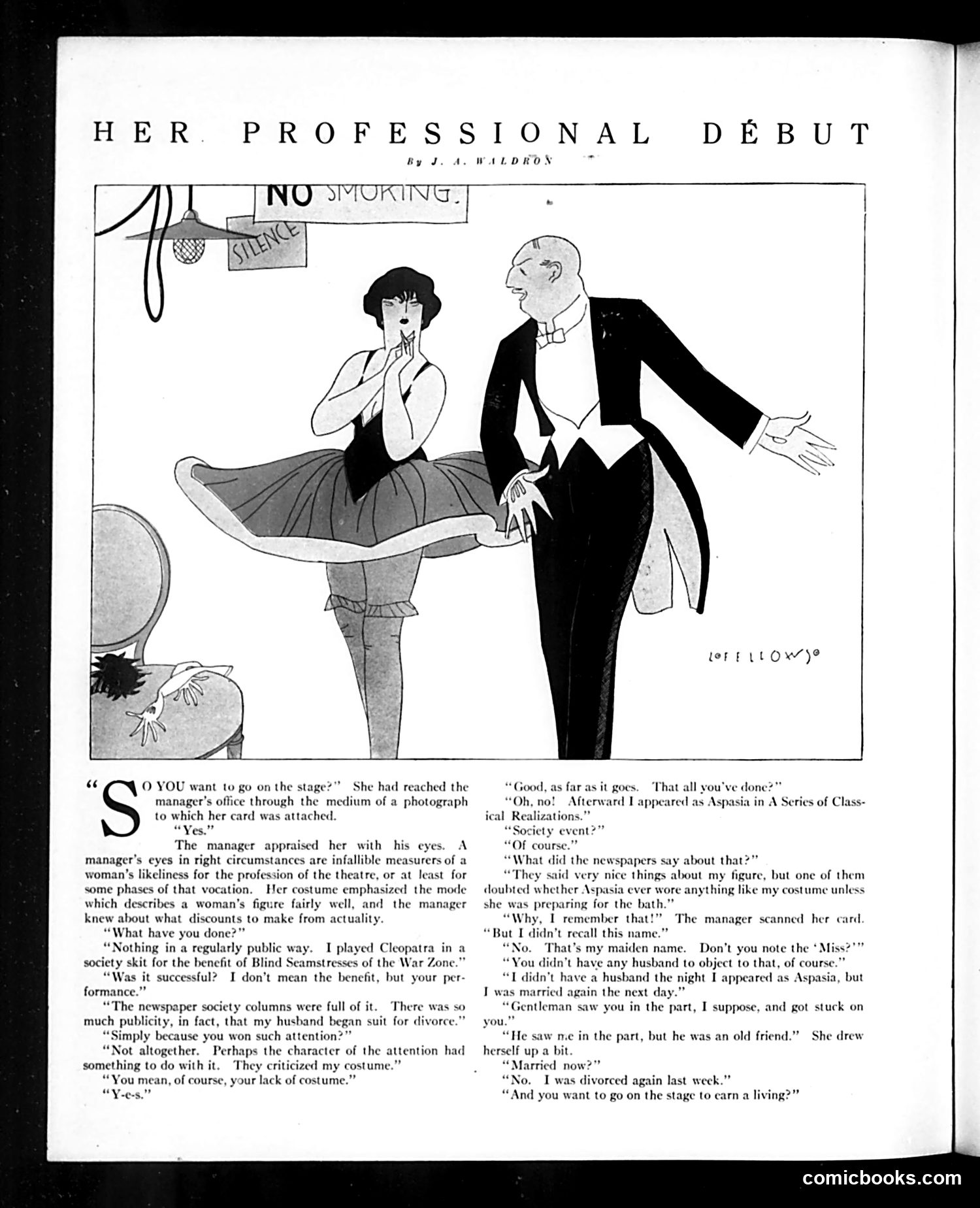
This satirical story mocks a woman seeking theatrical work through the lens of 1920s social attitudes. The humor centers on her checkered personal history: she gained notoriety performing as Cleopatra and Aspasia (a famous Greek courtesan) in society benefits, drawing newspaper attention—but primarily for her scanty costumes rather than her acting talent. The satire targets how she's been married and divorced twice in rapid succession, with men becoming "stuck on" her after seeing her provocative stage performances. The manager's questions expose the irony: she claims to want stage work for income, yet her "success" derives entirely from attracting male attention through costume (or lack thereof) rather than professional merit. The cartoon mocks both her naïveté about theatrical respectability and society's double standard—simultaneously criticizing women's scanty stage costumes while being captivated by them. It satirizes the intersection of marriage, divorce, and women's limited economic opportunities in that era.
📄 Transcribed text from this page (OCR, searchable)
Machine-transcribed from the original scan — historical spelling and the odd misread are preserved.
HER By J. A. PROFESSIONAL DEBUT 1LDRON ler EL LOW)? O YOU want to go on the stage?” manager's office through the medium of a photograph to which her card was attached. “Ye The manager appra aised her with his eyes. s in right circumstances are infallible measurers of a woman's likeliness for the profession of the theatre, or at least for some phases of that vocation. Her costume emphasized the mode which describes a woman's figure fairly well, and the manager knew about what discounts to make from actuality “What have you done?” “Nothing in a regularly public way. I played Cleopatra in 3 society skit for the benefit of Blind Seamstresses of the War Zone.” “Was it successful? I don’t mean the benefit, but your per- nee.” rhe newspaper socie much publicity, i in fact, that my husband be; ply because you won such attention? “Not altogether. Perhaps the character of the attention had something to do with it. They criticized my costume. ” “You mean, of course, your lack of costume.” Ye for y columns were full of it. here was so an suit for divorce.” She had reached the fone?” in A Series of Class- “Good, as far as it goes. ‘That all you've “Oh, no! Afterward I appeared as Aspa: ical Realizations.” y event?” “OF course.”” “What did the newspapers say about that “They said very nice things about my figure, but one of them doubted whether Aspasia ever wore anything like my costume unless she was preparing for the bath “Why, IT remember that “But I didn’t recall this name.” ‘o. That's my maiden name. Don't you note the * Miss? “You didn’t have any husband to object to that, of course.” “1 didn't a husband the night I appeared as Aspasia, but I was married in the next day, “Gentleman saw you in the part, I suppose, and got stuck on you.” “He saw me in the part, but he was an old friend.” herself up a bit. “Married now?” “No. I was divorced again last week.” “And you want to go on the stage to earn a living?” he manager scanned her card She drew comicbooks.com