
Judge, 1915-12-18 · page 13 of 28
Judge — December 18, 1915 — page 13: what you’re looking at
What you’re looking at
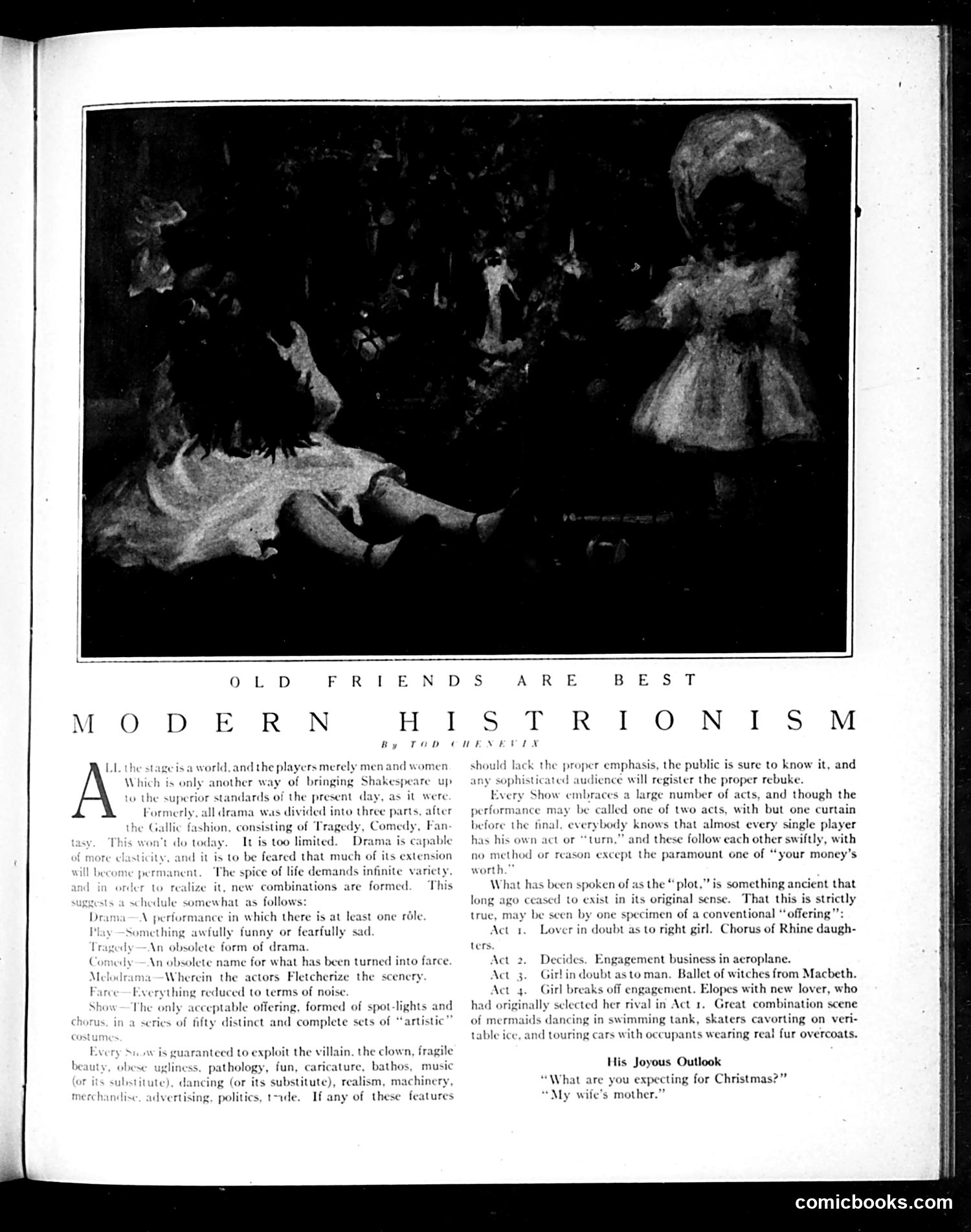
This page satirizes modern theatrical productions that have abandoned classical dramatic structure. The author (Tod Lusvia) argues that contemporary theatre has become a formless spectacle prioritizing entertainment gimmicks over coherent storytelling. The opening image appears to show a theatrical scene with performers in elaborate costumes, illustrating the "modern histrionism" being mocked. The satire's main points: 1. **Plot obsolescence**: Traditional plots have been replaced by disconnected "acts" or specialty performances (acrobatics, music, scenic displays). 2. **Example parody**: The specimen "offering" ridiculously combines unrelated elements—a love triangle with Rhine maidens, aeroplane stunts, witches' ballets, mermaids, ice skaters, and automobiles in one incoherent show. 3. **Spectacle over substance**: Rather than meaningful drama, shows exploit villains, clowns, music, and "artistic" costumes as distractions. The closing joke reinforces the critique: when asked what he expects for Christmas, a man replies "My wife's mother"—suggesting modern theatre is equally unwelcome torture.
📄 Transcribed text from this page (OCR, searchable)
Machine-transcribed from the original scan — historical spelling and the odd misread are preserved.
R N H omen isa world. and the players merely men and w Which is only another way of bringing Shakespeare up to the superior standards of the present day, as it were Ndrama was divided into three parts, after Formerly on, consisting of Tragedy, Cor t do today. It is too limited. Drama is capable und it is to be feared that much of its extension The spice of life demands infinite variety formed. This permanent to realize it, new combinations are »mewhat as follows: \ performance in which there is at least one role Something awfully funny or fearfully sad \n obsolete form drama. An obsolete name for what has been turned into farce. Wherein the actors Fletcherize the scenery rything reduced to terms of noise. only acceptable offering, formed of spot-lights and ics of fifty distinct and complete sets of “artistic” schedule teed to exploit the villain. the clown, fragil pathology, fun, caricature, bathe music dancing (or its substitute), realism, machine If any of these features ulvertising, politics, tide. E BES T R I ON roper emphasis, the public is sure to know it, and vudience will register the proper rebuke. large number of acts, and though the y be called one of two acts, with but one curtain everybody knows that almost every single player has his act or “turn,” and these follow each other swiftly, with no method or reason except the paramount one of “your money’s worth What has been spoken of as the “ plot,” is something ancient that long ago ceased to exist in its original sense. That this is strictly true, may be seen by one specimen of a conventional “offering”: Act 1. Lover in doubt as to right girl. Chorus of Rhine daugh- ters. Act 2. Decides. Engagement business in aeroplane. Act 3. Girlin doubt as to man. Ballet of witches from Macbeth. Act 4. Girl breaks off engagement. Elopes with new lover, who sriginally selected her rival in Act 1. Great combination scene of mermaids dancing in swimming tank, skaters cavorting on veri. table ice, and touring cars with occupants wearing real fur overcoats. SM ny sophistic Every Show embraces a perform before the His Joyous Outlook “What are you expecting for Christmas?” “My wife’s mother.” comicbooks.com