
Judge, 1915-11-20 · page 5 of 28
Judge — November 20, 1915 — page 5: what you’re looking at
What you’re looking at
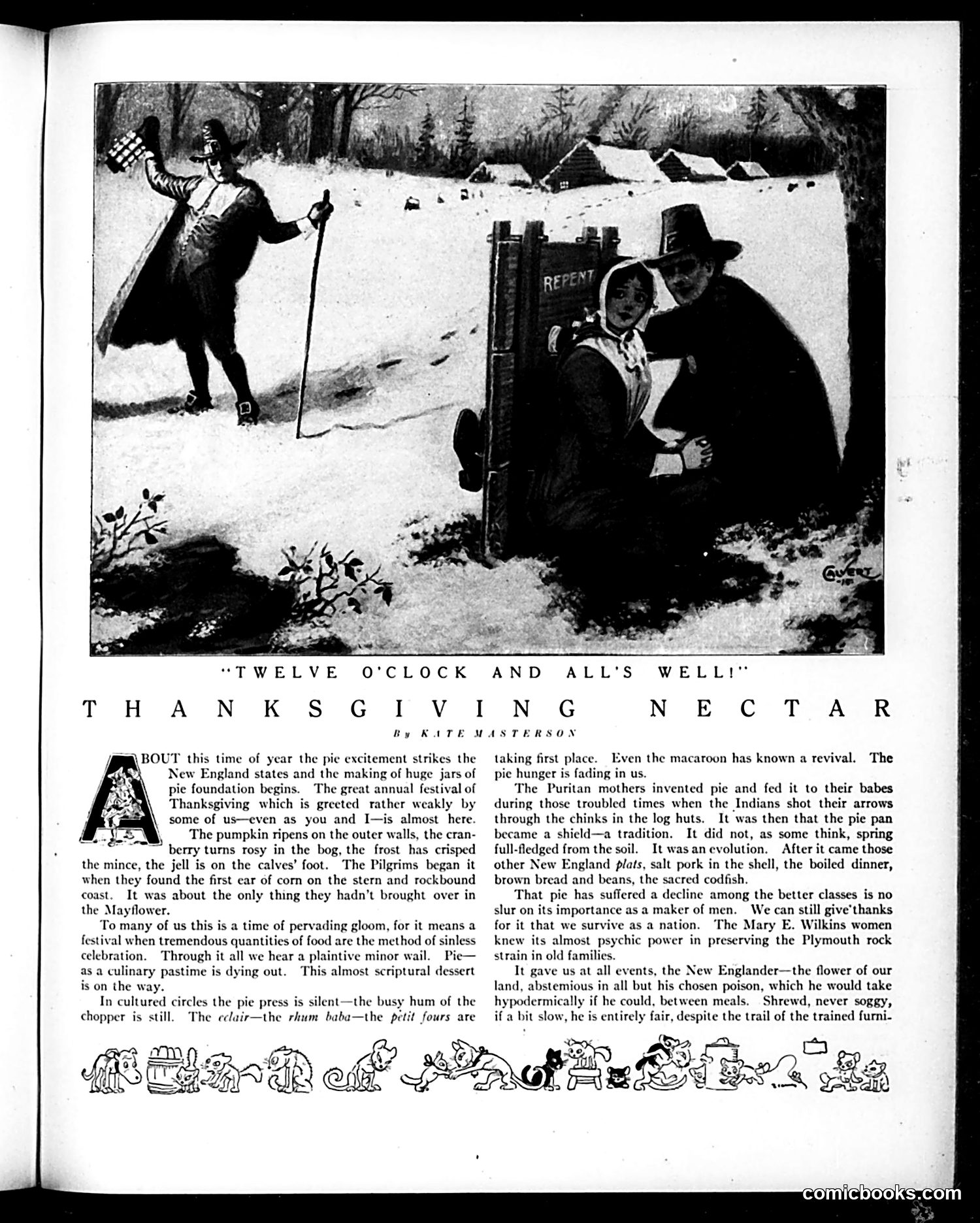
This satirical piece celebrates Thanksgiving pie traditions while lamenting its decline among "better classes." The image shows a winter scene where two well-dressed figures examine what appears to be a pie labeled "REGENT" — likely a commercial brand. The text humorously traces pie's cultural journey: from Pilgrim necessity to upper-class rejection. Masterson argues that despite attempts by "New Englanders" and society figures to poison pie's reputation through snobbery, it survives among working people. The "Mary E. Wilkins women" (likely referencing the regional writer) preserved Plymouth Rock traditions through humble pies. The satire criticizes class pretension—how the wealthy abandoned homely foods once deemed essential, only to have them survive through working-class loyalty.
📄 Transcribed text from this page (OCR, searchable)
Machine-transcribed from the original scan — historical spelling and the odd misread are preserved.
Ant eae O'CLOCK I V By KATE “TWELVE T H A N K S G BOUT this time of year the pie excitement strikes the New England states and the making of huge jars of pie foundation begins. The great annual festival of Thanksgiving which is greeted rather weakly by some of us—even as you and I—is almost here. The pumpkin ripens on the outer walls, the cran- ~ * berry turns rosy in the bog, the frost has crisped the mince, the jell is on the calves’ foot. The Pilgrims began it when they found the first ear of corn on the stern and rockbound coast. It was about the only thing they hadn’t brought over in the Mayflower. To many of us this is a time of pervading gloom, for it means a festival when tremendous quantities of food are the method of sinless celebration. Through it all we hear a plaintive minor wail. Pie— as a culinary pastime is dying out. This almost scriptural dessert is on the way. In cultured circles the pie press is silent—the busy hum of the chopper is still. The cclair—the rhum baba—the petit fours are 4 weer AND N G ASTERSON I M SAE of? LOD ALL'S WELL!’ N E C T A R taking first place. Even the macaroon has known a revival. The pie hunger is fading in us. The Puritan mothers invented pie and fed it to their babes during those troubled times when the Indians shot their arrows through the chinks in the log huts. It was then that the pie pan became a shield—a tradition. It did not, as some think, spring full-fledged from the soil. It wasanevolution. After it came those other New England piats, salt pork in the shell, the boiled dinner, brown bread and beans, the sacred codfish. That pie has suffered a decline among the better classes is no slur on its importance as a maker of men. We can still give’ thanks for it that we survive as a nation. The Mary E. Wilkins women knew its almost psychic power in preserving the Plymouth rock strain in old families. It gave us at all events, the New Englander—the flower of our land, abstemious in all but his chosen poison, which he would take hypodermically if he could, between me: Shrewd, never soggy, ifa bit slow, he is entirely fair, despite the trail of the trained furni- SH) zy