
Judge, 1915-05-15 · page 14 of 24
Judge — May 15, 1915 — page 14: what you’re looking at
What you’re looking at
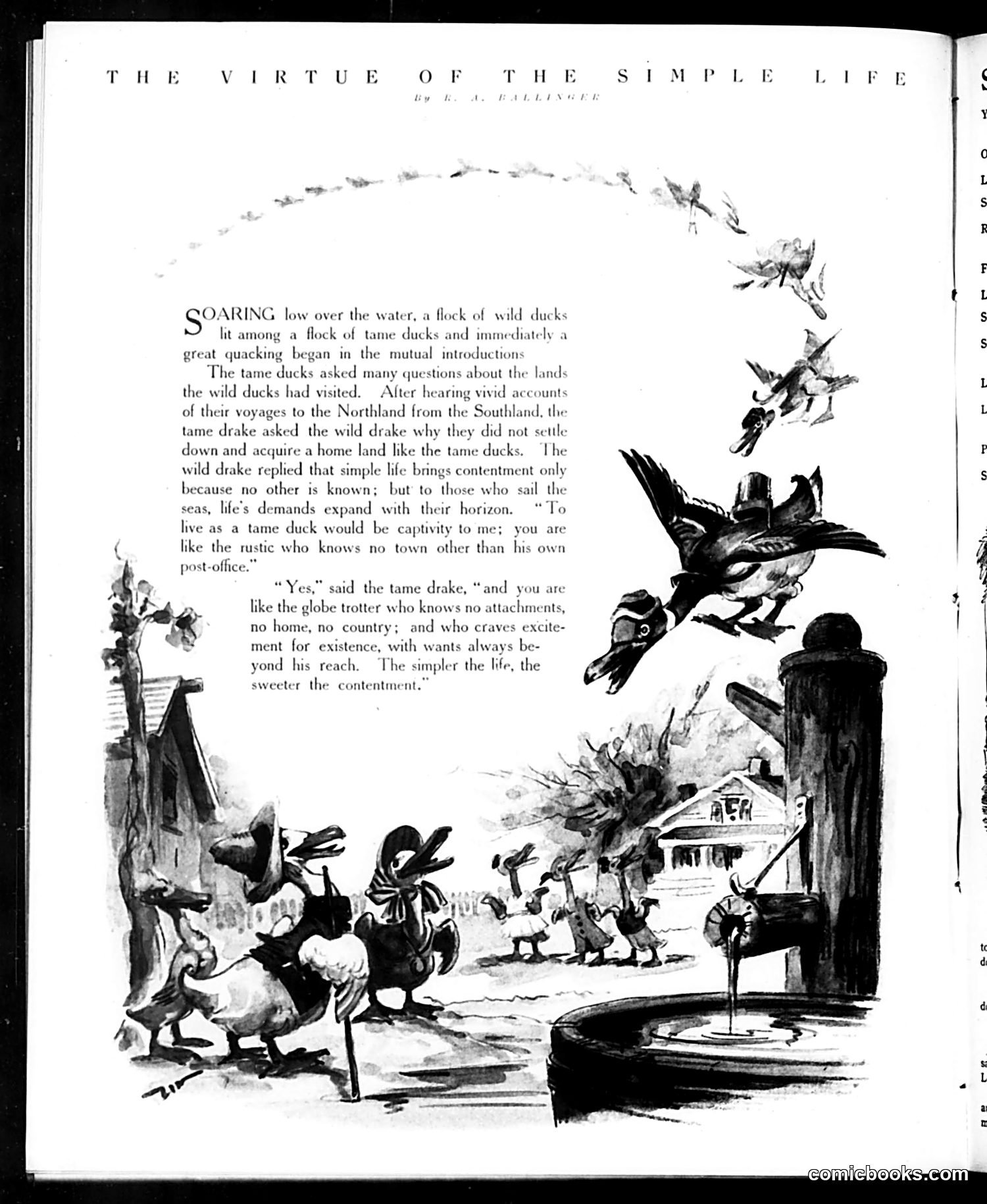
This fable contrasts two lifestyles through anthropomorphic ducks. Wild ducks represent adventurers and wanderers who seek excitement and constant new experiences across distant lands. Tame ducks embody settled domesticity and contentment with home, community, and stable attachments. The satire critiques both extremes: the wild drake mocks rural provincialism ("rustic who knows no town"), while the tame drake counters that restless globe-trotters lack genuine roots or satisfaction. The dialogue suggests early 20th-century American anxiety about competing values—the appeal of exploration and progress versus traditional stability and family life. The cartoon's moral appears deliberately ambiguous, allowing readers to choose which lifestyle deserves endorsement, reflecting contemporary debates about modernization, immigration, and American identity.
📄 Transcribed text from this page (OCR, searchable)
Machine-transcribed from the original scan — historical spelling and the odd misread are preserved.
OARING low over the water, a flock of wild ducks lit among a flock of tame ducks and immediately a great quacking began in the mutual introductions The tame ducks asked many questions about the lands the wild ducks had visited. After hearing vivid accounts of their voyages to the Northland from the Southland, the tame drake asked the wild drake why they did not settle down and acquire a home land like the tame ducks. ‘The wild drake replied that simple life brings contentment only because no other is known; but to those who sail the seas, life’s demands expand with their horizon. “To live as a tame duck would be captivity to me; you are like the rustic who knows no town other than his own post-office.” “Yes,” said the tame drake, “and you are like the globe trotter who knows no attachments, no home, no country; and who craves excite- ment for existence, with wants always be- yond his reach. ‘The simpler the life, the sweeter the contentment.”