
Judge, 1915-03-13 · page 5 of 24
Judge — March 13, 1915 — page 5: what you’re looking at
What you’re looking at
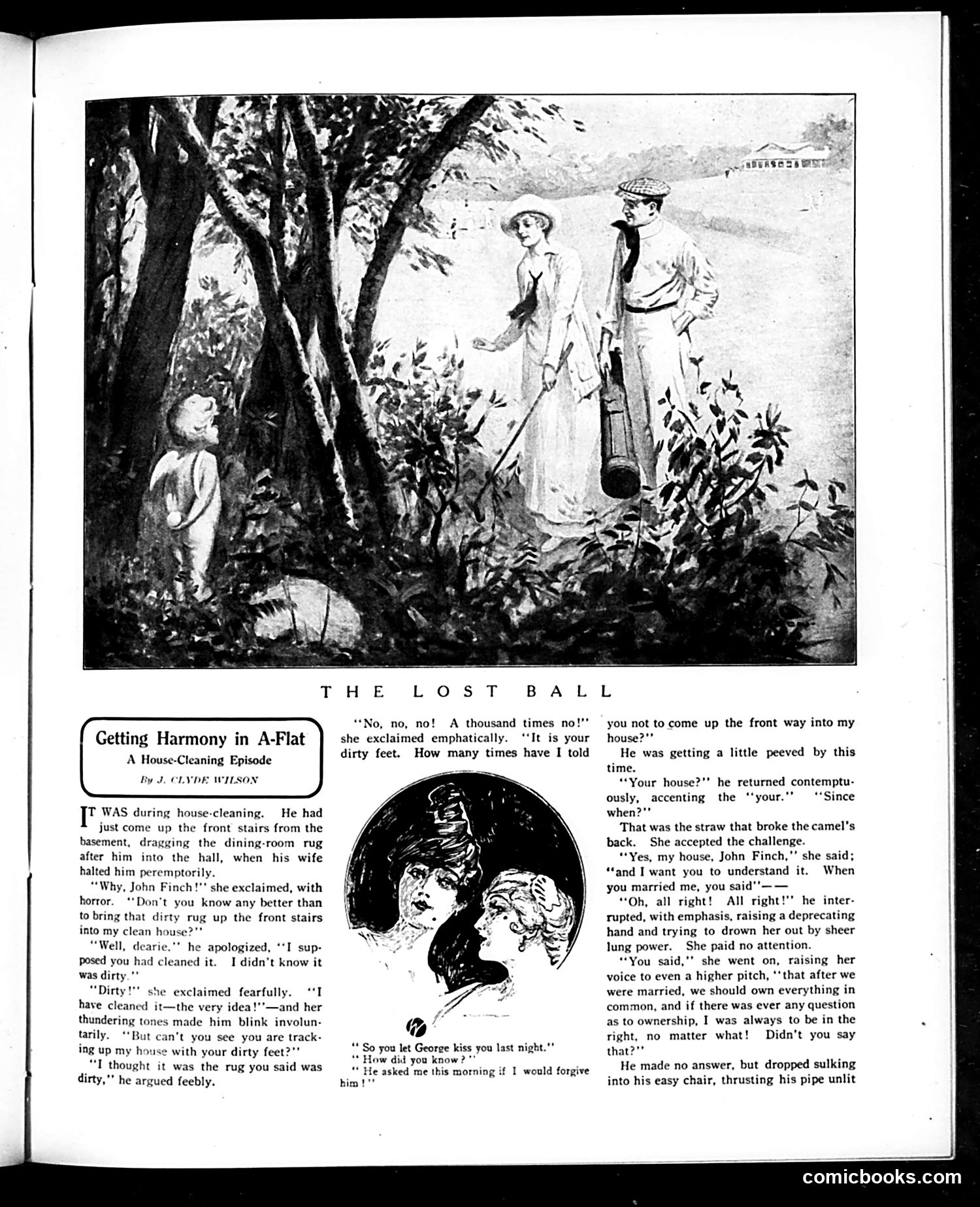
This domestic comedy from *Judge* magazine satirizes early 20th-century marriage tensions. A husband tracking mud through the house provokes his wife's exasperation about cleanliness standards. Their conflict escalates into a broader argument about authority in marriage—she demands he acknowledge her housekeeping expertise and right to rule domestic space. The satire targets both spouses: the husband's obliviousness and defensiveness, and the wife's aggressive assertion of control. The title pun ("A-Flat") references musical discord, suggesting marital disharmony. The humor derives from the relatable domesticity of the dispute—a common source of conflict in contemporary households—making it accessible social commentary on gender roles and household management expectations of the era.
📄 Transcribed text from this page (OCR, searchable)
Machine-transcribed from the original scan — historical spelling and the odd misread are preserved.
Getting Harmony in A-Flat A House-Cleaning Episode By J. CLYDE WILSON r WAS during house-cleaning. He had just come up the front stairs from the basement, dragging the dining-room rug after him into the hall, when his wife halted him peremptorily. “Why, John Finch!"" she exclaimed, with horror. ‘*Don't you know any better than to bring that dirty rug up the front stairs into my clean house?"’ “Well, dearie."’ he apologized, ‘*I sup- posed you had cleaned it. I didn’t know it she exclaimed fearfully. have cleaned it—the very idea!""—and her thundering tones made him blink involun- tarily. “But can't you see you are track- ing up my house with your dirty feet?"’ ST thought it was the rug you said was dirty,’ he argued feebly. ‘No, no, no! A thousand times no!’’ she exclaimed emphatically. ‘‘It is your dirty feet. How many times have I told “ So you let George kiss you last night."* ** How did you know? "’ “ He asked me this morning if I would forgive him!"" you not to come up the front way into my house?’” He was getting a little peeved by this time. “Your house?’’ he returned contemptu- ously, accenting the ‘‘your."’ ‘‘Since when?” That was the straw that broke the camel's back. She accepted the challenge. “Yes, my house, John Finch,"’ she said; “‘and I want you to understand it. When you married me, you said"’ “Oh, all right! All right!’’ he inter- rupted, with emphasis, raising a deprecating hand and trying to drown her out by sheer lung power. She paid no attention. “You said,’’ she went on, raising her voice to even a higher pitch, ‘‘that after we were married, we should own everything in common, and if there was ever any question as to ownership, I was always to be in the right, no matter what! Didn't you say that?"” He made no answer, but dropped sulking into his easy chair, thrusting his pipe unlit — comicbooks.com