
Judge, 1914-02-28 · page 7 of 24
Judge — February 28, 1914 — page 7: what you’re looking at
What you’re looking at
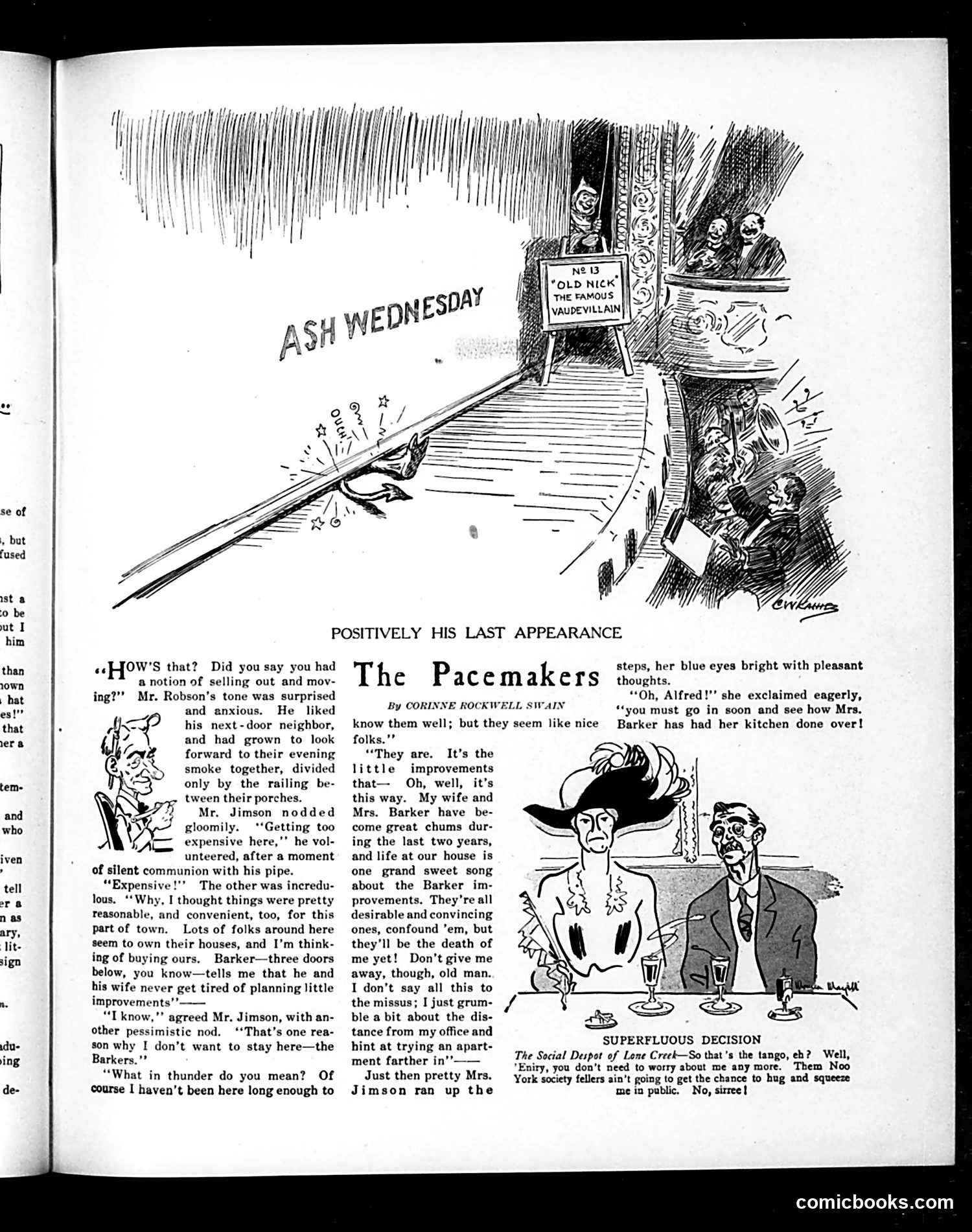
This page contains two distinct pieces satirizing American middle-class suburban life in the early 20th century. **"The Pacemakers"** (main story) depicts suburban competition and social pressure. Mr. Jimson wants to sell his house and move, citing expense—but admits the real reason: his wife has befriended Mrs. Barker, whose constant home improvements (kitchen renovations, etc.) set an impossible standard. The Barkers' improvements pressure Jimson into competitive home ownership and upgrading, threatening his financial comfort. The satire mocks how neighbors' ambitions can trap homeowners in cycles of costly "keeping up." **"Superfluous Decision"** (bottom cartoon) jokes about rural social anxieties. A country man announces he's quitting the tango to prevent "New York society fellers" from embracing him publicly—humorously exaggerating rural fears of urban sophistication and physical intimacy. Both pieces ridicule aspirational behavior: suburban consumerism-driven competitiveness in one, and defensive small-town anxiety about cosmopolitan influences in the other.
📄 Transcribed text from this page (OCR, searchable)
Machine-transcribed from the original scan — historical spelling and the odd misread are preserved.
POSITIVELY HIS LAST APPEARANCE «HOW'S that? Did you say you had a notion of selling out and mov- Mr. Robson’s tone was surprised and anxious. He liked his next-door neighbor, and had grown to look forward to their evening smoke together, divided only by the railing be- tween their porches. Mr. Jimson nodded gloomily. ‘Getting too expensive here,’’ he vol- unteered, after a moment of silent communion with his pipe. “Expensive !’? The other was incredu- lous. ‘*Why, I thought things were pretty reasonable, and convenient, too, for this part of town. Lots of folks around here seem to own their houses, and I’m think- ing of buying ours. Barker—three doors below, you know—tells me that he and his wife never get tired of planning little improvement “I know,’’ agreed Mr. Jimson, with an- other pessimistic nod. ‘‘That’s one rea- son why I don’t want to stay here—the Barkers."’ “What in thunder do you mean? Of course I haven’t been here long enough to ing?” Pacemakers By CORINNE ROCKWELL SWAIN The know them folks.”” “They are. It’s the little improvements that— Oh, well, it’s this way. My wife and Mrs. Barker have be- come great chums dur- ing the last two years, well; but they seem like nice steps, her blue eyes bright with pleasant thoughts. “Oh, Alfred!’ she exclaimed eagerly, **you must go in soon and see how Mrs. Barker has had her kitchen done over! and life at our house is one grand sweet song about the Barker im- provements. They’re all desirable and convincing ones, confound 'em, but they'll be the death of me yet! Don’t give me away, though, old man. I don’t say all this to the missus; I just grum- ble a bit about the dis- tance from my office and hint at trying an apart- ment farther in’’—— Just then pretty Mrs. Jimson ran up the SUPERFLUOUS DECISION The Social Despot of Lone Creck—So that's the tango, eh? Well, "Eniry, you don’t need to worry about me any more. Them Noo York society fellers ain't going to get the chance to hug and squeeze me in public. No, sirree! comicbooks.com