
Judge, 1914-01-24 · page 10 of 24
Judge — January 24, 1914 — page 10: what you’re looking at
What you’re looking at
This satirical fable by Randolph Bartlett contrasts two reform approaches. The First Reformer aggressively proclaims truth ("Black is not White. Black is Black"), gets violently rejected and martyred. The Second Reformer uses diplomatic gradualism—initially compromising ("Black is White, but tarnished"), then slowly introducing nuance ("merely Gray")—gaining audience acceptance and erecting monuments. The moral explicitly states: "The martyr gets the glory, but the diplomat does the work." This critiques American Progressive Era reform tactics. The fable argues that radical truth-telling, while morally pure, accomplishes nothing. Pragmatic compromise—incrementally shifting public opinion through flattery and incremental claims—actually succeeds politically. The page's other items ("Good Sport," "Changed") are unrelated humor pieces about Alaska and chorus girls, likely topical references to contemporary scandals now obscure.
📄 Transcribed text from this page (OCR, searchable)
Machine-transcribed from the original scan — historical spelling and the odd misread are preserved.
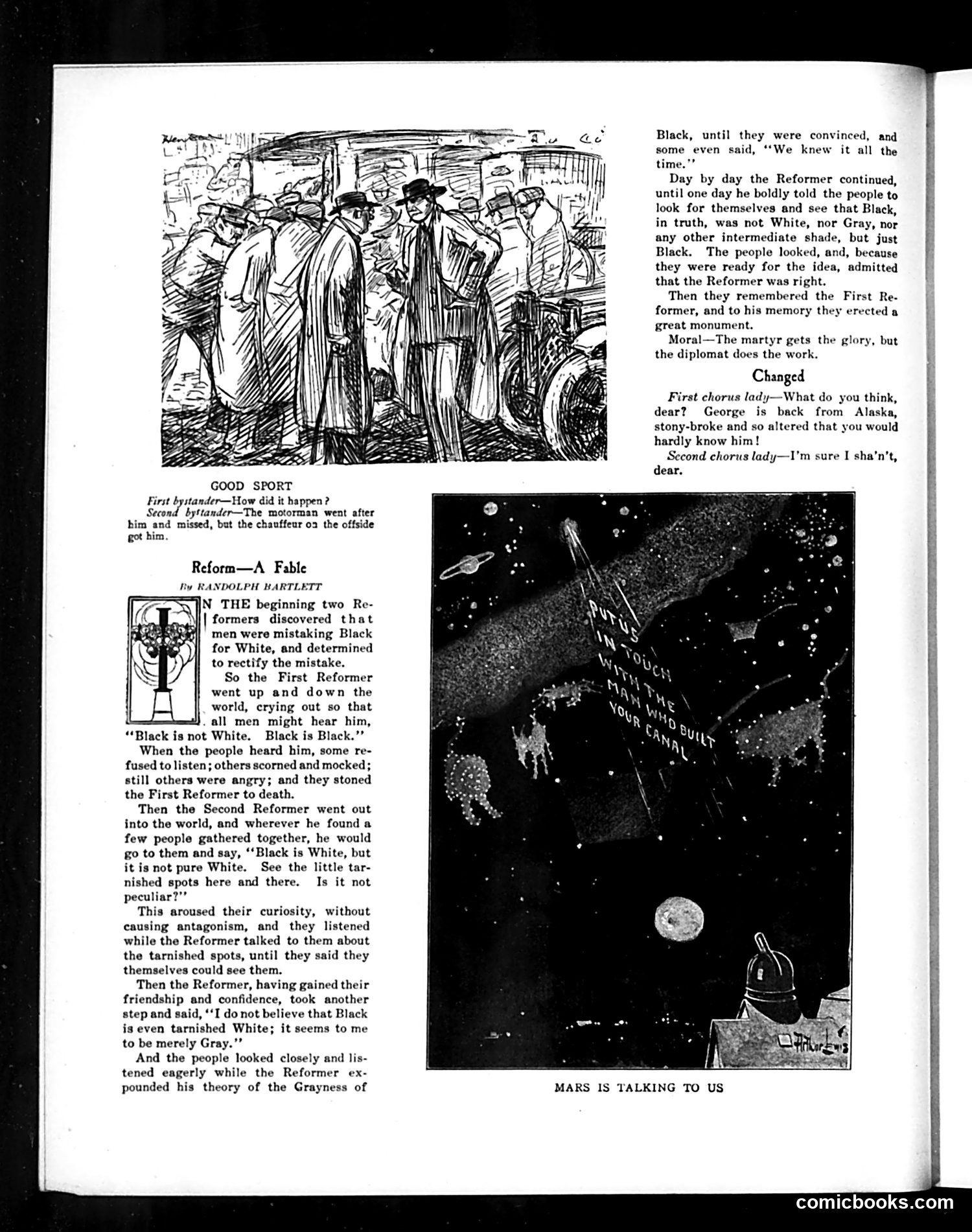
Black, until they were convinced, and some even said, ‘‘We knew it all the time.”” Day by day the Reformer continued, until one day he boldly told the people to look for themselves and see that Black, in truth, was not White, nor Gray, nor any other intermediate shade, but just Black. The people looked, and, because they were ready for the idea, admitted that the Reformer was right. Then they remembered the F former, and to his memory they great monument. Moral—The martyr gets the glory, but the diplomat does the work. Changed First chorus lady—What do you think, dear? George is back from Alaska, stony-broke and so altered that you would hardly know him! Second chorus lady—I'm sure I sha’n’t, First bystander—How did it happen? Second. byttander—The motorman went after him and missed, but the chauffeur o2 the offside got him. Reform—A Fable Ry RANDOLPH BARTLETT a I" THE beginning two Re- naq\l|| formers discovered that Nigy||_ men were mistaking Black for White, and determined to rectify the mistake. So the First Reformer went up and down the world, crying out so that a 4) all men might hear him, “Black is not White. Black is Black.”’ When the people heard him, some re- fused to listen; others scorned and mocked; still others were angry; and they stoned the First Reformer to death. Then the Second Reformer went out into the world, and wherever he found a few people gathered together, he would go to them and say, ‘‘Black is White, but it is not pure White. See the little tar- nished spots here and there. Is it not peculiar?”” This aroused their curiosity, without causing antagonism, and they listened while the Reformer talked to them about the tarnished spots, until they said they themselves could see them. Then the Reformer, having gained their friendship and confidence, took another step and said, ‘‘I do not believe that Black is even tarnished White; it seems to me to be merely Gray.’’ And the people looked closely and lis- tened eagerly while the Reformer ex- pounded his theory of the Grayness of MARS IS TALKING TO US comicbooks.com