
Judge, 1913-09-27 · page 14 of 24
Judge — September 27, 1913 — page 14: what you’re looking at
What you’re looking at
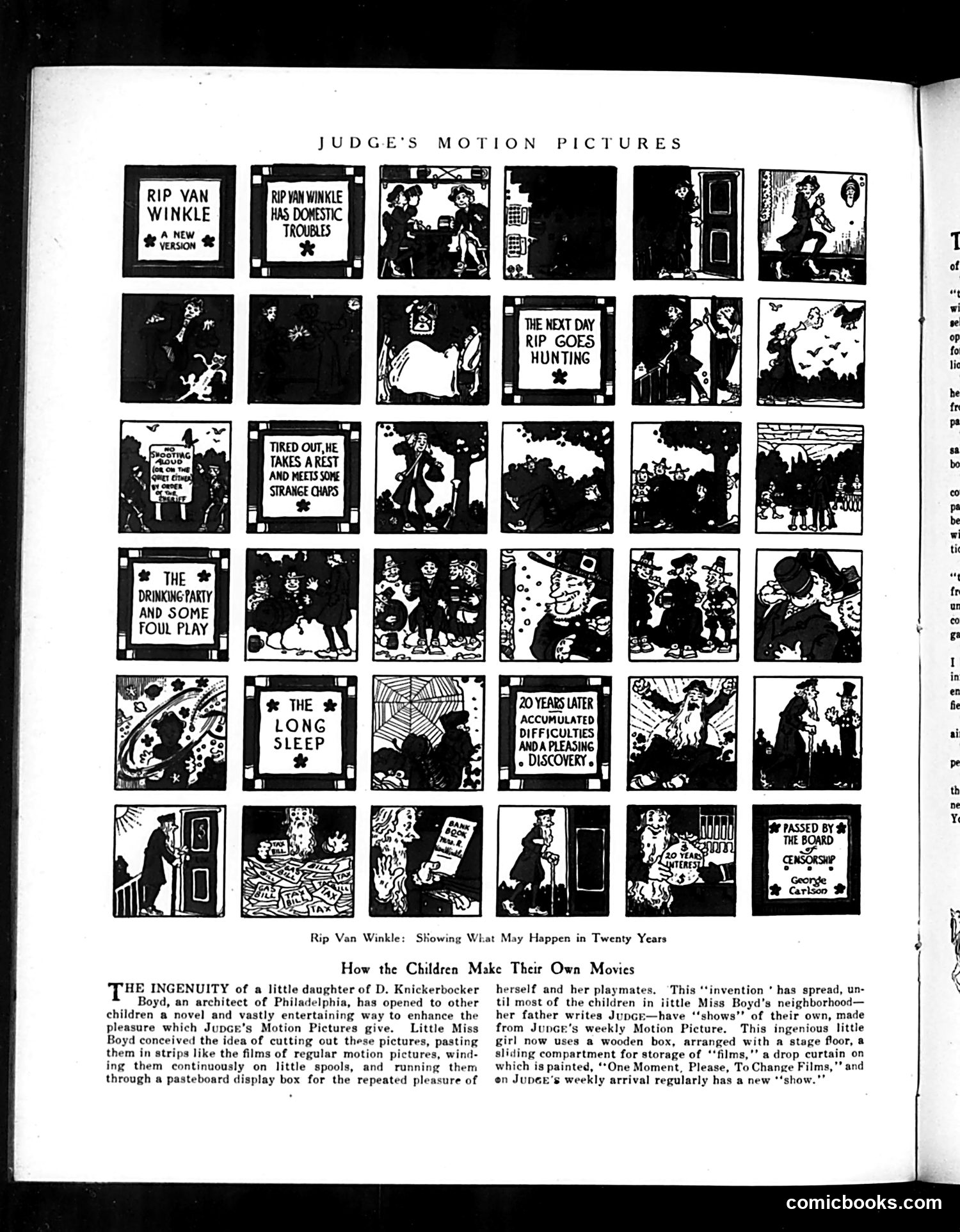
This page documents a creative trend among early 20th-century children: repurposing Judge magazine's cartoon strips as homemade motion pictures. A Philadelphia architect's daughter, D. Knickerbocker Boyd, invented a DIY projector by cutting out Judge's sequential cartoon panels, pasting them into filmstrips, and winding them on spools to view through a pasteboard box—creating the illusion of moving pictures. The page showcases one such strip: "Rip Van Winkle," the Washington Irving classic reimagined through Judge's satirical lens, showing the character's misadventures over twenty years. The article celebrates how this "invention" spread among neighborhood children, who created elaborate homemade theaters with wooden boxes, stage floors, and drop curtains. It's essentially an early example of children's hands-on media engagement—repurposing commercial content to create their own entertainment, predating modern fan culture and DIY media by decades.
📄 Transcribed text from this page (OCR, searchable)
Machine-transcribed from the original scan — historical spelling and the odd misread are preserved.
MOTION RIP VAN | WINKLE # Vession AND SOME FOUL PLAY Rip Van Winkle: PICTURES RIP GOES HUNTING ACCUMULATED DIFFICULTIES ‘AND A PLEASING o DISCOVERY» SKowing What May Happen in Twenty Years How the Children Make Their Own Movies THE INGENUITY of a little daughter of D. Knickerbocker Boyd, an architect of Philadelphia, has opened to other children a novel and vastly entertaining way to enhance the pleasure which JupGe’s Motion Pictures give. Little Miss Boyd conceived the idea of cutting out these pictures, pasting them in strips like the films of regular motion pictures, wind- ing them continuously on little spools, and running them through a pasteboard display box for the repeated pleasure of herself and her playmates. ‘This ‘invention * has spread, un- til most of the children in iittle Miss Boyd’s neighborhood— her father writes JupGe—have ‘‘shows’’ of their own, made from JunGe’s weekly Motion Picture. This ingenious little girl now uses a wooden box, arranged with a stage floor, a sliding compartment for storage of ‘‘films,’’ a drop curtain on which is painted, ‘*One Moment, Please, To Change Films,"’ and en Jupee’s weekly arrival regularly has a new ‘‘show."” comicbooks.com