
Judge, 1913-08-02 · page 15 of 24
Judge — August 2, 1913 — page 15: what you’re looking at
What you’re looking at
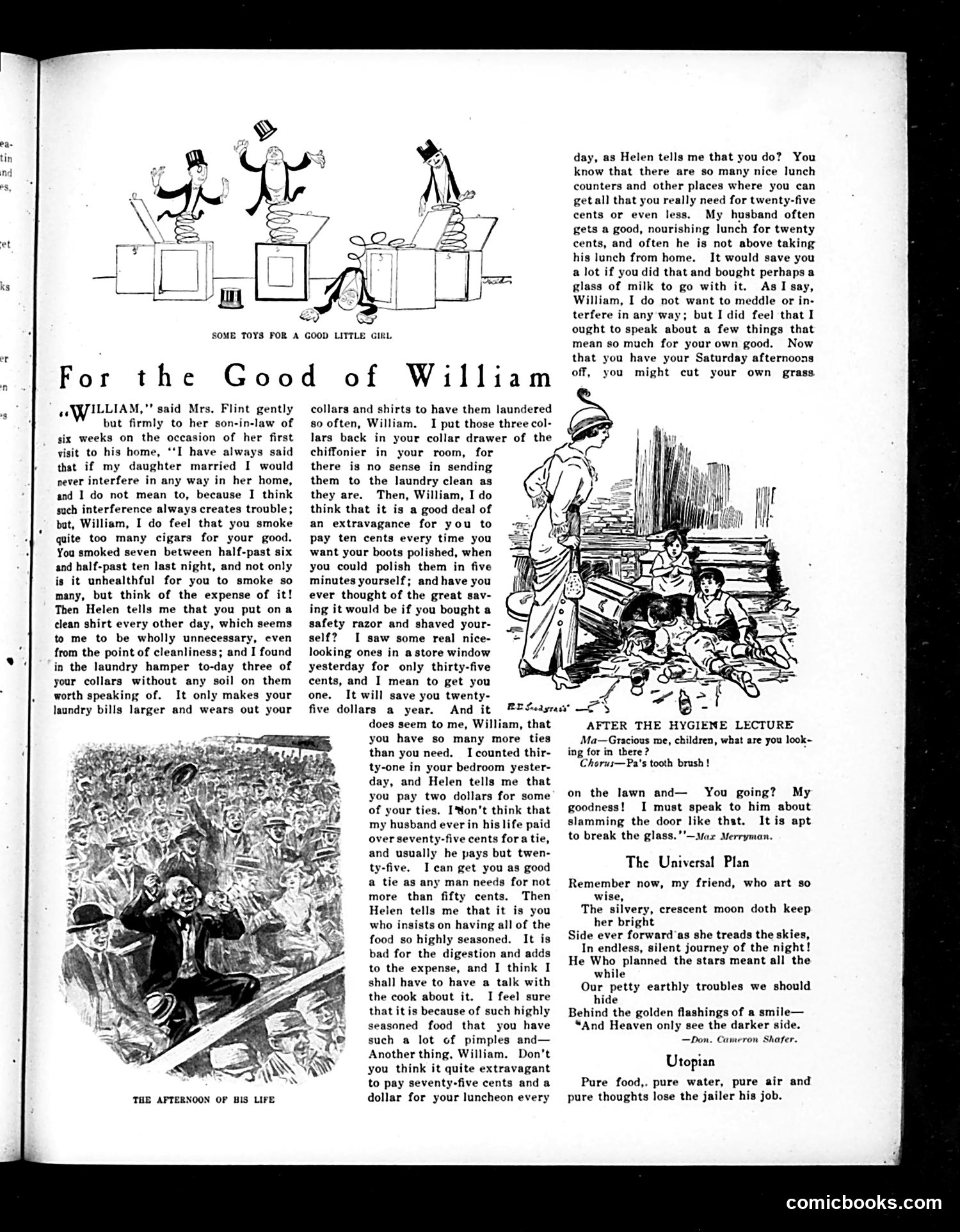
This satirical piece lampoons **overbearing mother-in-law interference** in newlyweds' lives. Mrs. Flint, visiting her son-in-law William for the first time, delivers an extended lecture criticizing his spending habits: too many cigars, frequent shirt laundering, paid shoe-polishing, expensive ties, and restaurant lunches. She positions herself as a "helpful" advisor while actually micromanaging his personal choices and expenses. The humor targets **interfering relatives** and the tension between household independence and family expectations—a common domestic comedy theme of the era. The accompanying cartoon showing toys labeled "For a Good Little Girl" reinforces the satire: William is being treated like a child requiring correction, not an adult married man. The closing illustration, "After the Hygiene Lecture," shows children searching for their father's toothbrush—implying even his oral hygiene is now under scrutiny. The satire mocks both Mrs. Flint's relentless busybodying and the powerlessness of men facing determined female relatives.
📄 Transcribed text from this page (OCR, searchable)
Machine-transcribed from the original scan — historical spelling and the odd misread are preserved.
SOME TOYS FOR A GOOD LITTLE GIRL For the Good of William ec QVILLIAM,” said Mrs. Flint gently but firmly to her son-in-law of six weeks on the occasion of her first visit to his home, ‘‘I have always said that if my daughter married I would never interfere in any way in her home, and I do not mean to, because I think such interference always creates trouble; but, William, I do feel that you smoke quite too many cigars for your good. You smoked seven between half-past six and half-past ten last night, and not only is it unhealthful for you to smoke so many, but think of the expense of it! Then Helen tells me that you put ona clean shirt every other day, which seems to me to be wholly unnecessary, even from the point of cleanliness; and I found in the laundry hamper to-day three of your collars without any soil on them worth speaking of. It only makes your laundry bills larger and wears out your THE AFTERNOON OF HIS LIFE collars and shirts to have them laundered so often, William. I put those three col- lars back in your collar drawer of the chiffonier in your room, for there is no sense in sending them to the laundry clean as they are. Then, William, I do think that it is a good deal of an extravagance for you to pay ten cents every time you want your boots polished, when you could polish them in five minutes yourself; and have you ever thought of the great sav- ing it would be if you bought a safety razor and shaved your- self? I saw some real nice- looking ones in a store window yesterday for only thirty-five cents, and I mean to get you one. It will save you twenty- five dollars a year. And it does seem to me, William, that you have so many more ties than you need. I counted thir- ty-one in your bedroom yester- day, and Helen tells me that you pay two dollars for some of your ties. I'Non’t think that my husband ever in his life paid over seventy-five cents fora tie, and usually he pays but twen- ty-five. Ican get you as good a tie as any man needs for not more than fifty cents. Then Helen tells me that it is you who insists on having all of the food so highly seasoned. It is bad for the digestion and adds to the expense, and I think I shall have to have a talk with the cook about it. I feel sure that it is because of such highly seasoned food that you have such a lot of pimples and— Another thing, William, Don’t you think it quite extravagant to pay seventy-five cents anda dollar for your luncheon every day, as Helen tells me that you do? You know that there are so many nice lunch counters and other places where you can get all that you really need for twenty-five cents or even less, My husband often gets a good, nourishing lunch for twenty cents, and often he is not above taking his lunch from home. It would save you a lot if you did that and bought perhaps a glass of milk to go with it. As I say, William, I do not want to meddle or in- terfere in any way; but I did feel that I ought to speak about a few things that mean so much for your own good. Now that you have your Saturday afternoons off, you might cut your own grass 7 BL Sagres’ —O S$ AFTER THE HYGIENE LECTURE Ma—Gracious me, children, what are you look~ ing for in there? Chorus—Pa’s tooth brush | on the lawn and— You going? My goodness! I must speak to him about slamming the door like that. Itis apt to break the glass.’’—Mar Merryman. The Universal Plan Remember now, my friend, who art so wise, The silvery, crescent moon doth keep her bright Side ever forward’as she treads the skies, In endless, silent journey of the night! He Who planned the stars meant all the while Our petty earthly troubles we should hide Behind the golden flashings of a smile— “And Heaven only see the darker side. —Don. Cameron Shafer. Utopian Pure food,. pure water, pure air and pure thoughts lose the jailer his job. comicbooks.com