
Judge, 1913-07-26 · page 11 of 24
Judge — July 26, 1913 — page 11: what you’re looking at
What you’re looking at
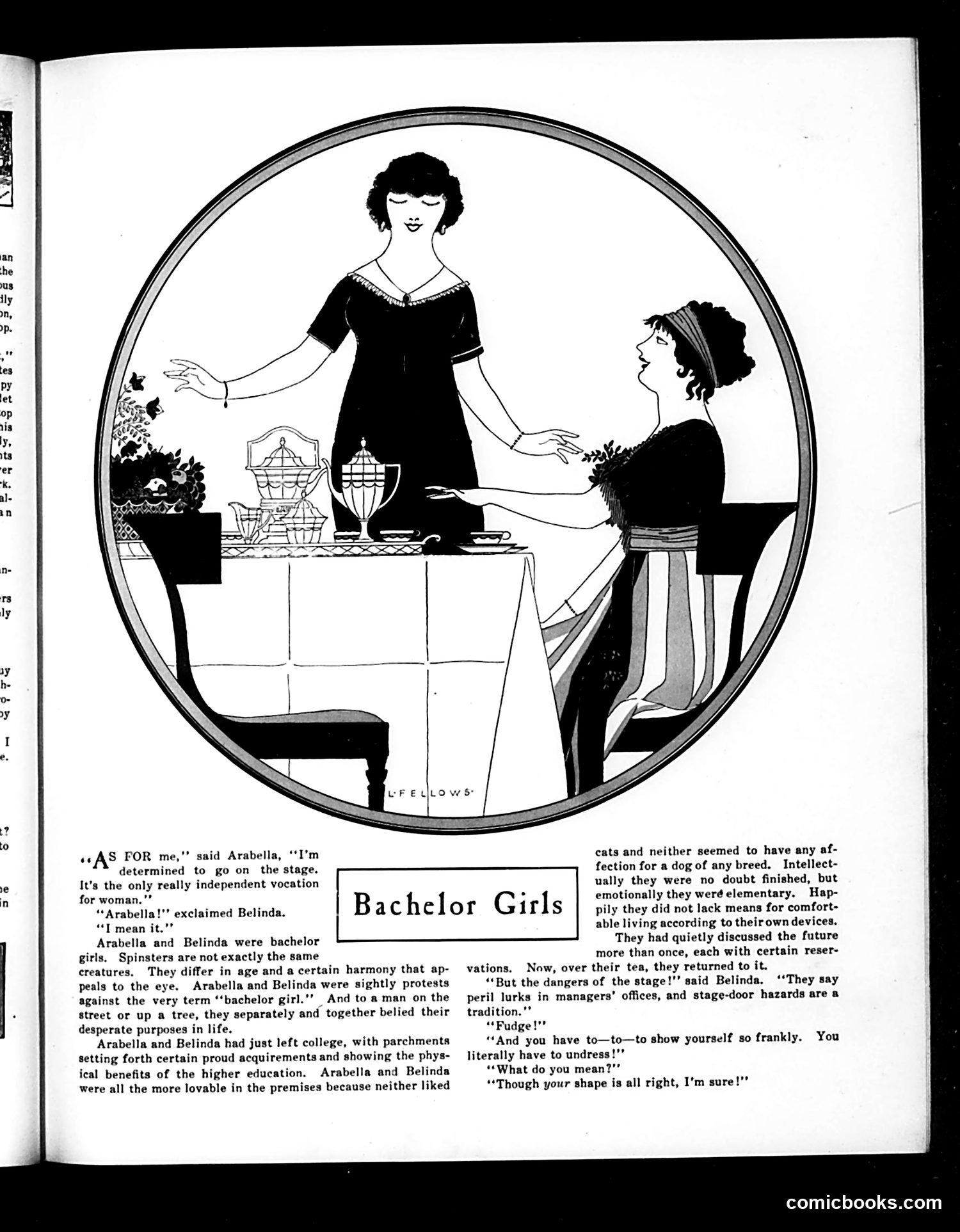
This satirical illustration and story from *Judge* magazine critique the "New Woman" of the early 20th century—specifically educated, unmarried women seeking independence. **The Setup:** Two college-educated women, Arabella and Belinda, are "bachelor girls" (unmarried women living independently). Arabella declares she'll pursue stage acting as the only "independent vocation for woman." **The Satire:** The text presents their situation with mock-earnest sympathy while highlighting the anxieties surrounding female independence. Belinda warns of "dangers" in theatrical life—predatory managers and stage-door "hazards" (sexual threats)—reflecting period concerns about women's safety and respectability in public work. The humor targets both the women's naïveté and society's contradictory attitudes: these well-educated, financially secure women are treated as fragile despite their stated independence. The illustration shows them in an intimate domestic scene, emphasizing that their rebellion against traditional roles remains constrained by social expectations about femininity and propriety.
📄 Transcribed text from this page (OCR, searchable)
Machine-transcribed from the original scan — historical spelling and the odd misread are preserved.
<= UF E LOWS ««AS FOR me," said Arabella, ‘I’m determined to go on the stage. It’s the only really independent vocation for woman."" ‘Arabella!’ exclaimed Belinda. “I mean it."” Arabella and Belinda were bachelor girls. Spinsters are not exactly the same creatures, They differ in age and a certain harmony that ap- peals to the eye. Arabella and Belinda were sightly protests against the very term ‘‘bachelor girl.’’ And to a man on the street or up a tree, they separately and together belied their desperate purposes in life. Arabella and Belinda had just left college, with parchments setting forth certain proud acquirements and showing the phys- ical benefits of the higher education. Arabella and Belinda were all the more lovable in the premises because neither liked Bachelor Girls cats and neither seemed to have any af- fection for a dog of any breed. Intellect- ually they were no doubt finished, but emotionally they weré elementary. Hap- pily they did not lack means for comfort- able living according to their own devices. They had quietly discussed the future more than once, each with certain reser- vations. Now, over their tea, they returned to it. “But the dangers of the stage!’’ said Belinda, ‘‘They say peril lurks in managers’ offices, and stage-door hazards are a tradition." ““Fudge!"” “And you have to—to—to show yourself so frankly. You literally have to undress!"’ “*What do you mean?"’ “Though your shape is all right, I’m sure!’’ comicbooks.com