
Judge, 1912-09-14 · page 10 of 24
Judge — September 14, 1912 — page 10: what you’re looking at
What you’re looking at
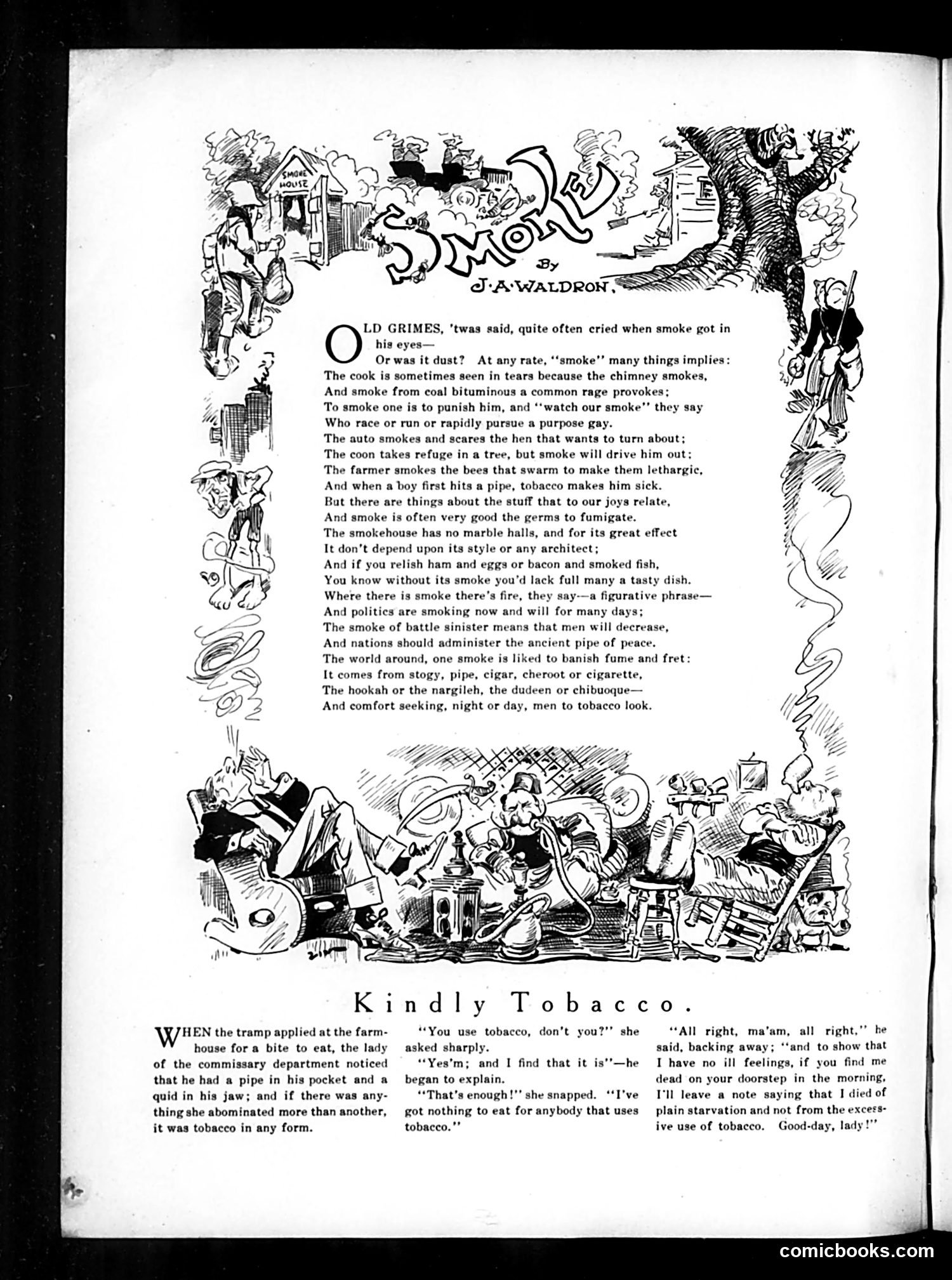
This page presents a dual satire on tobacco use. The upper poem by S.A. Waldron defends smoking as beneficial and harmless—listing practical uses (fumigating bees, preserving food) and philosophical ones (promoting peace, providing comfort). It's written as earnest advocacy. The lower cartoon undermines this. A vagrant asks a farm lady for food. She refuses because he uses tobacco, viewing it as morally corrupting. He politely accepts, then sarcastically promises to die on her doorstep and leave a note blaming "plain starvation" rather than tobacco excess. The satire targets anti-tobacco crusaders of the era—portrayed as hypocritically cruel and self-righteous. The vagrant's gentle sarcasm exposes the absurdity: the lady's moral stance literally threatens his survival. The cartoon mocks the temperance-era moralizing against tobacco by showing its advocates as unreasonable and unkind, suggesting such purity movements cause more harm than the vice they oppose.
📄 Transcribed text from this page (OCR, searchable)
Machine-transcribed from the original scan — historical spelling and the odd misread are preserved.
his eyes— Or was it dust? At any rate, ‘‘smoke’’ many things implies: The cook is sometimes seen in tears because the chimney smokes, And smoke from coal bituminous a common rage provokes; To smoke one is to punish him, and ‘*watch our smoke’’ they say Who race or run or rapidly pursue a purpose gay. The auto smokes and scares the hen that wants to turn about; The coon takes refuge in a tree, but smoke will drive him out; The farmer smokes the bees that swarm to make them lethargic, And when a boy first hits a pipe, tobacco makes him sick. But there are things about the stuff that to our joys relate, And smoke is often very good the germs to fumigate. The smokehouse has no marble halls, and for its great effect It don’t depend upon its style or any architect; And if you relish ham and eggs or bacon and smoked fish, You know without its smoke you'd lack full many a tasty dish. Where there is smoke there's fire, they say-—a figurative phrase— And politics are smoking now and will for many days; The smoke of battle sinister means that men will decrease, And nations should administer the ancient pipe of peace. The world around, one smoke is liked to banish fume and fret: It comes from stogy, pipe, cigar, cheroot or cigarette, The hookah or the nargileh, the dudeen or chibuoque— And comfort seeking, night or day, men to tobacco look. O* GRIMES, ‘twas said, quite often cried when smoke got in Kindly Tobacco. right,"’ he HEN the tramp applied at the farm- house for a bite to eat, the lady of the commissary department noticed that he had a pipe in his pocket and a quid in his jaw; and if there was any- thing she abominated more than another, it was tobacco in any form. “You use tobacco, don’t you?’’ she asked sharply. “Yes’m; and I find that it is’’—he began to explain. “That's enough!"’ she snapped. ‘I've got nothing to eat for anybody that uses tobacco."" “All right, ma’am, all said, backing away; ‘‘and to show that I have no ill feelings, if you find me dead on your doorstep in the morning, I'll leave a note saying that I died of plain starvation and not from the excess- ive use of tobacco. Good-day, lady!” comicbooks.com