
Judge, 1906-12-22 · page 9 of 48
Judge — December 22, 1906 — page 9: what you’re looking at
What you’re looking at
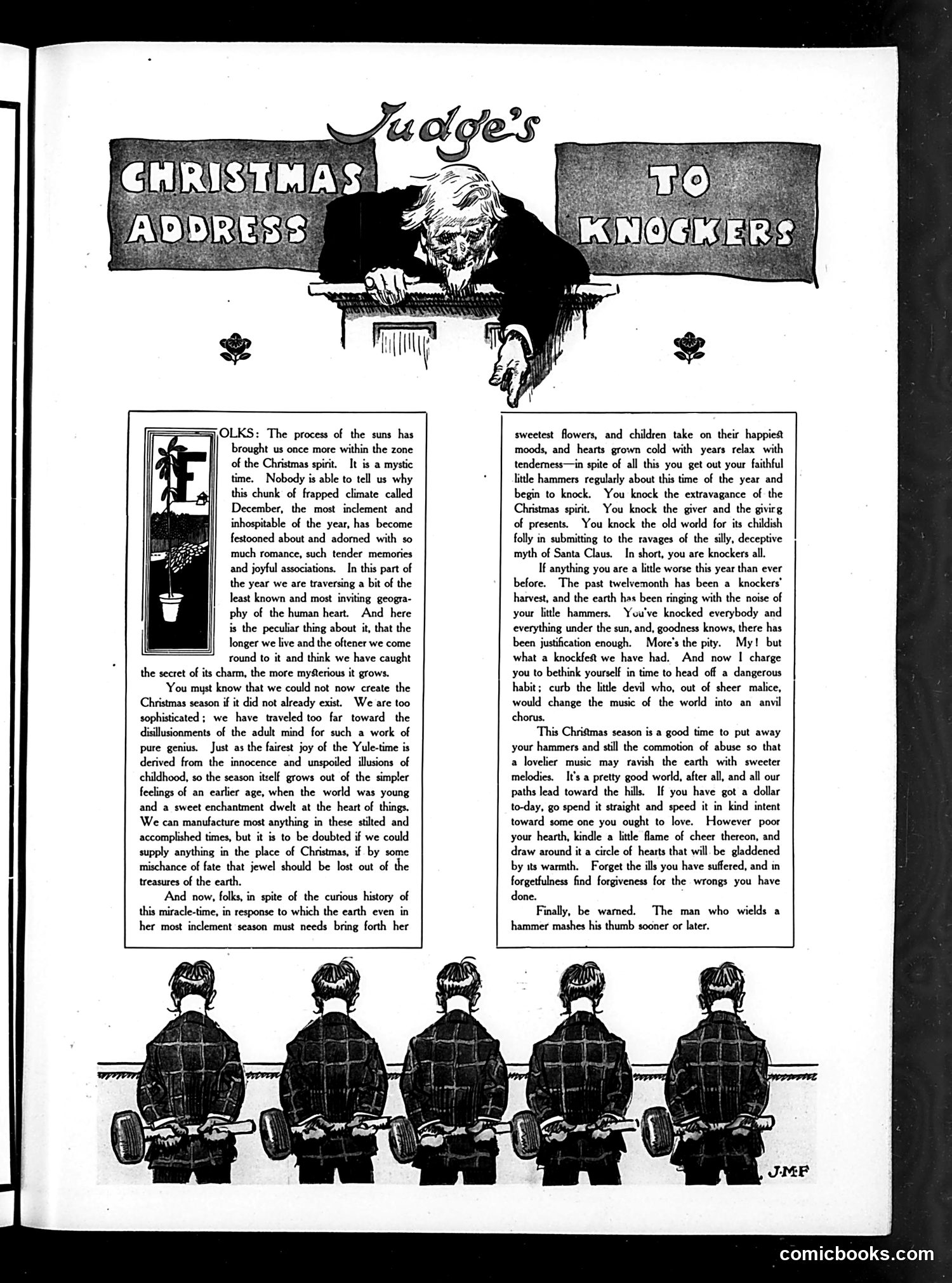
This is a satirical editorial attacking cynics and chronic complainers during the Christmas season. The cartoonist personifies "Knockers"—people who habitually criticize everything—as literal figures with hammers (shown at bottom, facing away while holding mallets). The text argues that while 1920s society has legitimate grievances ("The past twelvemonth has been a knockers' harvest"), Christmas represents a rare moment to abandon cynicism and embrace the gentleness of the season. The author exhorts readers to stop their constant "knocking" (complaining) and instead practice charity and forgiveness. The skeleton figure at top represents Death or Fate presiding over this moral lesson. The final line is a pun: literal hammers cause thumb injuries, but metaphorical hammers (constant criticism) wound the spirit. The appeal is for seasonal goodwill over relentless fault-finding—a common early 20th-century editorial theme.
📄 Transcribed text from this page (OCR, searchable)
Machine-transcribed from the original scan — historical spelling and the odd misread are preserved.
OLKS: The process of the suns has brought us once more within the zone of the Christmas spirit. It is a mystic time. Nobody is able to tell us why this chunk of frapped climate called December, the most inclement and inhospitable of the year, has become festooned about and adomed with so much romance, such tender memories and joyful associations. In this part of the year we are traversing a bit of the least known and most inviting geogra- phy of the human heart. And here is the peculiar thing about it, that the longer we live and the oftener we come round to it and think we have caught the secret of its charm, the more myferious it grows. You myst know that we could not now create the Christmas season if it did not already exist. We are too sophisticated; we have traveled too far toward the disillusionments of the adult mind for such a work of pure genius. Just as the fairest joy of the Yule-time is derived from the innocence and unspoiled illusions of childhood, so the season itself grows out of the simpler feelings of an earlier age, when the world was young and a sweet enchantment dwelt at the heart of things. We can manufacture most anything in these stilted and accomplished times, but it is to be doubted if we could supply anything in the place of Christmas, if by some mischance of fate that jewel should be lost out of the treasures of the earth, And now, folks, in spite of the curious history of this miracle-time, in response to which the earth even in her most inclement season must needs bring forth her sweetest flowers, and children take on their happiest moods, and hearts grown cold with years relax with tendemess—in spite of all this you get out your faithful litle hammers regularly about this time of the year and begin to knock. You knock the extravagance of the Christmas spirit. You knock the giver and the givirg of presents. You knock the old world for its childish folly in submitting to the ravages of the silly, deceptive myth of Santa Claus. In short, you are knockers all. If anything you are a little worse this year than ever before. The past twelvemonth has been a knockers’ harvest, and the earth has been ringing with the noise of your little hammers. You've knocked everybody and everything under the sun, and, goodness knows, there has been justification enough. More's the pity. My! but what a knockfe&t we have had. And now I charge you to bethink yourself in time to head off a dangerous habit; curb the little devil who, out of sheer malice, would change the music of the world into an anvil chorus. This Christmas season is a good time to put away your hammers and still the commotion of abuse so that a lovelier music may ravish the earth with sweeter melodies. It's a pretty good world, after all, and all our paths lead toward the hills. If you have got a dollar to-day, go spend it straight and speed it in kind intent toward some one you ought to love. However poor your hearth, kindle a little flame of cheer thereon, and draw around it a circle of hearts that will be gladdened by its warmth. Forget the ills you have suffered, and in forgetfulness find forgiveness for the wrongs you have done. Finally, be wamed. The man who wields a hammer mashes his thumb sooner or later. comicbooks.com